The strategy "Planning for 2026 agency legislation and budget priorities" involves meticulous coordination and input collection from various divisions. It focuses on identifying legislative and budgetary priorities to align with the agency’s goals. For example, by convening division leaders, the agency ensures diverse perspectives in selecting legislative initiatives. Creating a ranking system allows objective evaluation, ensuring only the most impactful proposals advance. Workshops are organized to refine priorities and gather insights from relevant stakeholders, ensuring all perspectives are considered.
Evaluating budget decision packages from each division helps identify alignment with strategic goals, and workshops facilitate discussion for in-depth understanding. By using scoring systems and establishing committees for review, the agency ensures transparent and fair assessment. Workshops and continuous stakeholder engagement strengthen these evaluations.
An implementation timeline supports this plan, organizing key deadlines and milestones. Project management tools track progress, and designated personnel oversee initiatives. Regular check-ins and reviews help adapt to changes, while collaboration fosters cross-division coherence, ensuring successful implementation.
The strategies
⛳️ Strategy 1: Convene division leaders for input
- Schedule meetings with leaders from each division to discuss potential legislation
- Create a template for divisions to submit their legislative requests
- Request that divisions present their top three legislative priorities
- Organise a workshop to discuss and prioritise legislative initiatives
- Evaluate each proposal for alignment with agency goals
- Develop criteria for selecting the most impactful proposals
- Utilise a scoring system to rank legislative proposals
- Establish a panel to review and provide feedback on proposals
- Compile a shortlist of legislative initiatives for further consideration
- Prepare a report summarising division input and prioritisation process
⛳️ Strategy 2: Assess budget decision packages
- Collect budget decision packages from each division
- Establish criteria for evaluating decision packages
- Review each package for alignment with agency strategic goals
- Organise a committee to review budget submissions
- Host a workshop to discuss and refine budget priorities
- Rank decision packages using a predefined scoring system
- Identify any gaps in funding and priorities
- Prepare a presentation for agency leadership on budget findings
- Engage with stakeholders to gather additional insights
- Compile a comprehensive list of budget priorities
⛳️ Strategy 3: Develop an implementation timeline
- Draft a timeline outlining key deadlines for legislative proposals
- Use project management tools to track progress of initiatives
- Identify key milestones and deliverables for each proposal
- Designate lead personnel for overseeing each initiative
- Establish regular check-ins to monitor progress
- Develop contingency plans for potential challenges
- Coordinate with external partners to align efforts
- Facilitate cross-division collaboration to ensure coherence
- Create a communication plan to keep stakeholders informed
- Review and adjust the timeline as necessary to accommodate evolving priorities
Bringing accountability to your strategy
It's one thing to have a plan, it's another to stick to it. We hope that the examples above will help you get started with your own strategy, but we also know that it's easy to get lost in the day-to-day effort.
That's why we built Tability: to help you track your progress, keep your team aligned, and make sure you're always moving in the right direction.
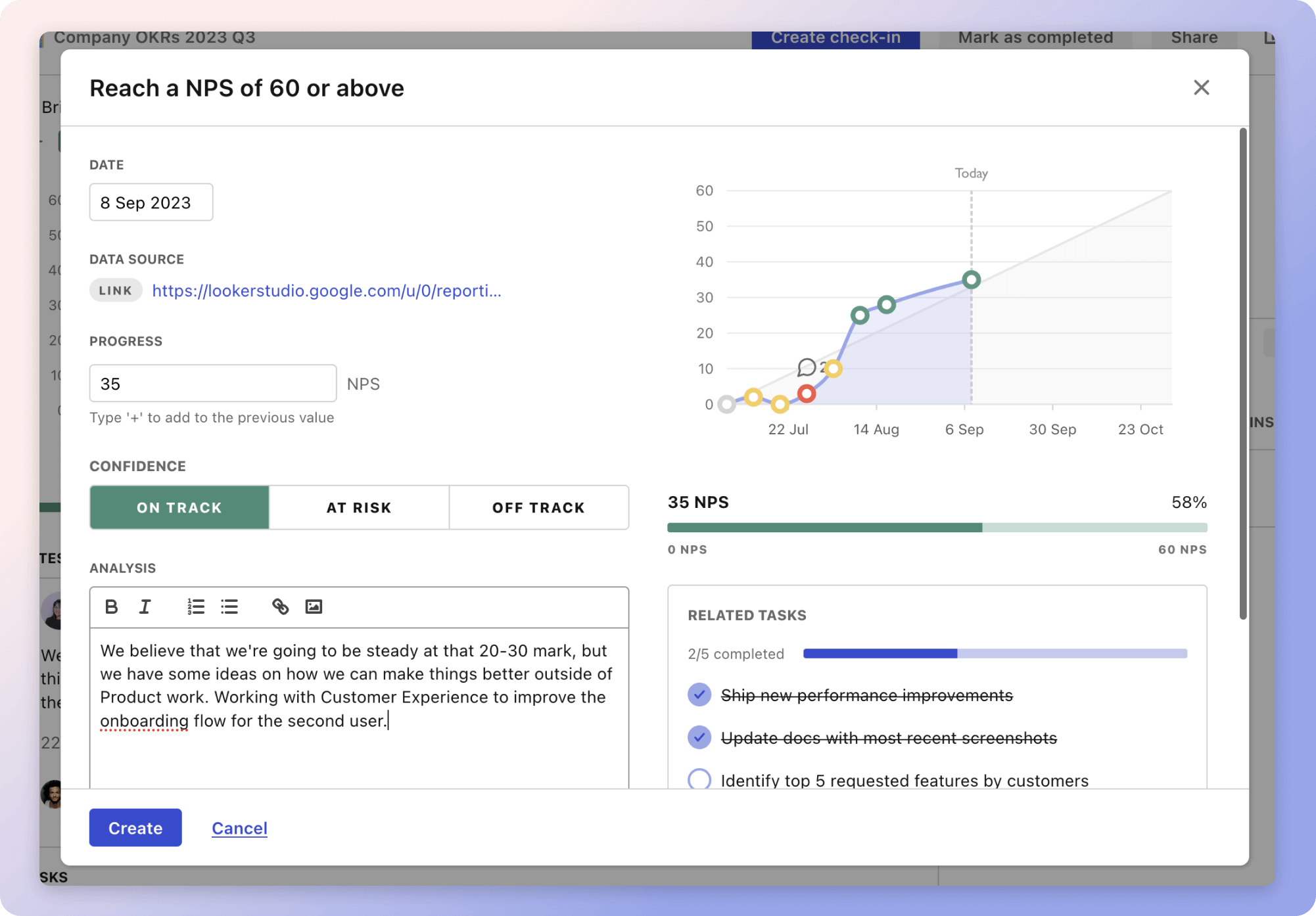
Give it a try and see how it can help you bring accountability to your strategy.