The strategy designed for EzPal focuses on creating a comprehensive AI initiative portfolio to enhance various business aspects within 12-18 months. It revolves around three primary strategies. First, implementing a dynamic matching and recommendation system aims to increase user engagement and marketplace liquidity. For instance, setting a goal to boost match success rates by 30% showcases the initiative's targeted approach to foster a thriving platform.
Secondly, AI-driven fraud detection plays a key role in enhancing trust and safety. By setting a clear objective of reducing fraud incidents by 25% within the first year, EzPal aims to bolster user trust and platform credibility. Finally, optimizing pricing via AI ensures revenue growth by targeting a 15% increase in transaction value and leveraging data-driven insights for dynamic pricing adjustments.
The strategies
⛳️ Strategy 1: Implement a dynamic matching and recommendation system
- Define the objective to increase user engagement and maximise marketplace liquidity
- Establish key results with targets such as increasing match success rate by 30%
- Set business impact by aiming for 20% enhanced user retention
- Identify data dependencies like historical user behaviour and transaction data
- Leverage technology such as ML models and NLP for improved recommendations
- Involve the people aspect by engaging product and data science teams
- Ensure governance by integrating privacy protection and ethical AI guidelines
- Design automated progress tracking with real-time KPIs on engagement rate
- Monitor leading indicators like match success rate weekly
- Plan lagging indicator evaluation for churn reduction monthly
⛳️ Strategy 2: Enhance trust and safety with AI-driven fraud detection
- Define the objective to strengthen trust and safety at scale
- Set key results to decrease fraud incidents by 25% within the first year
- Focus on business impact aiming to maintain user trust and platform credibility
- Utilise data dependencies such as behaviour patterns and anomaly detection
- Apply technology using sophisticated fraud detection ML algorithms
- Coordinate with security-focused engineering teams for implementation
- Adhere to governance requirements regarding ethical AI and privacy
- Create automated dashboards tracking fraud attempts in real-time
- Analyse leading indicators of suspicious activity weekly
- Evaluate lagging indicators like user report metrics monthly
⛳️ Strategy 3: Optimise pricing strategy via AI to boost revenue growth
- Define the objective to maximise revenue through dynamic pricing
- Set key results targeting a 15% increase in average transaction value
- Predict business impact leading to a 25% growth in overall revenue
- Collect data dependencies like transaction histories and demand fluctuations
- Incorporate technology using AI-powered pricing algorithms
- Engage people from finance and data analytics teams for insights
- Align to governance for unbiased pricing models and fairness policies
- Develop tracking with realtime revenue dashboards
- Follow leading indicators on pricing experiment success rates weekly
- Assess lagging indicators such as quarterly revenue reports
Bringing accountability to your strategy
It's one thing to have a plan, it's another to stick to it. We hope that the examples above will help you get started with your own strategy, but we also know that it's easy to get lost in the day-to-day effort.
That's why we built Tability: to help you track your progress, keep your team aligned, and make sure you're always moving in the right direction.
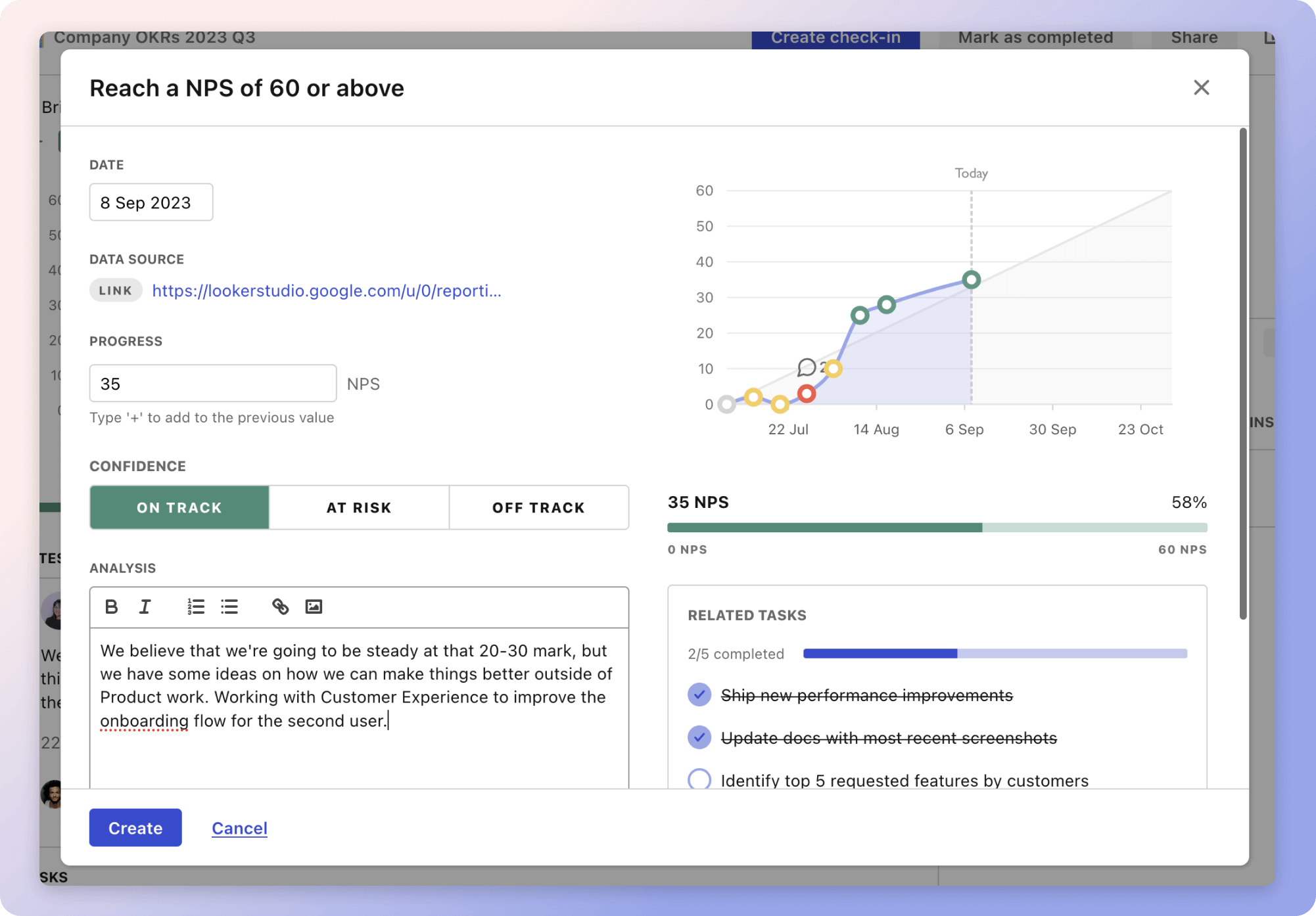
Give it a try and see how it can help you bring accountability to your strategy.