The strategy focuses on tracking feature adoption and enhancing record updates within a system. To achieve this, three primary tactics are employed. First, user analytics tools are implemented to track the use of new features. For instance, by identifying key metrics and setting up dashboards, stakeholders can visualize trends in feature adoption, which guides improvements based on user feedback.
Second, enhancing user training and support ensures that users are well-informed about new features. Comprehensive guides, training sessions, and a FAQ section aid in this process, and visual content and peer networks further support learning. Personalising support and collecting feedback helps evolve the training material.
Third, optimizing record update processes aims to eliminate inefficiencies. Auditing current processes helps pinpoint bottlenecks, and streamlined workflows with automated updates facilitate accuracy. Training staff and batch processing help maintain quality control, while feedback loops ensure continuous improvement.
The strategies
⛳️ Strategy 1: Implement user analytics tools
- Identify key metrics for feature adoption
- Choose an analytics tool suitable for the system
- Integrate the analytics tool with the system
- Set up dashboards to visualise feature usage
- Regularly review analytics data
- Identify trends in feature adoption
- Share findings with relevant stakeholders
- Use data to inform feature improvements
- Track user feedback on new features
- Adjust metrics and tools as necessary
⛳️ Strategy 2: Enhance user training and support
- Create comprehensive guides for new features
- Organise regular training sessions for users
- Develop a user FAQ section on updates
- Provide a feedback channel for user queries
- Analyse common questions and address them
- Offer personalised support sessions
- Create visual content like videos for education
- Facilitate peer support networks
- Monitor effectiveness of training through surveys
- Update training content based on feedback
⛳️ Strategy 3: Optimise record update processes
- Audit current record update processes
- Identify bottlenecks and inefficiencies
- Streamline workflows for record updates
- Implement automated notifications for required updates
- Train staff on best practices for record accuracy
- Utilise batch processing where possible
- Regularly review record update logs
- Set up quality control checks
- Encourage accountability through user responsibilities
- Solicit feedback for continuous process improvement
Bringing accountability to your strategy
It's one thing to have a plan, it's another to stick to it. We hope that the examples above will help you get started with your own strategy, but we also know that it's easy to get lost in the day-to-day effort.
That's why we built Tability: to help you track your progress, keep your team aligned, and make sure you're always moving in the right direction.
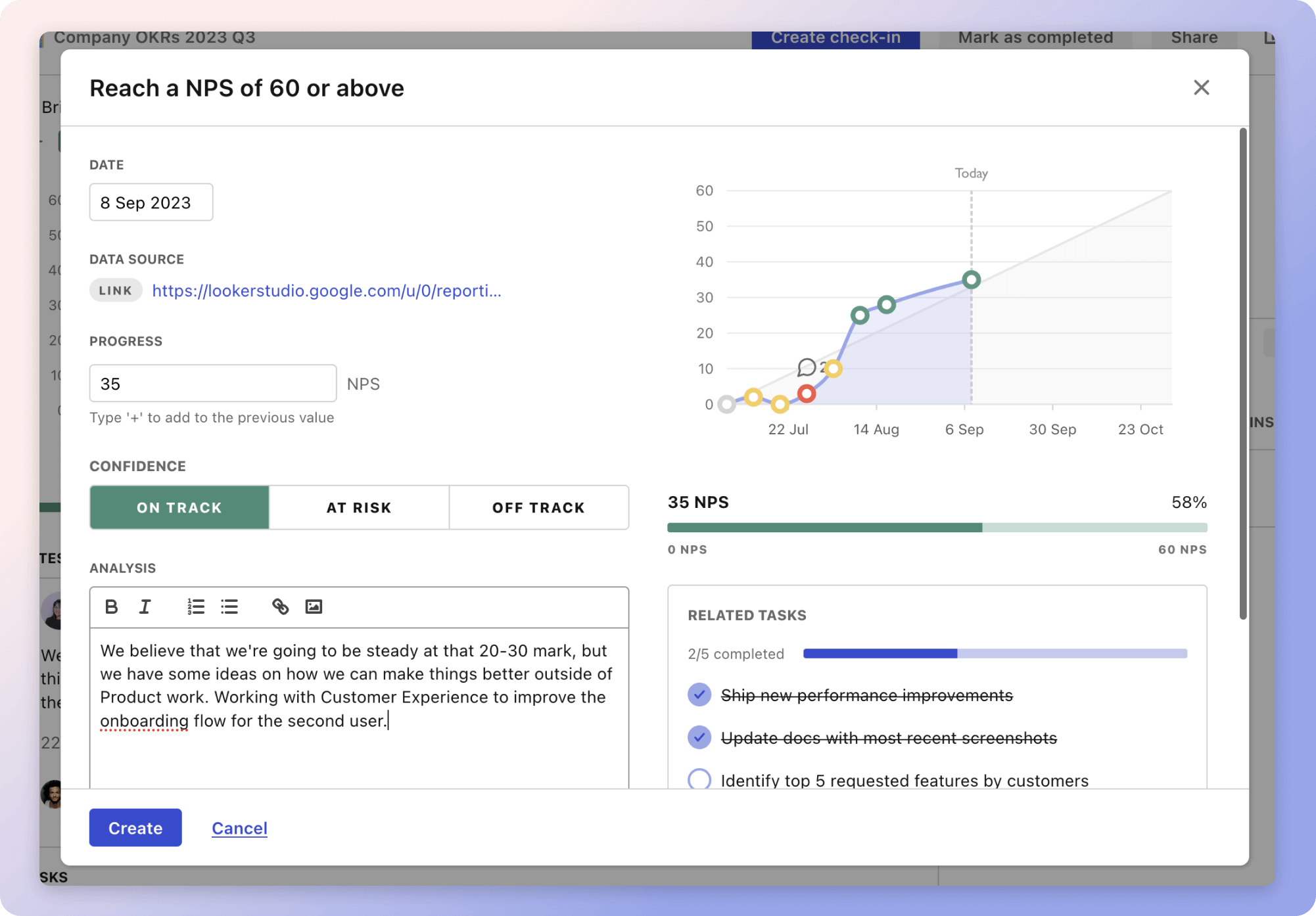
Give it a try and see how it can help you bring accountability to your strategy.