The strategy outlined in the JSON revolves around creating effective LinkedIn outbound campaigns to spark high-intent conversations with senior decision-makers. It includes several key strategies like exploiting innovation pressure, addressing market pressure, and highlighting operational inefficiencies. By researching industries with rapid technological advancements and identifying companies lagging in AI adoption, one can engage decision-makers with tailored messages discussing industry innovation trends and competitor strides.
For market pressure, the strategy involves capturing leaders in AI and strategy, understanding market shifts, and crafting messages that reference recent challenges. These help initiate meaningful discussions on adapting to market changes with AI solutions. The third strategy targets operational inefficiencies by identifying industries with bottlenecks and engaging prospects through case studies showcasing AI's optimization power. Each strategy uses LinkedIn's tools and industry research to enhance message relevance and content quality, positioning Wizr as a valuable partner.
The strategies
⛳️ Strategy 1: Exploit innovation pressure
- Research industries with rapid technological advancements
- Identify companies lagging in AI adoption compared to competitors
- Examine recent news on industry-specific technological innovations
- Leverage LinkedIn Sales Navigator to filter leaders in AI and innovation
- Craft messages highlighting industry innovation trends
- Engage prospects by discussing their competitors' innovation strides
- Initiate conversations around industry best practices in AI
- Include case studies in follow-up messages showing innovation success
- Use competitor analysis tools to strengthen conversation context
- Position Wizr as a partner to bridge innovation gaps
⛳️ Strategy 2: Address market pressure
- Identify companies under pressure due to market changes
- Use LinkedIn Sales Navigator to capture leaders in AI and strategy
- Analyse recent industry reports indicating market shifts
- Create LinkedIn messages referencing recent market challenges
- Initiate conversations around adapting to market shifts with AI
- Discuss potential AI solutions to mitigate market pressures
- Share insights from industry research in follow-ups
- Analyse competitor movements to build conversation context
- Use trend analysis tools to identify market pressures
- Showcase Wizr's AI solutions to address specific market challenges
⛳️ Strategy 3: Highlight operational inefficiencies
- Identify industries prone to operational inefficiencies
- Use LinkedIn Sales Navigator to filter operational leaders
- Investigate reports highlighting operational bottlenecks
- Craft LinkedIn messages discussing operational optimisation
- Engage prospects with case studies on AI improving efficiencies
- Discuss the potential of AI in streamlining their processes
- Provide insights on industry benchmarks for operational efficiency
- Use process mapping tools to illustrate inefficiencies
- Highlight Wizr's success stories in operational improvements
- Follow up with solution-oriented conversations on efficiency
Bringing accountability to your strategy
It's one thing to have a plan, it's another to stick to it. We hope that the examples above will help you get started with your own strategy, but we also know that it's easy to get lost in the day-to-day effort.
That's why we built Tability: to help you track your progress, keep your team aligned, and make sure you're always moving in the right direction.
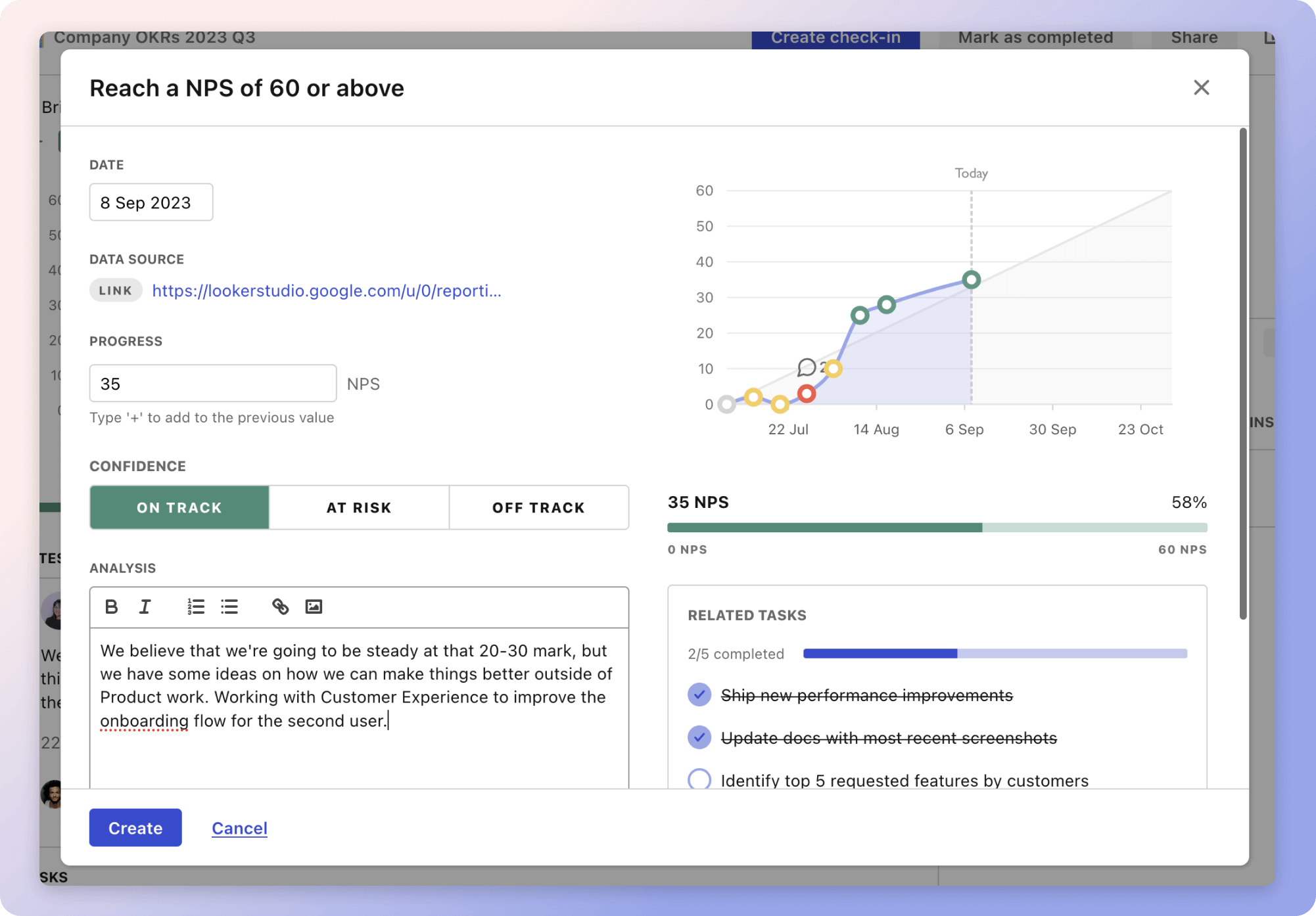
Give it a try and see how it can help you bring accountability to your strategy.