Enhancing communication and fostering a healthier relationship with your boyfriend involves the practice of active listening, emotional expression, and cultivating empathy. Active listening includes setting dedicated times weekly to focus solely on understanding each other's thoughts, using non-verbal cues like nodding, and maintaining eye contact to engage fully. For example, summarizing your partner’s words helps confirm your understanding and allows clarifying any doubts.
Enhancing emotional expression focuses on using "I" statements to express feelings without blame and setting communication boundaries. For instance, acknowledging mistakes serves as growth opportunities while a "soft start-up" reduces defensiveness during tough conversations.
Cultivating empathy involves seeing situations from your partner's perspective and sharing personal histories to deepen understanding. Activities like creating shared vocabularies for emotional needs or engaging in perspective-taking exercises aid this. Celebrating communication successes bolsters this strategy.
The strategies
⛳️ Strategy 1: Practice active listening
- Allocate a specific time each week to have a dedicated conversation focusing on listening to each other's thoughts and feelings
- Focus on the speaker rather than thinking about your response when your partner is speaking
- Use non-verbal cues like nodding to show engagement during the conversation
- Summarise and repeat back what your partner said to ensure you have understood their point accurately
- Ask clarifying questions if you're unsure about what they mean, rather than assuming
- Avoid interrupting, allowing your partner to finish their thoughts fully
- Practice reflective listening by acknowledging their emotions ('I understand you’re feeling…')
- Maintain an open posture and eye contact to show that you are attentive
- Use a calm and gentle tone to encourage open and honest dialogue
- Offer reassurance and empathy to validate your partner’s feelings
⛳️ Strategy 2: Enhance emotional expression and honesty
- Schedule regular check-ins to discuss emotions and challenges in a non-confrontational setting
- Identify and use 'I' statements to express your feelings without blaming ('I feel upset when…')
- Set boundaries together on how to communicate during arguments to prevent escalation
- Acknowledge and address the fear of admitting wrongs by recognizing mistakes as opportunities for growth
- Incorporate a 'soft start-up' approach when introducing difficult topics to avoid defensiveness
- Identify personal triggers and communicate them clearly with your partner
- Create a safe space for both partners to express negatives without fear of judgement
- Encourage expressing both positive and challenging emotions to foster a balanced communication
- Practice honesty by sharing thoughts and intentions openly, reducing misunderstandings
- Use humor appropriately to defuse tension during serious discussions
⛳️ Strategy 3: Cultivate understanding and empathy
- Engage in perspective-taking exercises where you try to see situations from each other's viewpoints
- Discuss and share personal histories to build more understanding of each other’s backgrounds
- Create a shared vocabulary or key phrases that signify misunderstandings or emotional needs
- Implement a no-tech time rule during conversations to eliminate distractions
- Participate in joint activities that require teamwork to improve cooperative communication
- Regularly express appreciation to foster a positive atmosphere for dialogue
- Agree on signals or cues that can be used if someone feels overwhelmed during a discussion
- Do role-reversal exercises where you discuss as if you were the other person to increase empathy
- Celebrate small victories together when successful communication efforts are made
- Seek out resources such as communication workshops or relationship counselling to gain new skills
Bringing accountability to your strategy
It's one thing to have a plan, it's another to stick to it. We hope that the examples above will help you get started with your own strategy, but we also know that it's easy to get lost in the day-to-day effort.
That's why we built Tability: to help you track your progress, keep your team aligned, and make sure you're always moving in the right direction.
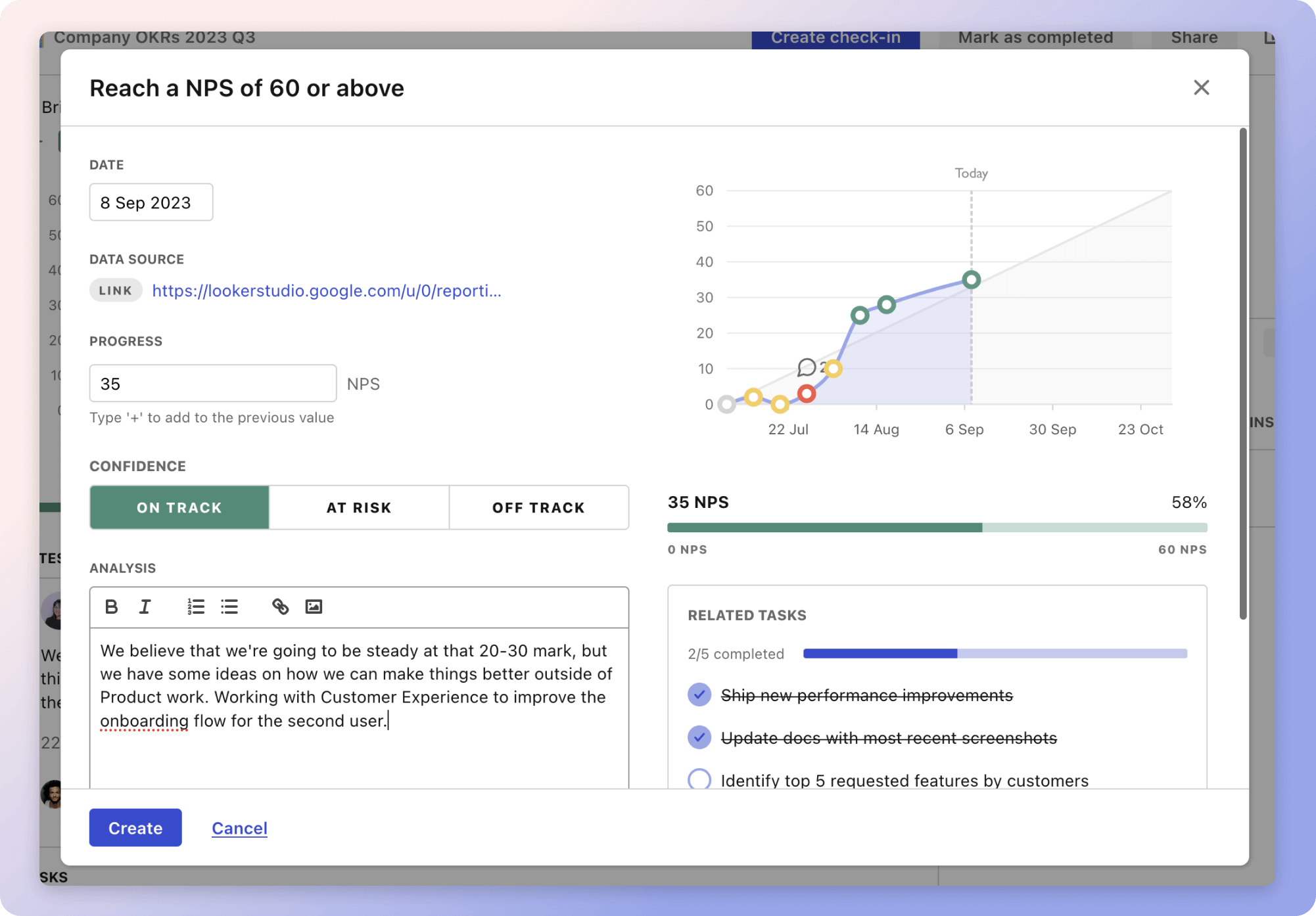
Give it a try and see how it can help you bring accountability to your strategy.