The strategy for building a last mile logistics business in Nairobi involves three key approaches. First, by partnering with public bus operators, the business aims to leverage existing transit routes to facilitate parcel delivery. This includes crafting a mutual benefit proposal, negotiating terms, and implementing parcel tracking on buses. For instance, an agreement with a major bus operator could enhance route scheduling and operations.
Next, establishing reliable operational processes is crucial. Mapping delivery areas, setting up digital platforms, and recruiting staff ensures efficiency. A structured schedule for pick-ups and deliveries, along with monitoring systems, can significantly optimize operations.
Lastly, marketing the service effectively is essential to reach potential customers. Targeting businesses and individual senders via digital campaigns and partnerships with e-commerce platforms widens the customer base. Offering discounts and hosting webinars can drive initial adoption and enhance brand visibility.
The strategies
⛳️ Strategy 1: Partner with public bus operators
- Identify key public bus operators in Nairobi
- Develop a partnership proposal outlining mutual benefits
- Schedule meetings with bus operators to present the proposal
- Negotiate terms and conditions for bus utilisation
- Draft and sign a formal agreement with interested operators
- Work with bus operators to identify optimal routes and stops
- Implement a system for parcel tracking and management on buses
- Develop a protocol for handling parcels to ensure safety
- Train bus operators and staff on parcel management processes
- Establish a feedback loop with bus operators for ongoing improvements
⛳️ Strategy 2: Establish reliable operational processes
- Map out the delivery areas and bus stops aligned with bus routes
- Set up a digital platform for order management and tracking
- Create a structured schedule for parcel pick-up and delivery
- Develop standard operating procedures for package handling
- Implement a robust customer communication system
- Recruit and train operations staff and delivery personnel
- Ensure compliance with local regulations and safety standards
- Invest in technology for efficient logistics and tracking
- Monitor and optimise delivery efficiency on an ongoing basis
- Regularly review and adjust operation processes based on feedback and data
⛳️ Strategy 3: Market the service to potential customers
- Identify target customer segments including businesses and individual senders
- Develop a unique value proposition highlighting benefits of using public buses
- Create marketing materials including brochures and digital content
- Launch a targeted digital marketing campaign on social media platforms
- Establish partnerships with local businesses and e-commerce platforms
- Offer introductory promotions or discounts to attract initial customers
- Host informational sessions or webinars to educate potential customers
- Develop a referral program to encourage word-of-mouth marketing
- Collect customer testimonials and case studies for social proof
- Regularly evaluate marketing efforts and adjust strategies for better reach
Bringing accountability to your strategy
It's one thing to have a plan, it's another to stick to it. We hope that the examples above will help you get started with your own strategy, but we also know that it's easy to get lost in the day-to-day effort.
That's why we built Tability: to help you track your progress, keep your team aligned, and make sure you're always moving in the right direction.
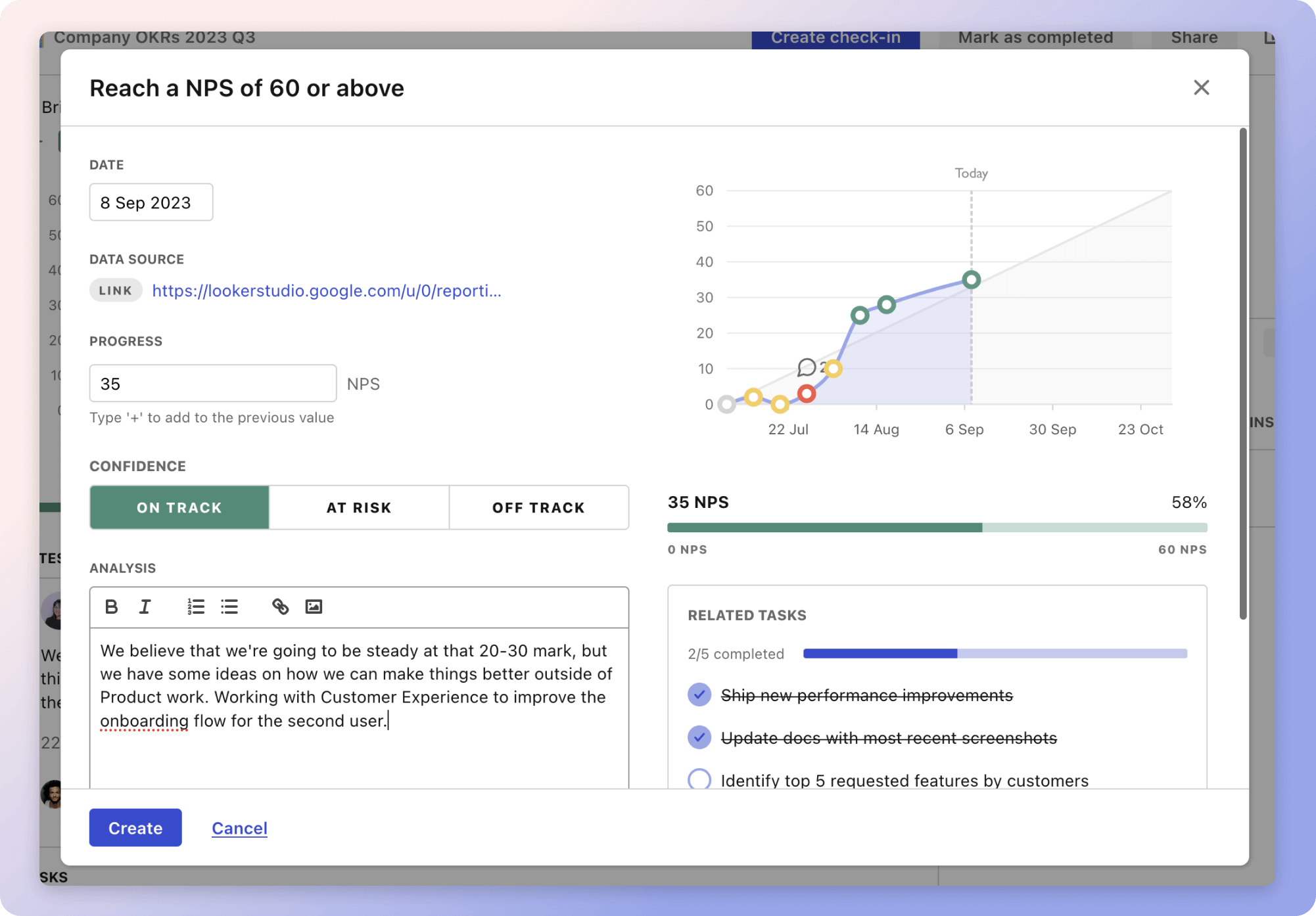
Give it a try and see how it can help you bring accountability to your strategy.