The strategy for trading BTCUSD focuses on two main price movements: upward and downward, each with defined parameters to guide decision-making. For upward movements, the plan involves monitoring the BTCUSD price from the day's opening and placing a buy order after detecting a 100-point increase. This strategy sets a stop loss 100 points below the entry and targets a profit 600 points above, ensuring funds are available and utilizing a platform with real-time data to track movements and improve accuracy.
In contrast, the strategy advises selling during downward movements by following similar guidelines. A sell order is placed once a 100-point decrease is noted from the morning's price. Establishing a stop loss and profit target with adequate account funds is crucial for executing this plan efficiently. Alerts for significant movements help refine trading decisions, which are reviewed weekly for adjustments based on past performance.
Risk management optimization is integral to the strategy, advocating for calculating risk tolerance and aligning the trading account with a favorable risk-reward ratio of at least 1:6. The focus remains on assessing strategy effectiveness, considering market volatility, and perhaps seeking advice from financial experts. Diversification and automated risk tools are encouraged to mitigate potential losses.
The strategies
⛳️ Strategy 1: Buy on upward movement
- Monitor BTCUSD price from the day's opening
- Identify a 100-point movement upward from the opening price
- Place a buy order once the 100-point upward movement is identified
- Set a stop loss 100 points below the buy entry
- Set a profit target 600 points above the buy entry
- Ensure that the trading account has adequate funds
- Utilise a trading platform with real-time data for precise action
- Establish alerts on your trading platform for the 100-point upward movement
- Review and adjust your strategy weekly based on the past performance
- Maintain logs of each trade, noting the conditions and outcomes
⛳️ Strategy 2: Sell on downward movement
- Monitor BTCUSD price from the day's opening
- Identify a 100-point movement downward from the opening price
- Place a sell order once the 100-point downward movement is identified
- Set a stop loss 100 points above the sell entry
- Set a profit target 600 points below the sell entry
- Ensure that the trading account has adequate funds
- Utilise a trading platform with real-time data for precise action
- Establish alerts on your trading platform for the 100-point downward movement
- Review and adjust your strategy weekly based on the past performance
- Maintain logs of each trade, noting the conditions and outcomes
⛳️ Strategy 3: Optimise risk management
- Calculate the trading account's risk tolerance before executing trades
- Determine the position size based on overall risk management strategy
- Implement a risk-reward ratio of at least 1:6 as per target and stop loss
- Regularly evaluate the success rate of this strategy
- Adjust stop loss and take profit levels as necessary to align with market volatility
- Set automated risk management tools if available
- Ensure a diversified trading portfolio to balance potential losses
- Regularly review the effectiveness of your risk management practices
- Stay informed about key BTCUSD milestones or relevant market news
- Consider consulting with a financial advisor on strategy effectiveness
Bringing accountability to your strategy
It's one thing to have a plan, it's another to stick to it. We hope that the examples above will help you get started with your own strategy, but we also know that it's easy to get lost in the day-to-day effort.
That's why we built Tability: to help you track your progress, keep your team aligned, and make sure you're always moving in the right direction.
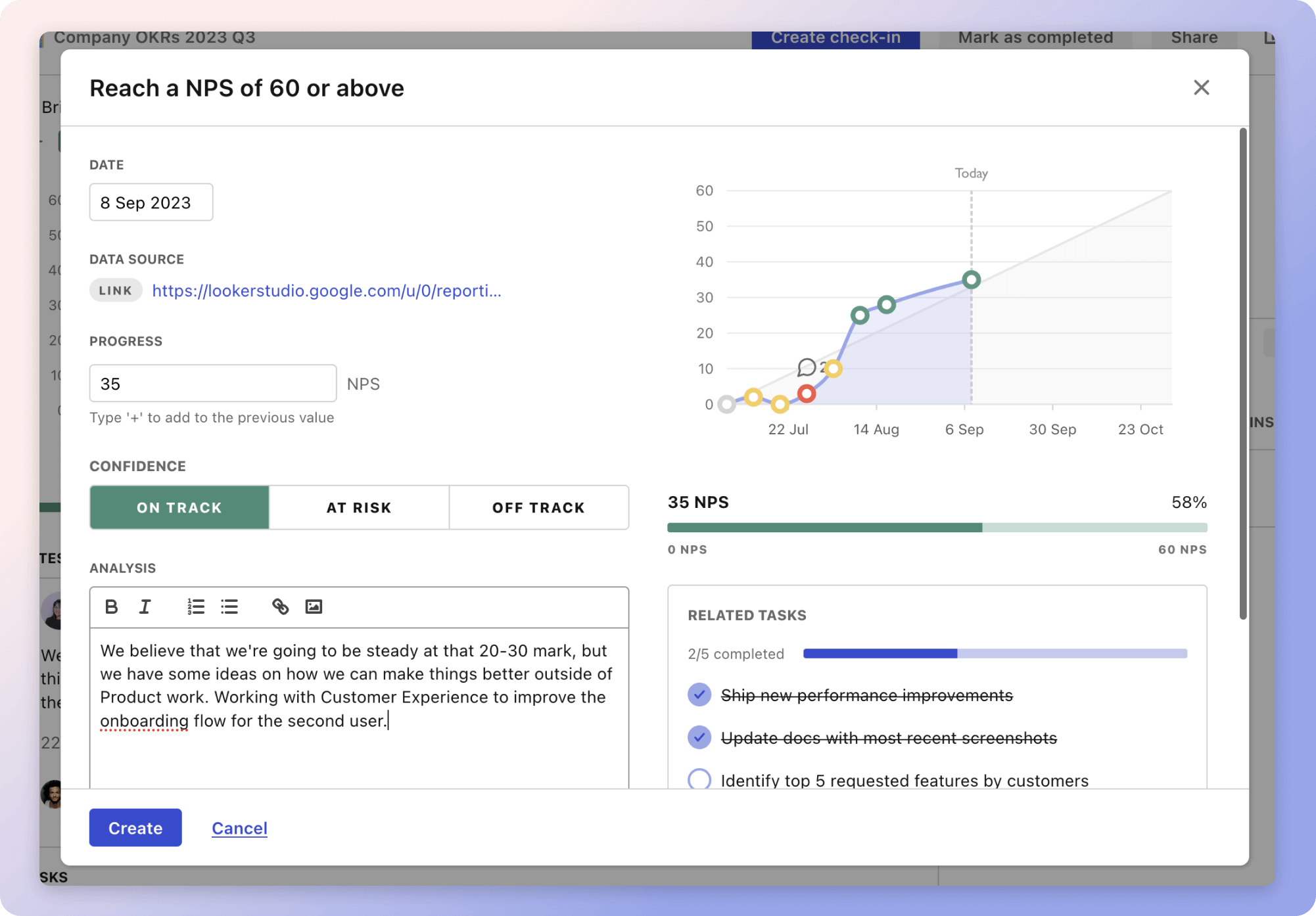
Give it a try and see how it can help you bring accountability to your strategy.