The strategy for trading gold using Smart Money Concepts involves three main focuses. First, identifying trends by analyzing higher timeframes, such as H1 or H4, and using M15 for finer details. This approach is crucial to determine market direction, key support, and resistance levels. For example, traders observe patterns such as consolidation or breakout scenarios, assisting them in pinpointing potential entry points aligned with trends.
Second, the strategy emphasizes identifying fair value gaps and changes in character on M15 charts. This involves spotting rapid price movements leaving gaps and looking for price revisits as entry signals. These fair value gaps are combined with candlestick patterns to confirm market reversals, increasing precision in decision-making.
Lastly, implementing a comprehensive risk management plan is pivotal, ensuring no more than 2% of total capital is risked per trade. This includes establishing a 1:2 risk/reward ratio, setting strategic stop loss and take profit levels, and maintaining emotional discipline. For instance, traders develop a trailing stop to lock in profits and have a checklist to ensure all criteria are met before executing trades.
The strategies
⛳️ Strategy 1: Focus on trend identification
- Analyse the higher timeframe (H1 or H4) to determine the overall market trend
- Identify the key zones of support and resistance on the M15 timeframe
- Look for patterns indicating potential trend continuation or reversal
- Recognise signs of market consolidation and prepare for breakout scenarios
- Mark previous highs and lows to anticipate liquidity zones
- Track price movements around institutional price levels
- Monitor economic news releases that could impact gold prices
- Use moving averages to identify potential zones of trend continuation
- Verify trend alignment between multiple timeframes for higher probability setups
- Reassess the trend regularly to adapt to changing market conditions
⛳️ Strategy 2: Identify fair value gaps and change of character
- Begin by identifying aggressive price movements forming imbalances
- Pinpoint fair value gaps on the M15 timeframe where price moved away quickly
- Wait for price to revisit these gaps, signalling a potential entry point
- Look for a price structure change at these fair value gaps indicating a change of character
- Use candlestick patterns to confirm reversal signals at these zones
- Set alerts for when price approaches identified fair value gaps
- Analyse whether market structure supports potential movement into the gap
- Observe if the price respects or breaks the structure around these gaps
- Combine fair value gaps analysis with other technical indicators for confirmation
- Consistently review and refine gap identification methods to improve precision
⛳️ Strategy 3: Implement a professional risk management plan
- Set a fixed risk percentage per trade based on total capital, not exceeding 2%
- Calculate position size accurately to maintain the 1:2 risk/reward ratio for each trade
- Set stop loss orders below or above recent swing points for optimal protection
- Develop a trailing stop mechanism to lock in profits as the trade moves favourably
- Establish take profit levels at least twice the distance of the stop loss
- Avoid over-leveraging by adhering strictly to pre-defined lot sizes
- Track all trades meticulously to analyse risk/reward performance
- Include downtime in the plan for regular review and adjustment based on performance
- Create a checklist to verify all risk management criteria are met before executing a trade
- Adopt strict emotional discipline to follow the plan consistently
Bringing accountability to your strategy
It's one thing to have a plan, it's another to stick to it. We hope that the examples above will help you get started with your own strategy, but we also know that it's easy to get lost in the day-to-day effort.
That's why we built Tability: to help you track your progress, keep your team aligned, and make sure you're always moving in the right direction.
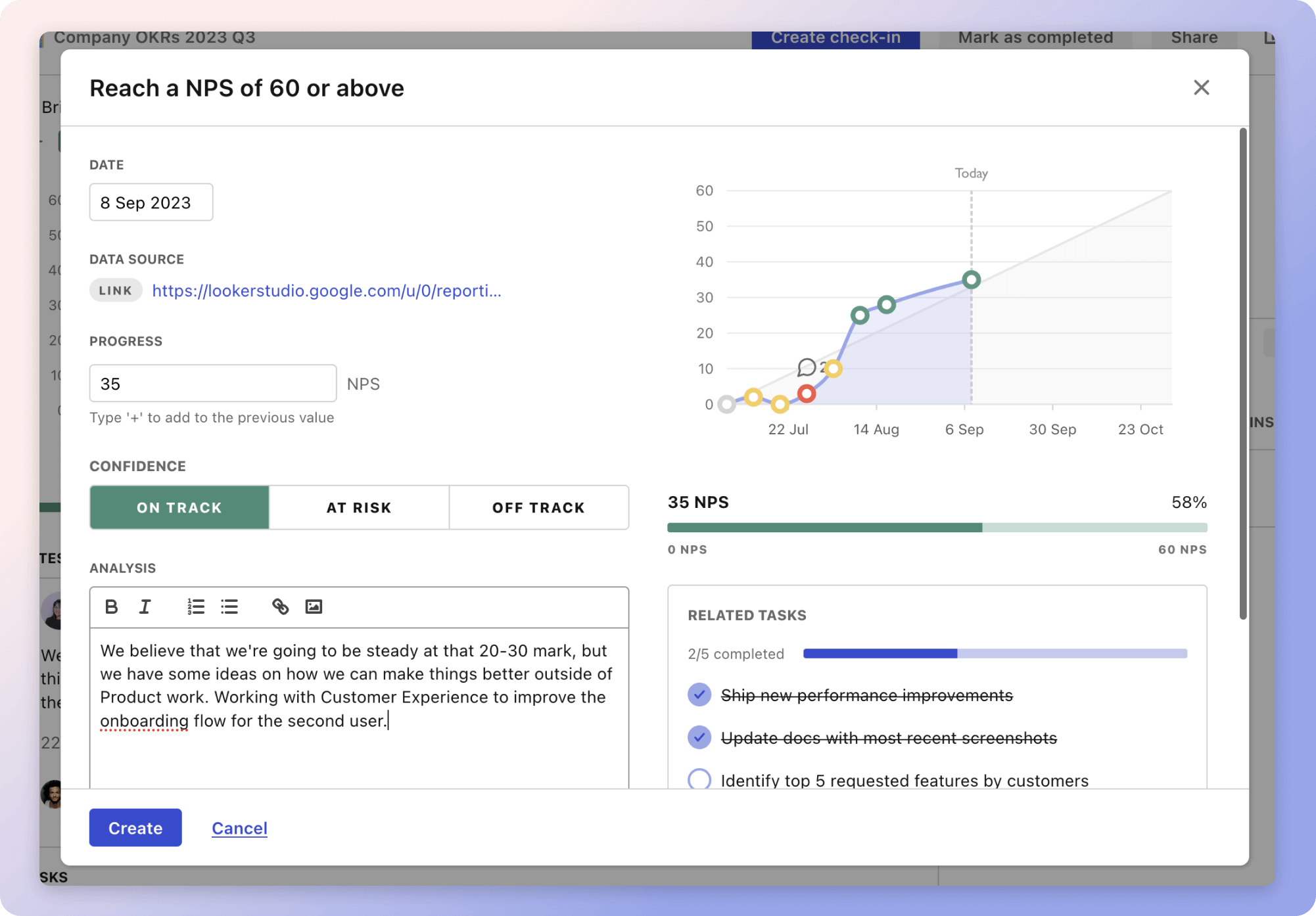
Give it a try and see how it can help you bring accountability to your strategy.