The strategy for "Designing a Battery Energy Storage Solution" focuses on developing, implementing, and supporting a comprehensive deployment project. It begins with conducting a thorough needs assessment. This involves identifying energy storage requirements across various sectors and analyzing existing infrastructure and gaps. By engaging with key stakeholders and assessing regulatory needs, the strategy ensures a foundation that is both compliant and responsive to market demands. For example, evaluating environmental impacts and exploring emerging battery technologies are crucial steps.
Next, the strategy emphasizes developing a comprehensive implementation plan. By defining scope, timelines, and milestones, the project gains clarity and direction. Selecting suitable battery technology and suppliers is key to tailoring the storage solution. Regular stakeholder communications, along with budget and contingency planning, support project stability and adaptability. Scalability plans ensure future readiness, ensuring the solution can grow with demand.
Finally, technological support and training are critical. Establishing support teams and implementing remote monitoring tools help maintain performance. User training enhances system operation efficiency, and regular updates keep the system current. Continuous feedback ensures improvement, and partnerships with tech providers offer advanced support. These strategies combined create a robust and efficient energy storage system.
The strategies
⛳️ Strategy 1: Conduct thorough needs assessment
- Identify energy storage requirements across different sectors
- Analyse existing energy infrastructure and gaps
- Assess regulatory and compliance requirements for energy storage
- Engage with key stakeholders to gather insights and priorities
- Evaluate potential environmental impacts and mitigation strategies
- Research emerging battery technologies and innovations
- Determine budgetary constraints and funding opportunities
- Establish performance metrics and success indicators
- Develop a risk management plan
- Prioritise project elements based on assessment findings
⛳️ Strategy 2: Develop a comprehensive implementation plan
- Define the project scope, timeline, and milestones
- Select appropriate battery technology and suppliers
- Establish a project management team and assign roles
- Design infrastructure layout and integration with existing systems
- Develop a detailed budget and financial plan
- Initiate procurement process for materials and resources
- Craft a communication plan for stakeholder updates
- Schedule regular project reviews and progress assessments
- Plan for scalability and future expansions
- Create a contingency plan for potential challenges
⛳️ Strategy 3: Provide ongoing technological support and training
- Establish a technical support team for ongoing maintenance
- Develop user training programmes for efficient system operation
- Implement remote monitoring and diagnostics tools
- Create a knowledge base and documentation for user reference
- Organise periodic system performance evaluations
- Facilitate feedback loops with users for continuous improvement
- Ensure compliance with safety standards and protocols
- Update systems regularly with the latest software and patches
- Foster partnerships with tech providers for advanced support
- Evaluate technological advancements for potential upgrades
Bringing accountability to your strategy
It's one thing to have a plan, it's another to stick to it. We hope that the examples above will help you get started with your own strategy, but we also know that it's easy to get lost in the day-to-day effort.
That's why we built Tability: to help you track your progress, keep your team aligned, and make sure you're always moving in the right direction.
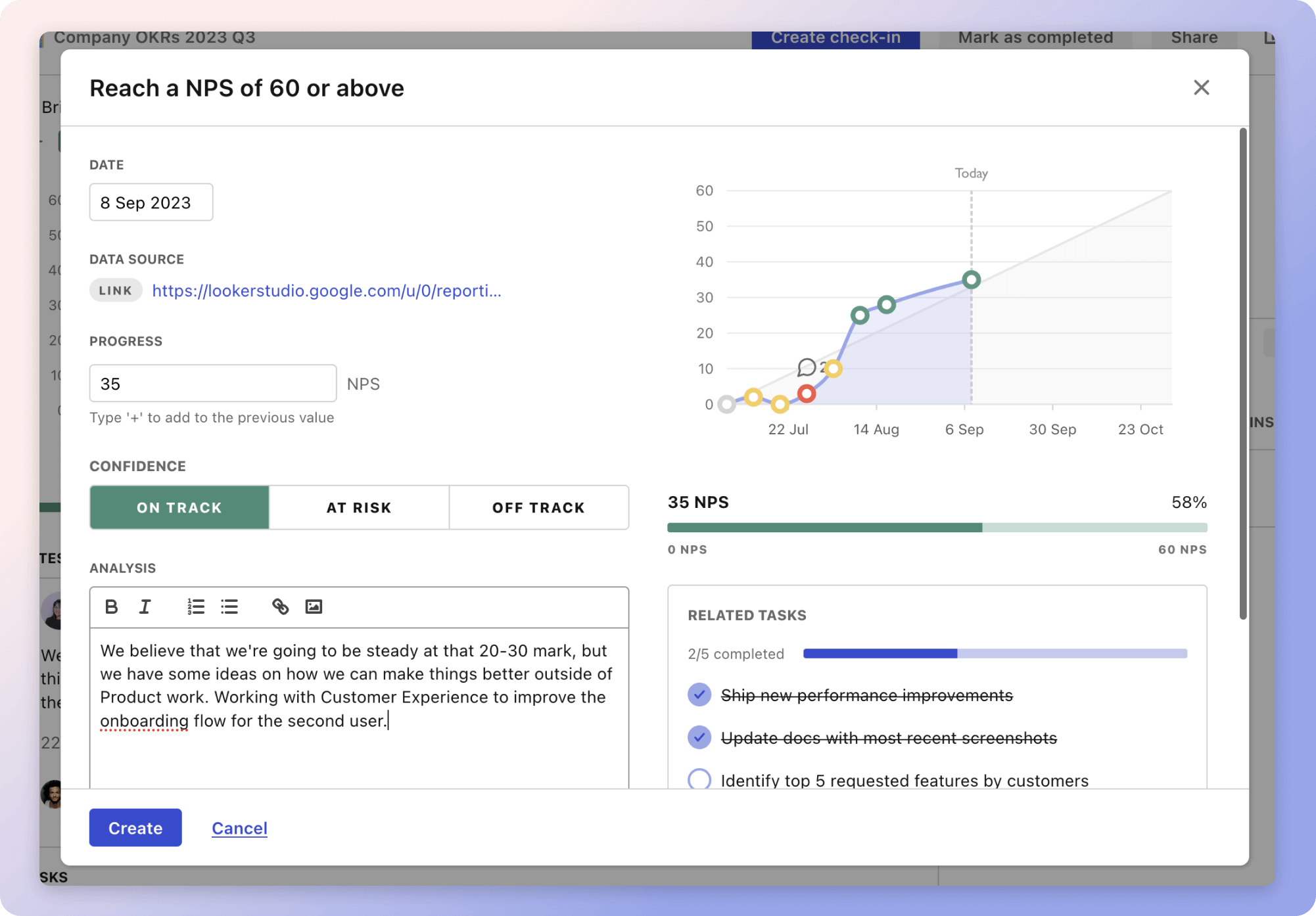
Give it a try and see how it can help you bring accountability to your strategy.