The strategy focuses on securing grant funding to enhance amateur radio services in the Caribbean, crucial for disaster preparedness and telecommunications. Initially, the strategy involves identifying potential grant providers. This includes researching international organizations, Caribbean NGOs, and government bodies offering grants. For example, tapping into technology-focused grant databases and attending relevant webinars can furnish insightful leads. Consulting with local radio clubs and liaising with universities also emerge as actionable insights to boost funding efforts.
Crafting compelling grant applications forms the next strategic step. It mandates a clear articulation of project objectives, impacts, and a detailed budget plan. Garnering endorsements from local stakeholders amplifies credibility. For example, showcasing the benefits of amateur radio during emergencies backed by data makes a profound impact. Applications need to be tailored to each grant's criteria, supplemented with ongoing evaluation mechanisms.
Finally, building partnerships magnifies grant opportunities. Collaborating with clubs, educational institutions, and networking at trade shows are pivotal steps. By facilitating training and creating collaborative platforms, the strategy aims to solidify partnerships and enhance project visibility. For example, partnerships with technology firms can open up co-funding avenues, while participation in public-private dialogues illustrates project benefits to communities.
The strategies
⛳️ Strategy 1: Identify potential grant providers
- Research international organisations providing funding for telecommunications and disaster preparedness
- Create a list of Caribbean-based NGOs and governmental bodies that offer grants
- Look for technology-focused grant databases and subscription services
- Identify grant cycles and application deadlines for relevant organisations
- Attend webinars and networking events hosted by potential grant providers
- Consult with local amateur radio clubs and organisations for leads on funding resources
- Reach out to universities with faculties interested in radio technology for partnership potential
- Research corporate social responsibility initiatives of technology companies
- Identify non-profit foundations that support community development projects
- Investigate international development agencies that focus on infrastructure
⛳️ Strategy 2: Develop compelling grant applications
- Ensure you have a clear project overview highlighting objectives and impacts
- Outline a detailed budget and timeline for capacity-building initiatives
- Gather letters of support from local amateur radio stakeholders and partners
- Include data or case studies on the effectiveness of amateur radio in emergency situations
- Explain how the funding will be used to build and expand radio networks
- Develop a communication plan on how to promote the positive impact of the project
- Showcase prior successful projects or collaborations, if available
- Respond to each grant's specific criteria and tailor applications accordingly
- Establish a system to collect ongoing feedback and evaluative metrics
- Proofread applications carefully and have colleagues review before submission
⛳️ Strategy 3: Build partnerships for increased grant opportunities
- Identify potential partners in amateur radio clubs across the Caribbean
- Establish collaborations with educational institutions for joint grant applications
- Join regional and international networks focused on telecommunications and disaster response
- Attend conferences and trade shows to network with like-minded entities
- Facilitate training sessions or workshops to enhance skills and attract partners
- Create a collaborative online platform for knowledge exchange among partners
- Document and promote past successes through social media and newsletters
- Seek partnerships with technology firms for co-funding possibilities
- Engage in public-private dialogues to showcase project benefits to communities
- Leverage partnerships to apply for larger, consortium-based grants
Bringing accountability to your strategy
It's one thing to have a plan, it's another to stick to it. We hope that the examples above will help you get started with your own strategy, but we also know that it's easy to get lost in the day-to-day effort.
That's why we built Tability: to help you track your progress, keep your team aligned, and make sure you're always moving in the right direction.
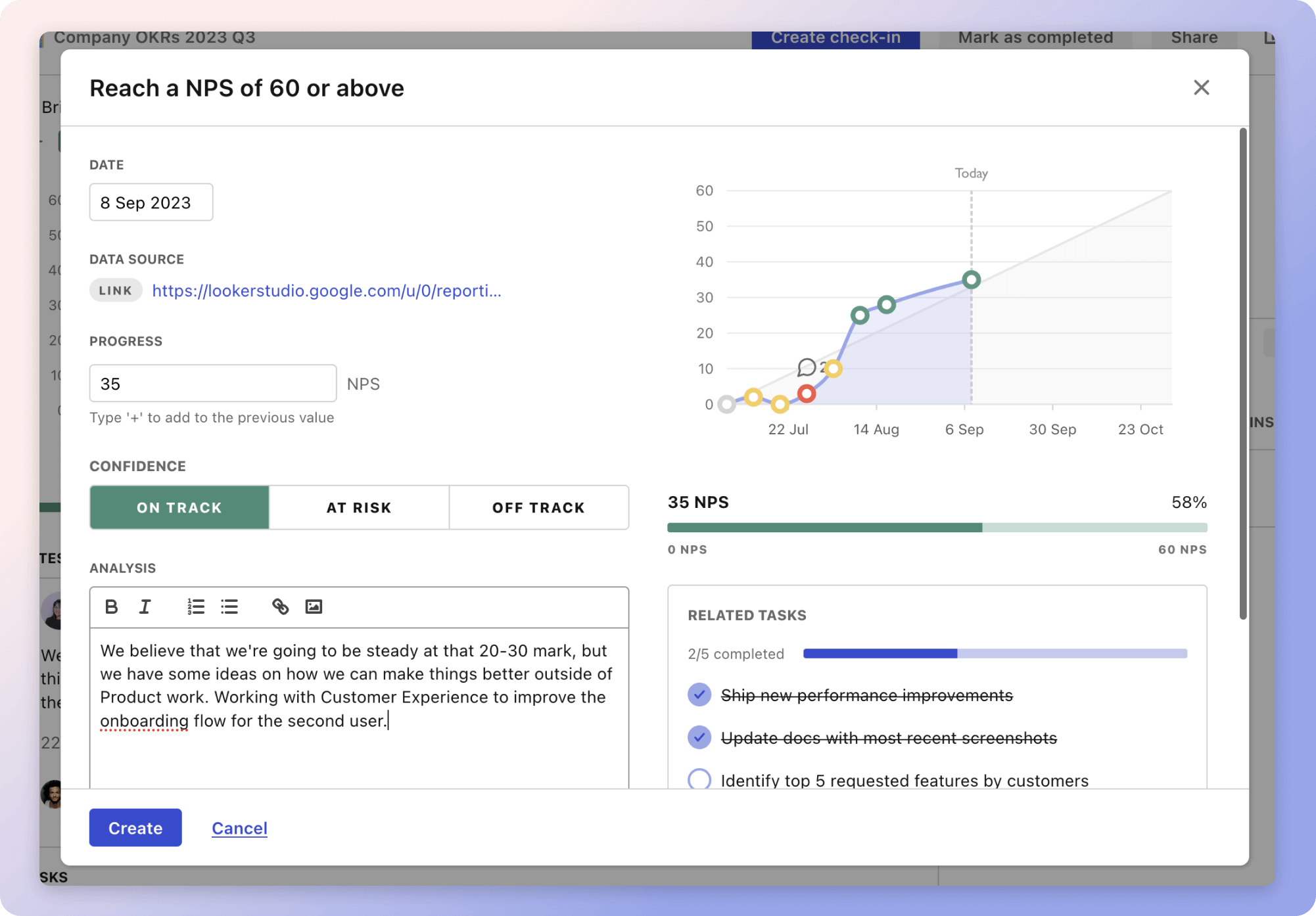
Give it a try and see how it can help you bring accountability to your strategy.