The strategy focuses on buying Nifty 50 stocks by leveraging two key technical indicators: RSI (Relative Strength Index) and EMA (Exponential Moving Average). When the RSI is below 30, indicating that a stock might be oversold, and the stock price is above the 200-day EMA, signaling a potential upward trend, it's the right time to buy. This is followed by setting a 1% stop loss to limit potential losses and a 2% target exit to secure profits.
To implement this, one should monitor the Nifty 50 index, check RSI levels, and confirm prices above the 200 EMA for shortlisted stocks. Using technical tools and assessing market sentiment and macro-economic factors are essential steps. You should also set up alerts and prepare an action plan and a checklist to verify stock criteria before buying. Allocating a budget and backtesting the strategy through a virtual portfolio can fine-tune this approach.
Risk management is critical, involving defining risk tolerance, regular review of stop-loss and target prices, and diversification. Setting automatic stop-loss orders and exit strategies for varying market conditions can minimize potential losses. Regular performance tracking and staying updated on investment risk strategies ensure effective execution.
The strategies
⛳️ Strategy 1: Analyse the market conditions
- Monitor the Nifty 50 index regularly to understand current market trends
- Compile a list of Nifty 50 stocks to focus on for potential buy signals
- Check the RSI levels for all shortlisted stocks to identify those below 30
- Confirm stock prices are trading above the 200 EMA
- Use technical analysis tools to further validate stock movements
- Review recent news and reports influencing Nifty 50 stocks
- Assess the current market sentiment as bearish or bullish
- Consider macro-economic factors affecting the stock market
- Research historical data of stocks meeting the criteria for performance patterns
- Identify stocks that align with both technical and fundamental analysis
⛳️ Strategy 2: Create and follow an action plan
- Set up alerts for RSI below 30 and price above 200 EMA across selected stocks
- Develop a step-by-step checklist to verify each stock meets criteria before buying
- Allocate a specific budget portion for executing these trades
- Establish a virtual or small portfolio to backtest your strategy
- Prepare orders to be executed automatically when conditions meet
- Calculate exact entry points taking into account a 1% stop loss
- Determine precise sell prices to achieve a 2% profit target
- Review your plan and adjust actions based on feedback and results
- Document every trade made as per the strategy to track performance
- Hold regular review sessions to refine strategy for larger gains
⛳️ Strategy 3: Implement and monitor risk management
- Define your risk tolerance level for each trade
- Regularly review stop loss and target prices for accuracy
- Maximise diversification by not concentrating investment in a single stock
- Set up automatic stop-loss orders at 1% below purchase price
- Develop exit strategy variations for different market conditions
- Analyse and modify stop loss rules to prevent excessive losses
- Track each trade’s performance against expectations daily
- Prepare to exit manually if the market deviates from expected trends
- Limit the maximum number of current positions based on risk analysis
- Continuously educate yourself on the latest investment risk strategies
Bringing accountability to your strategy
It's one thing to have a plan, it's another to stick to it. We hope that the examples above will help you get started with your own strategy, but we also know that it's easy to get lost in the day-to-day effort.
That's why we built Tability: to help you track your progress, keep your team aligned, and make sure you're always moving in the right direction.
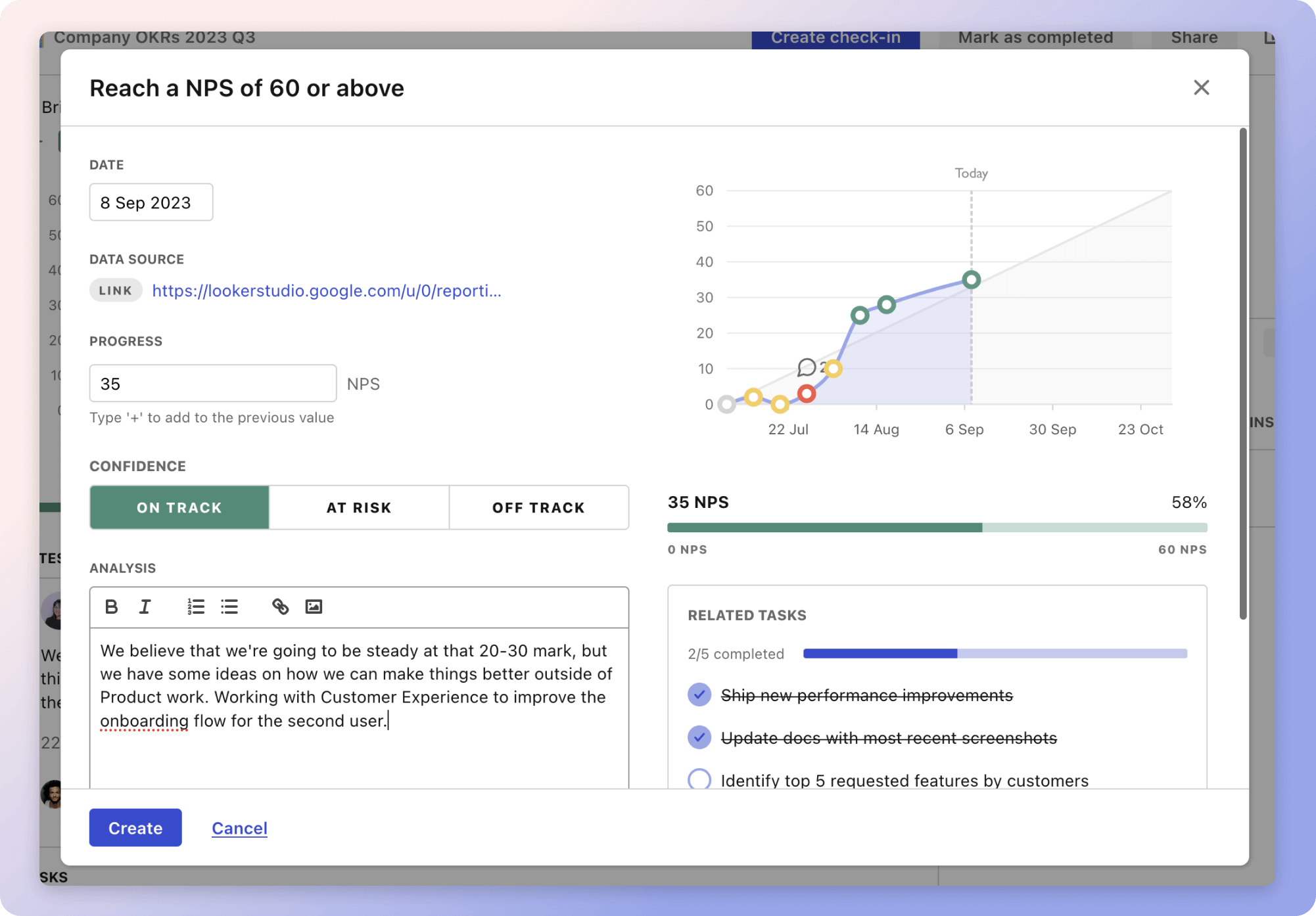
Give it a try and see how it can help you bring accountability to your strategy.