The strategy discussed here focuses on increasing sales in retail stores by capitalizing on the skills and abilities of store employees. A central component of this plan is enhancing employee product knowledge. This includes conducting weekly training sessions, creating product quizzes, and offering certification programs to ensure employees understand and can eloquently convey product information. For example, incentivizing employees who learn and share in-depth product knowledge can make them more effective in customer interactions.
Furthermore, improving customer service skills is a key area of focus. Techniques like role-playing scenarios and quarterly workshops aim to boost employees' ability to create positive customer experiences. Encouraging personal interaction with customers and fostering active listening can build loyalty and drive sales. For instance, a mentorship program allows newer employees to learn conflict resolution skills from experienced staff.
Lastly, motivating employees through incentives is crucial for fostering a driven sales team. Implementing a commission-based incentive scheme yields various rewards, from additional time off to being recognized as employee of the month. Boosting morale through team celebrations of milestones and soliciting employee input on preferred rewards systems can create a vibrant, motivated workplace culture. An example is tracking individual sales performance transparently to encourage healthy competition.
The strategies
⛳️ Strategy 1: Enhance employee product knowledge
- Conduct weekly product training sessions
- Create a product knowledge quiz for employees
- Incentivise employees to learn about new products
- Provide access to product experts for deep-dive sessions
- Develop easy-to-read product manuals
- Implement role-playing scenarios for customer interactions
- Share customer success stories related to products
- Encourage employees to use products themselves
- Offer certification programmes for product knowledge
- Host monthly team meetings to discuss product updates
⛳️ Strategy 2: Improve customer service skills
- Organise quarterly customer service workshops
- Introduce a mentorship programme with seasoned staff
- Monitor and provide feedback on employee-customer interactions
- Provide training on conflict resolution techniques
- Establish a mystery shopper programme for feedback
- Create a rewards system for excellent customer service
- Engage employees in active listening exercises
- Incorporate customer service training in onboarding
- Encourage employees to personalise customer interactions
- Set monthly customer service goals for employees
⛳️ Strategy 3: Motivate employees through incentives
- Implement a commission-based sales incentive
- Recognise top-performing employees in sales meetings
- Develop a point system for incremental sales rewards
- Offer non-monetary rewards, such as additional time off
- Create an employee of the month programme
- Celebrate team milestones with group rewards
- Solicit employee input on preferred incentives
- Track individual sales performance transparently
- Provide surprise perks for unexpected achievements
- Encourage healthy competition among teams
Bringing accountability to your strategy
It's one thing to have a plan, it's another to stick to it. We hope that the examples above will help you get started with your own strategy, but we also know that it's easy to get lost in the day-to-day effort.
That's why we built Tability: to help you track your progress, keep your team aligned, and make sure you're always moving in the right direction.
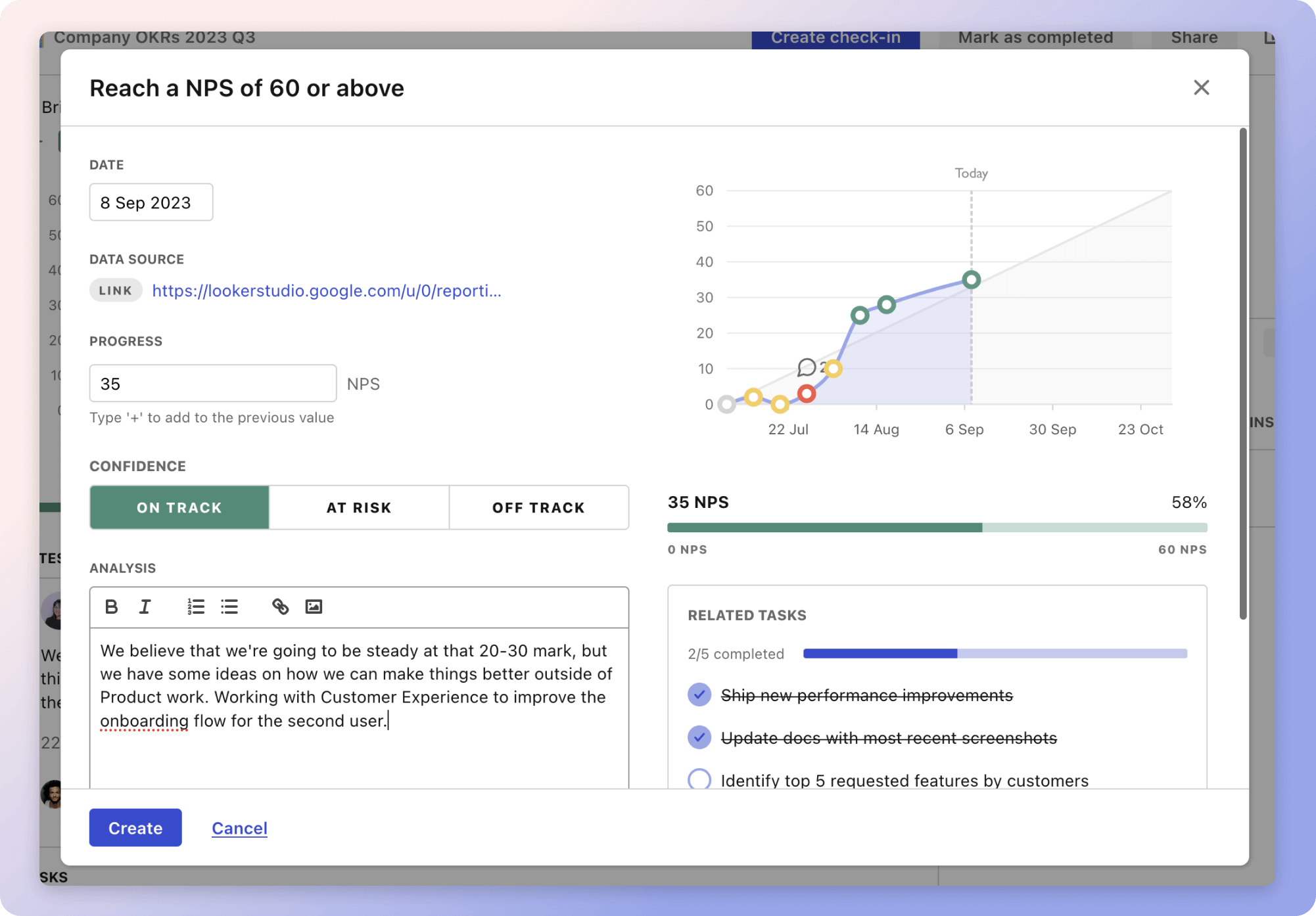
Give it a try and see how it can help you bring accountability to your strategy.