The strategy to identify an Ashok Leyland buying zone focuses on three primary approaches. First, analyzing historical price trends involves collecting data from the past five years to identify patterns, such as head and shoulders formations, and calculate average prices. For example, if Ashok Leyland shares frequently dip after quarterly earnings, that period may signal a buying opportunity. Moreover, comparing trend movements like the 50-day moving average to market patterns can reveal potential buying signals.
Secondly, monitoring news is essential for spotting market trends. By setting alerts for financial and industry news, investors can quickly act on factors affecting Ashok Leyland, such as new product launches or changes in government policies. For instance, a positive earnings report might suggest a rise in share value, presenting a lucrative buying opportunity.
Lastly, engaging in peer discussions helps challenge assumptions and refine strategies. Forums, webinars, and expert consultations offer diverse perspectives and professional advice. Talking to fellow investors can provide tips on timing an investment, especially when consensus among experts marks a share price dip as a buying zone offering maximum returns.
The strategies
⛳️ Strategy 1: Analyse historical price trends
- Collect data on Ashok Leyland's share prices over the last 5 years
- Identify patterns and trends in the historical data
- Calculate the average price and standard deviation for the last 5 years
- Detect support and resistance levels from past price movements
- Identify noticeable patterns such as head and shoulders or cup and handle
- Track moving averages like 50-day and 200-day for trends
- Highlight periods of significant price dips and recoveries
- Compare Ashok Leyland trends with overall market trends
- Use technical analysis tools to identify potential buying zones
- Summarise findings to identify optimal buying points
⛳️ Strategy 2: Monitor market and company news
- Set up alerts for Ashok Leyland in financial news platforms
- Follow industry news for updates affecting the commercial vehicle sector
- Analyse quarterly earnings reports for insights into company performance
- Track announcements related to new products or expansions
- Monitor geopolitical news impacting the automotive industry
- Watch for announcements related to changes in management
- Be aware of changes in government policies affecting the sector
- Follow market analyst reports and recommendations
- Identify news that had led to price fluctuations in the past
- Assess the market sentiment based on recent news for ideal buying zones
⛳️ Strategy 3: Engage in peer discussions and expert consultations
- Join financial forums and communities discussing Ashok Leyland
- Attend investment webinars focused on the automotive sector
- Engage with analysts and experts through LinkedIn or professional networks
- Participate in industry conferences and seminars for insights
- Request peer recommendations on stock investment platforms
- Listen to podcasts featuring discussions on Ashok Leyland or similar stocks
- Consult with your financial advisor for a professional opinion
- Exchange insights with fellow investors or enthusiasts
- Analyse different viewpoints to challenge your own assumptions
- Compile and assess consensus advice to identify a buying zone
Bringing accountability to your strategy
It's one thing to have a plan, it's another to stick to it. We hope that the examples above will help you get started with your own strategy, but we also know that it's easy to get lost in the day-to-day effort.
That's why we built Tability: to help you track your progress, keep your team aligned, and make sure you're always moving in the right direction.
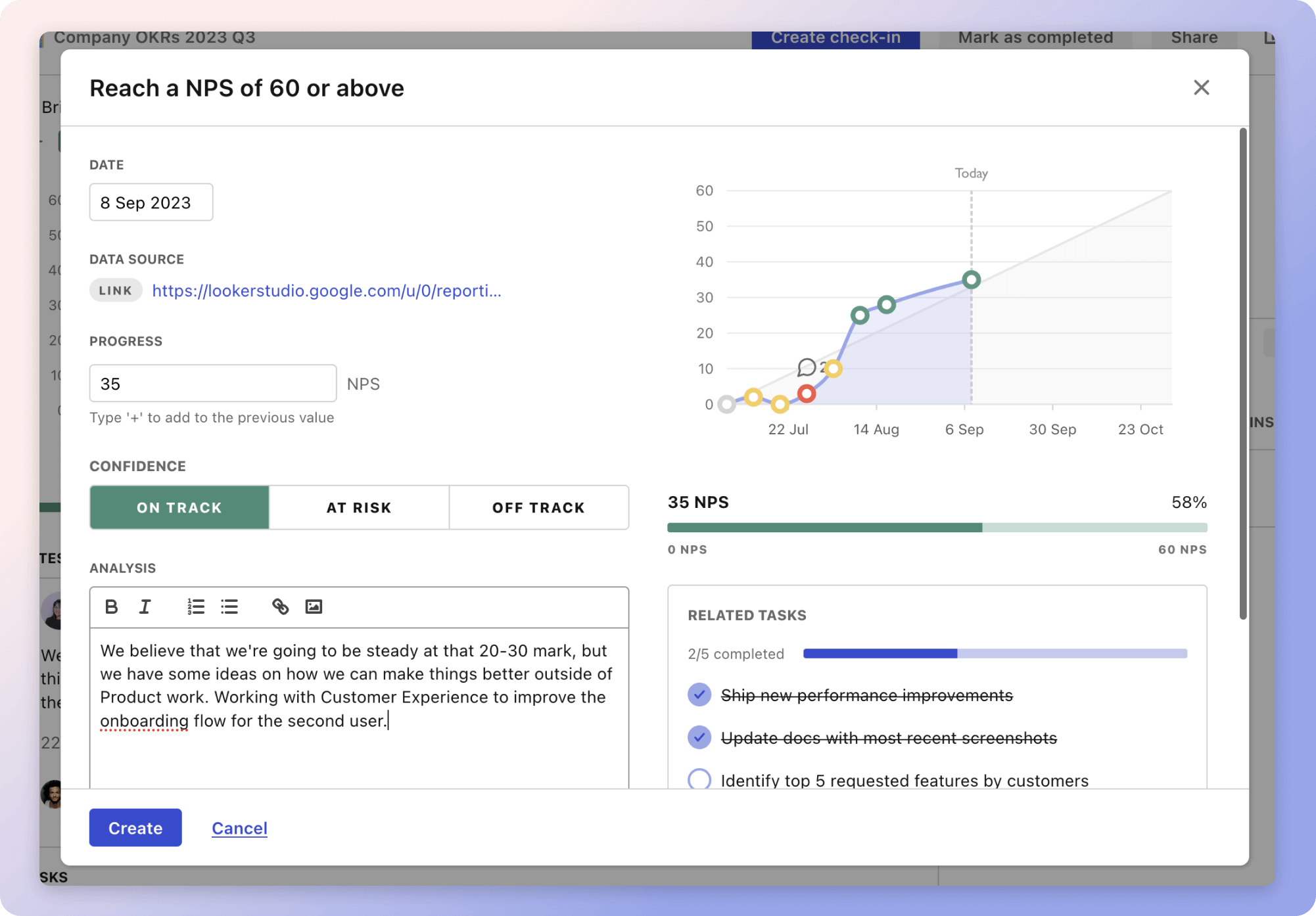
Give it a try and see how it can help you bring accountability to your strategy.