The strategy outlined in your JSON aims to significantly reduce workplace accidents and injuries by 2026. The first step is enhancing employee training and awareness. This involves implementing regular health and safety training sessions and creating a comprehensive safety manual. To ensure knowledge retention, the strategy includes mandatory online courses and monthly briefings. Engaging workshops and virtual reality simulations help employees tackle real-world scenarios, while rewarding safety adherence fosters a positive behavior.
Another key strategy is to implement risk assessment and mitigation plans. This includes conducting regular workplace inspections to identify potential hazards and establishing detailed risk assessment procedures. Safety audits ensure compliance and highlight areas needing improvements. Employees are encouraged to report near-misses, which leads to proactive solutions. External safety consultants are engaged for expert evaluations, and incident trends are analyzed to offer targeted solutions.
Finally, fostering a culture of safety is pivotal to the strategy. By establishing a health and safety committee, setting department-specific safety goals, and promoting transparency, the organization encourages a safe working environment. Incentives for reporting safety issues and celebrating Safety Week foster enthusiasm and participation. Opportunities for peer mentoring and open discussion further reinforce a collaborative safety culture.
The strategies
⛳️ Strategy 1: Enhance employee training and awareness
- Implement regular health and safety training sessions for all employees
- Develop a comprehensive safety manual and distribute it to all staff
- Introduce mandatory online safety courses with quizzes to reinforce learning
- Organise monthly safety briefings to discuss ongoing risks and prevention
- Engage employees in safety workshops led by industry experts
- Launch a safety awareness campaign with posters, newsletters, and emails
- Create a safety feedback system where employees can suggest improvements
- Reward employees who consistently follow and promote safety best practices
- Integrate safety training into the onboarding process for new hires
- Use virtual reality simulations to train employees on emergency responses
⛳️ Strategy 2: Implement risk assessment and mitigation plans
- Conduct monthly workplace inspections to identify potential hazards
- Establish a detailed risk assessment procedure to evaluate job tasks
- Develop specific action plans for high-risk areas and activities
- Introduce safety audits to measure compliance with safety protocols
- Regularly review and update risk assessments as conditions change
- Encourage employees to report near-misses to address them proactively
- Deploy hazard control measures based on risk assessment findings
- Chart incident trends and address common causes with targeted solutions
- Hold annual safety drills to test and refine emergency procedures
- Coordinate with external safety consultants for regular assessments
⛳️ Strategy 3: Foster a culture of safety
- Establish a health and safety committee with representatives from each department
- Set clear and achievable safety goals for each team to strive towards
- Promote transparency by sharing safety statistics and progress updates
- Incentivise reporting and resolving safety issues by recognising employee efforts
- Encourage peer-to-peer mentoring on safety practices and protocols
- Celebrate Safety Week annually with various activities and workshops
- Invite employees to participate in safety policy reviews and updates
- Acknowledge departments that exhibit excellent safety records publicly
- Develop an open-door policy for employees to discuss safety concerns
- Create interactive safety content, such as videos and infographics, to engage staff
Bringing accountability to your strategy
It's one thing to have a plan, it's another to stick to it. We hope that the examples above will help you get started with your own strategy, but we also know that it's easy to get lost in the day-to-day effort.
That's why we built Tability: to help you track your progress, keep your team aligned, and make sure you're always moving in the right direction.
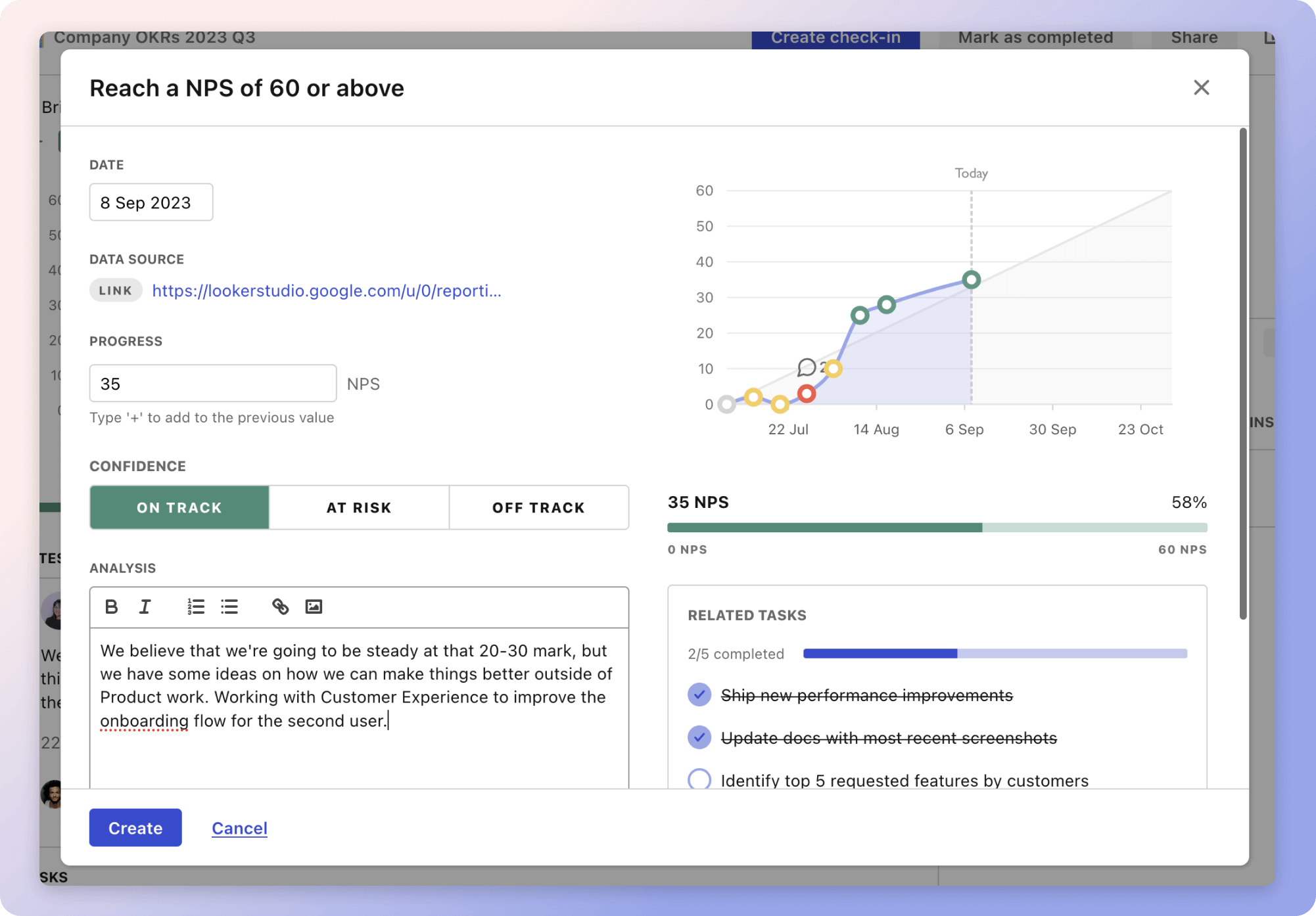
Give it a try and see how it can help you bring accountability to your strategy.