Achieving Level 3 Cybersecurity Maturity involves a multi-faceted approach to fortify an organization's cybersecurity posture. The first step is to assess business criticality by surveying all applications and infrastructure to determine their critical importance. This can be achieved through various methods, such as engaging business units and evaluating past incidents to create a comprehensive criticality database. For example, applications that handle sensitive customer data would receive higher criticality scores.
Next, mapping applications to business capabilities helps ensure that each application supports and enhances the company's strategic objectives. By using visual tools, businesses can easily identify interdependencies and verify accurate alignment with business units. This strategy ensures that any new applications are seamlessly integrated into existing structures.
Lastly, updating documentation on dependencies involves regularly reviewing and accurately documenting all dependencies of applications and infrastructure. Engaging IT teams is crucial for mapping these dependencies, ensuring configurations are up-to-date, and maintaining consistent documentation aligned with security controls.
The strategies
⛳️ Strategy 1: Assess Business Criticality
- Conduct a survey of all existing applications and infrastructure
- Engage business units to evaluate the criticality of each application and infrastructure component
- Develop a scoring system to rank the business criticality of applications
- Integrate criticality scores into the existing risk management framework
- Align assessments with the attached security controls document
- Review historical incident data to identify critical applications
- Create a database of application criticality levels
- Provide training sessions for stakeholders on the importance of assessing criticality
- Define input and output parameters for the criticality assessment process
- Compile a report outlining the criticality assessment process and findings
⛳️ Strategy 2: Map Applications to Business Capabilities
- Identify and document existing business capabilities
- Map each application to relevant business capabilities
- Use a visual mapping tool to display relationships between applications and capabilities
- Verify accuracy of mappings with respective business units
- Systematically update the mapping as new applications are introduced
- Ensure alignment with the attached security controls document
- Identify dependencies between applications in the business capability context
- Document mapping methodology and procedures
- Update application repositories to reflect mapping data
- Create a summary report on the mapping effort and findings
⛳️ Strategy 3: Update Documentation on Dependencies
- Conduct a thorough review of existing dependency documentation
- Engage IT teams to identify and document dependencies for each application and infrastructure component
- Incorporate dependency data into configuration management databases
- Ensure all documentation is aligned with the attached security controls document
- Establish procedures for regular updates to dependency documentation
- Develop templates for recording dependencies
- Create a checklist for dependency audits
- Implement version control for dependency documents
- Train relevant staff on documenting and managing dependencies
- Prepare an audit report for dependency documentation reviews
Bringing accountability to your strategy
It's one thing to have a plan, it's another to stick to it. We hope that the examples above will help you get started with your own strategy, but we also know that it's easy to get lost in the day-to-day effort.
That's why we built Tability: to help you track your progress, keep your team aligned, and make sure you're always moving in the right direction.
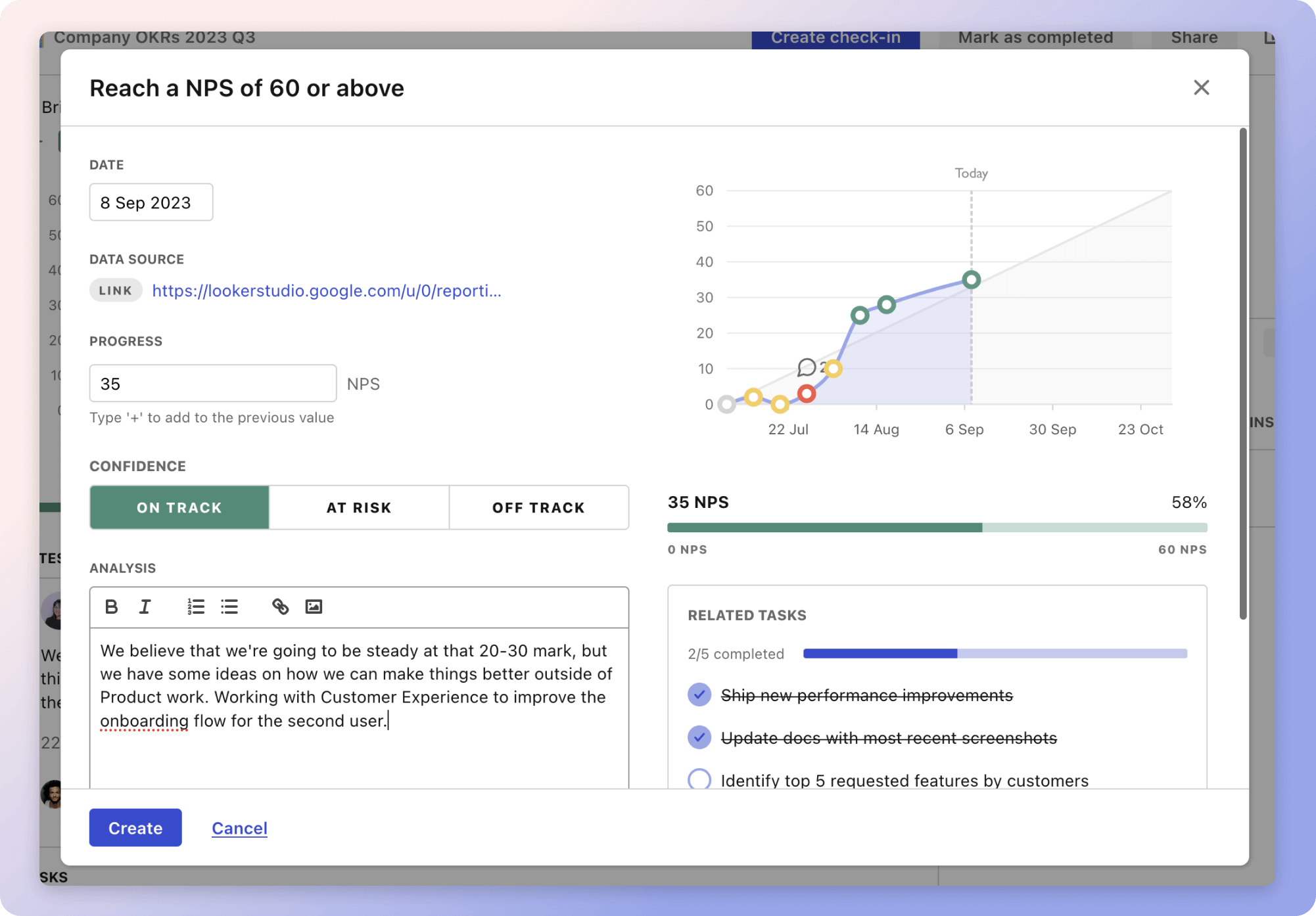
Give it a try and see how it can help you bring accountability to your strategy.