The strategy to implement a college program initiative begins with conducting a thorough market and needs analysis. This step includes researching existing programs to identify gaps, which helps in tailoring the initiative to meet the specific needs and expectations of junior college and graduate students. For example, conducting surveys and interviews with students and faculty can provide valuable insights into the demand for offline versus online programs, allowing the program to better align with the target audience's preferences.
Once the analysis is complete, the next step is to develop a comprehensive program structure and curriculum. This involves defining the program’s mission and creating a modular curriculum that can be adapted to different institutions. By incorporating experiential learning opportunities like workshops, the program can enhance student engagement. A feedback mechanism ensures continuous improvement, while a clear timeline and structure help keep the program organized.
Finally, establishing partnerships and securing resources are crucial to the program's execution. Identifying academic and industry partners for collaboration fosters credibility and support, while exploring funding options ensures financial viability. By setting up logistics and piloting the program at select institutions, real-time feedback can be gathered, helping refine and finalize the initiative for broader implementation.
The strategies
⛳️ Strategy 1: Conduct thorough market and needs analysis
- Research existing programs to understand market gaps
- Identify key needs and expectations of junior college and graduate students
- Conduct surveys and interviews with students and faculty to gather insights
- Assess the demand for offline programs versus online alternatives
- Identify colleges and universities with potential interest in the program
- Analyse competencies and areas of interest for potential collaboration
- Evaluate cultural and institutional factors unique to each target institution
- Create a detailed report outlining findings and potential opportunities
- Identify key metrics for success based on the market analysis
- Refine the program concept based on research findings
⛳️ Strategy 2: Develop a comprehensive program structure and curriculum
- Outline the program's mission, goals, and objectives
- Design a modular curriculum that can be adapted to different institutions
- Identify subject matter experts and educators to develop curriculum content
- Create a timeline and structure for program sessions and activities
- Incorporate experiential learning opportunities like workshops and projects
- Design evaluation metrics to assess student engagement and learning outcomes
- Develop a feedback mechanism for continuous program improvement
- Draft guidelines and standards for educators delivering the program
- Create a resource list for supplemental materials and reading
- Prepare marketing material describing the program's value proposition
⛳️ Strategy 3: Establish partnerships and secure resources
- Identify potential academic and industry partners for collaboration
- Reach out to prospective institutional partners with a formal proposal
- Seek endorsement from credible educational bodies and organizations
- Develop partnership agreements outlining mutual benefits and responsibilities
- Explore funding opportunities from educational grants and sponsors
- Estimate and allocate finances for program development and execution
- Hire dedicated staff for program management and coordination
- Set up logistics including venue booking, equipment, and materials
- Initiate pilot programs at selected institutions for real-time testing
- Develop a sustainability model for long-term program success
Bringing accountability to your strategy
It's one thing to have a plan, it's another to stick to it. We hope that the examples above will help you get started with your own strategy, but we also know that it's easy to get lost in the day-to-day effort.
That's why we built Tability: to help you track your progress, keep your team aligned, and make sure you're always moving in the right direction.
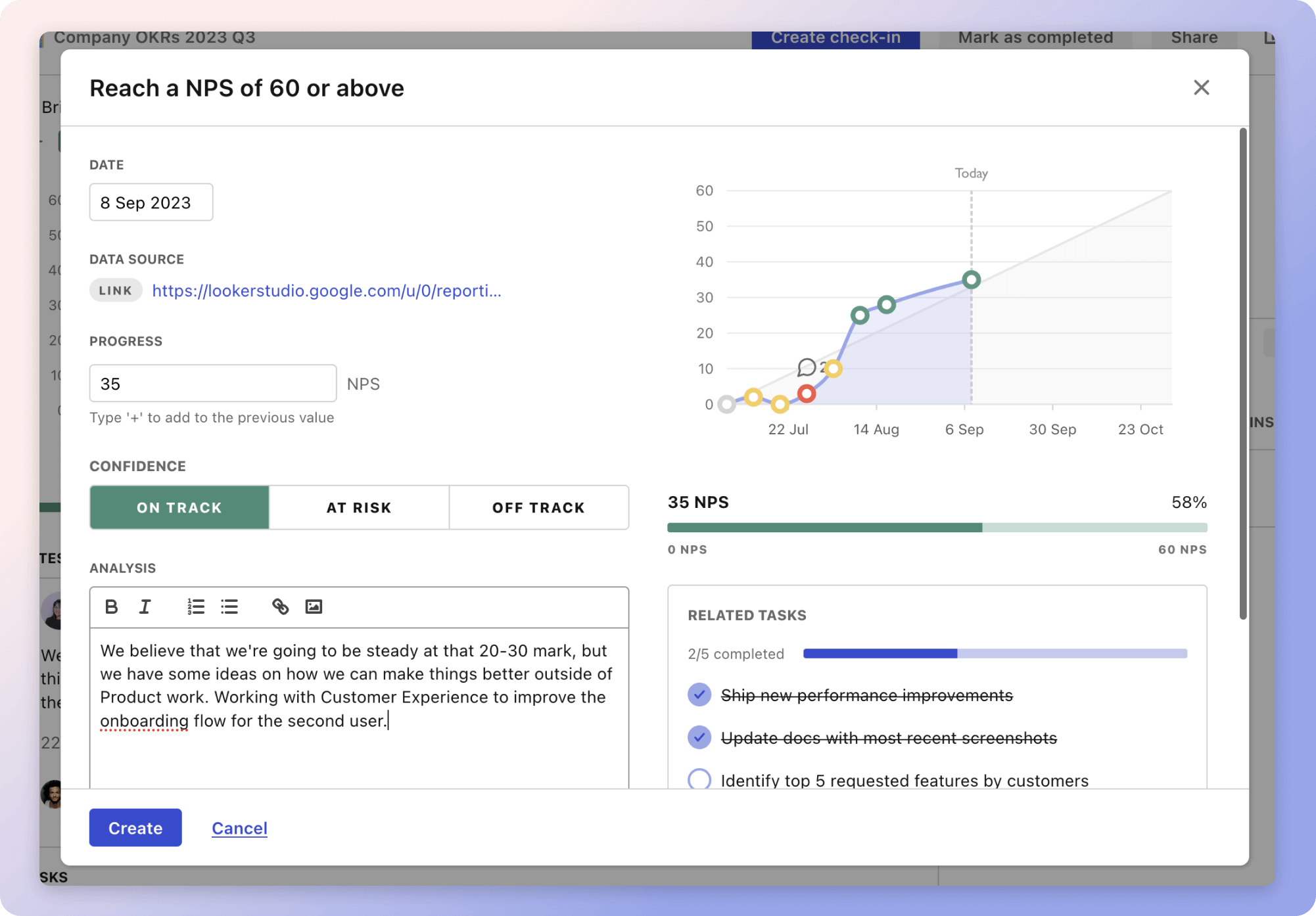
Give it a try and see how it can help you bring accountability to your strategy.