The strategy focuses on enhancing inventory and supply chain management using advanced AI technology. The first part of the strategy involves deploying multimodal Large Language Models (LLMs) to integrate data from various sources, such as 'Bill of Lading' PDFs, social media trends, and SQL logs. For example, these LLMs can predict demand fluctuations by analyzing how electronic goods are discussed in social media, allowing you to anticipate stock-outs.
Another component of the strategy is the development of an automated reorder trigger system and a predictive risk dashboard. This involves setting precise thresholds for reordering stock, which could automatically trigger orders weeks before a potential stock-out is identified. Such proactive measures can reduce costly emergency order shipments.
The final element emphasizes enhancing collaboration and communication between teams. By forming cross-functional teams that include IT, logistics, and sales, the strategy ensures that the system is effectively implemented and maintained. Regular meetings and feedback loops foster a culture of continuous improvement, facilitating better system adoption and effectiveness among employees and stakeholders.
The strategies
⛳️ Strategy 1: Deploy multimodal LLMs for data integration
- Collect and organize all relevant 'Bill of Lading' PDFs from the past year
- Design a data pipeline that extracts, transforms, and loads (ETL) data from unstructured PDFs into a structured format
- Implement a multimodal LLM to analyse social media trends relevant to electronic goods
- Integrate legacy SQL warehouse logs into the data pipeline using a common data interface
- Set up a system to automatically update the dataset with new incoming 'Bill of Lading' documents
- Train the multimodal LLMs using historical data from PDFs, social media, and SQL logs
- Define key variables and indicators for predicting demand and potential stock-outs
- Validate the output of the multimodal LLMs against actual historical outcomes
- Regularly update and fine-tune the LLMs with the latest data to maintain accuracy
- Ensure data integrity and compliance with regulatory requirements
⛳️ Strategy 2: Develop automated reorder trigger and risk dashboard
- Define thresholds and parameters for automated reorder triggers with stakeholders
- Design the architecture for a predictive risk dashboard that visualises potential stock-outs
- Implement machine learning algorithms to process data and predict inventory needs
- Set up automated alerts for reorder triggers when thresholds are reached
- Integrate the reorder system with current inventory management software
- Perform user acceptance testing (UAT) of the dashboard with key users
- Conduct a pilot run to evaluate the effectiveness of the reorder triggers and dashboard
- Gather feedback from users to refine interface and functionality
- Measure the system's impact on reducing emergency air-freight costs
- Continuously monitor system performance and adjust parameters as needed
⛳️ Strategy 3: Strengthen collaboration and communication between teams
- Form a cross-functional team including IT, logistics, and sales to oversee implementation
- Set up regular alignment meetings to ensure progress and address challenges
- Develop a communication plan to keep all stakeholders informed on project developments
- Create detailed documentation and guides for system usage and troubleshooting
- Implement a training programme for employees on using the new system
- Foster a feedback loop to continuously improve system functionality based on user input
- Coordinate with suppliers to ensure seamless integration of data exchange
- Align expectations and gain buy-in from leadership by demonstrating projected benefits
- Encourage a culture of data-driven decision-making within the organisation
- Use project management tools to track tasks, deadlines, and responsibilities
Bringing accountability to your strategy
It's one thing to have a plan, it's another to stick to it. We hope that the examples above will help you get started with your own strategy, but we also know that it's easy to get lost in the day-to-day effort.
That's why we built Tability: to help you track your progress, keep your team aligned, and make sure you're always moving in the right direction.
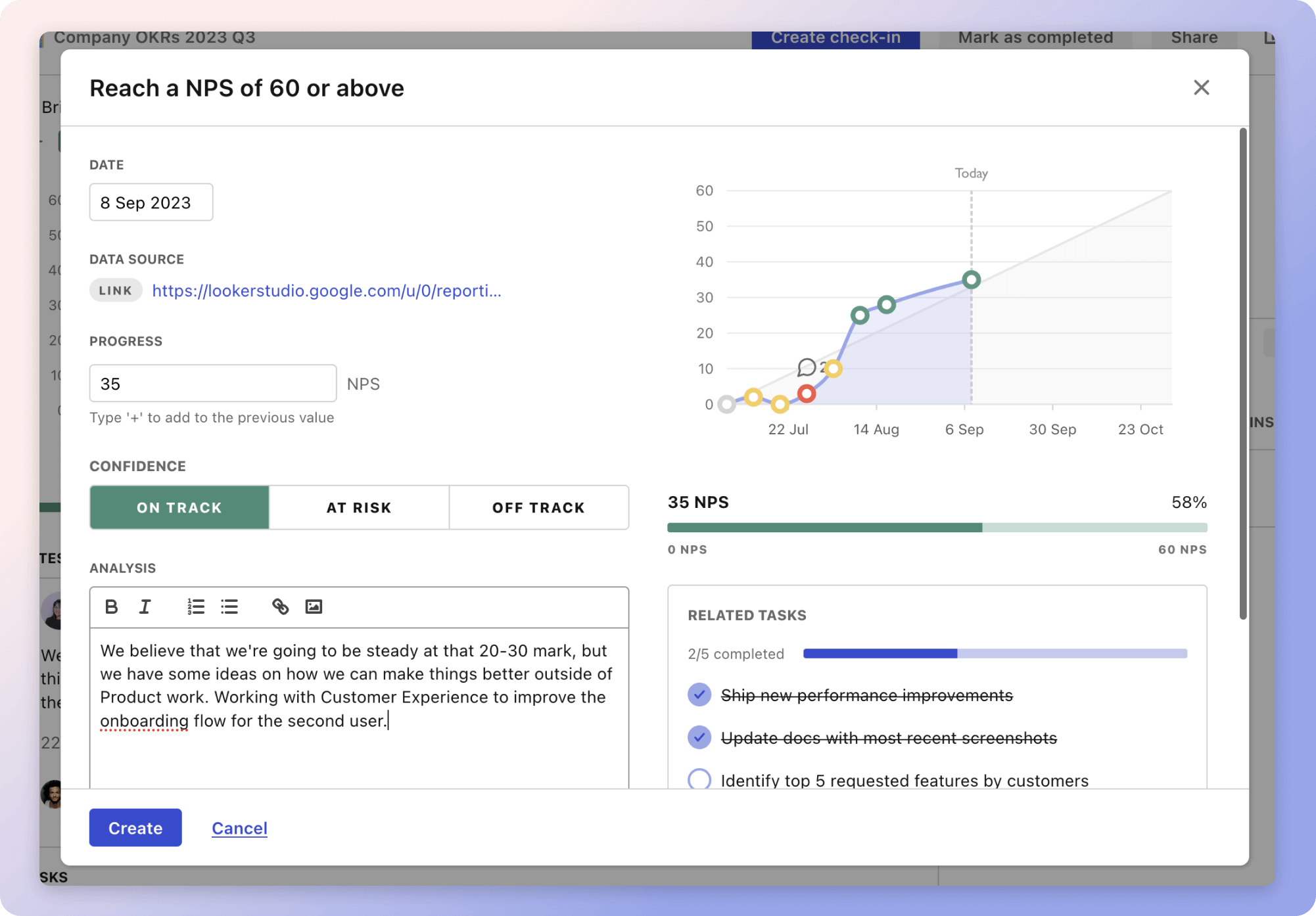
Give it a try and see how it can help you bring accountability to your strategy.