Establishing an efficient micro lending company finance unit involves building a skilled finance team. This includes identifying key roles like finance managers and compliance officers and recruiting qualified individuals with experience in microfinance. A robust training program equips staff with financial analysis skills, while ongoing education ensures compliance with the latest financial regulations. Encouraging team collaboration and implementing job rotation broadens understanding and supports professional development.
Additionally, implementing robust financial systems is crucial. This means selecting appropriate financial software, developing standardized loan issuance processes, and conducting regular audits. For example, establishing a budgeting framework specific to micro lending aids in accurate forecasting and financial tracking.
Ensuring regulatory compliance and risk management is a fundamental strategy. Staying informed about applicable financial regulations and conducting regular training for staff helps maintain compliance. Hiring a legal advisor for financial regulations and establishing a risk management framework are key steps. Open communication with regulators and timely submission of required filings further support risk management. For instance, conducting internal audits ensures adherence to compliance standards.
The strategies
⛳️ Strategy 1: Build a skilled finance team
- Identify key roles required within the finance unit, such as finance manager, accountants, and compliance officers
- Recruit individuals with relevant experience and qualifications in microfinance and lending
- Develop a training program to equip employees with necessary financial analysis and auditing skills
- Provide ongoing training on the latest financial regulations and compliance practices
- Create a performance evaluation system to assess team productivity and effectiveness
- Establish a mentoring system to support professional development of junior staff
- Encourage team collaboration through regular finance team meetings
- Implement job rotation to provide team members with a broad understanding of various functions
- Set clear team objectives aligned with company goals
- Recognise and reward team members for exceptional performance and contributions
⛳️ Strategy 2: Implement robust financial systems and processes
- Select and implement financial software that caters to micro lending specific needs
- Develop a standardized process for loan issuance and repayments tracking
- Establish clear financial reporting protocols and schedules
- Create a budgeting and forecasting framework specific to micro lending
- Ensure regular financial audits are conducted by external auditors
- Establish risk management protocols to mitigate financial losses
- Implement a financial checks and balances system to prevent fraud
- Facilitate real-time financial tracking and reporting capabilities
- Set up a document management system for secure storing of financial records
- Regularly review and update financial processes to improve efficiency
⛳️ Strategy 3: Ensure regulatory compliance and risk management
- Stay informed about national and local financial regulations affecting micro lending
- Develop a comprehensive compliance policy for the finance unit
- Conduct regular compliance training for all finance staff
- Hire or consult with a legal advisor specialising in financial regulations
- Perform periodic risk assessments to identify potential compliance issues
- Implement a risk management framework to address and mitigate identified risks
- Maintain open communication channels with regulators and financial institutions
- Prepare and submit required regulatory filings and reports on time
- Establish procedures for handling customer complaints and issues promptly
- Conduct internal audits to ensure adherence to compliance standards
Bringing accountability to your strategy
It's one thing to have a plan, it's another to stick to it. We hope that the examples above will help you get started with your own strategy, but we also know that it's easy to get lost in the day-to-day effort.
That's why we built Tability: to help you track your progress, keep your team aligned, and make sure you're always moving in the right direction.
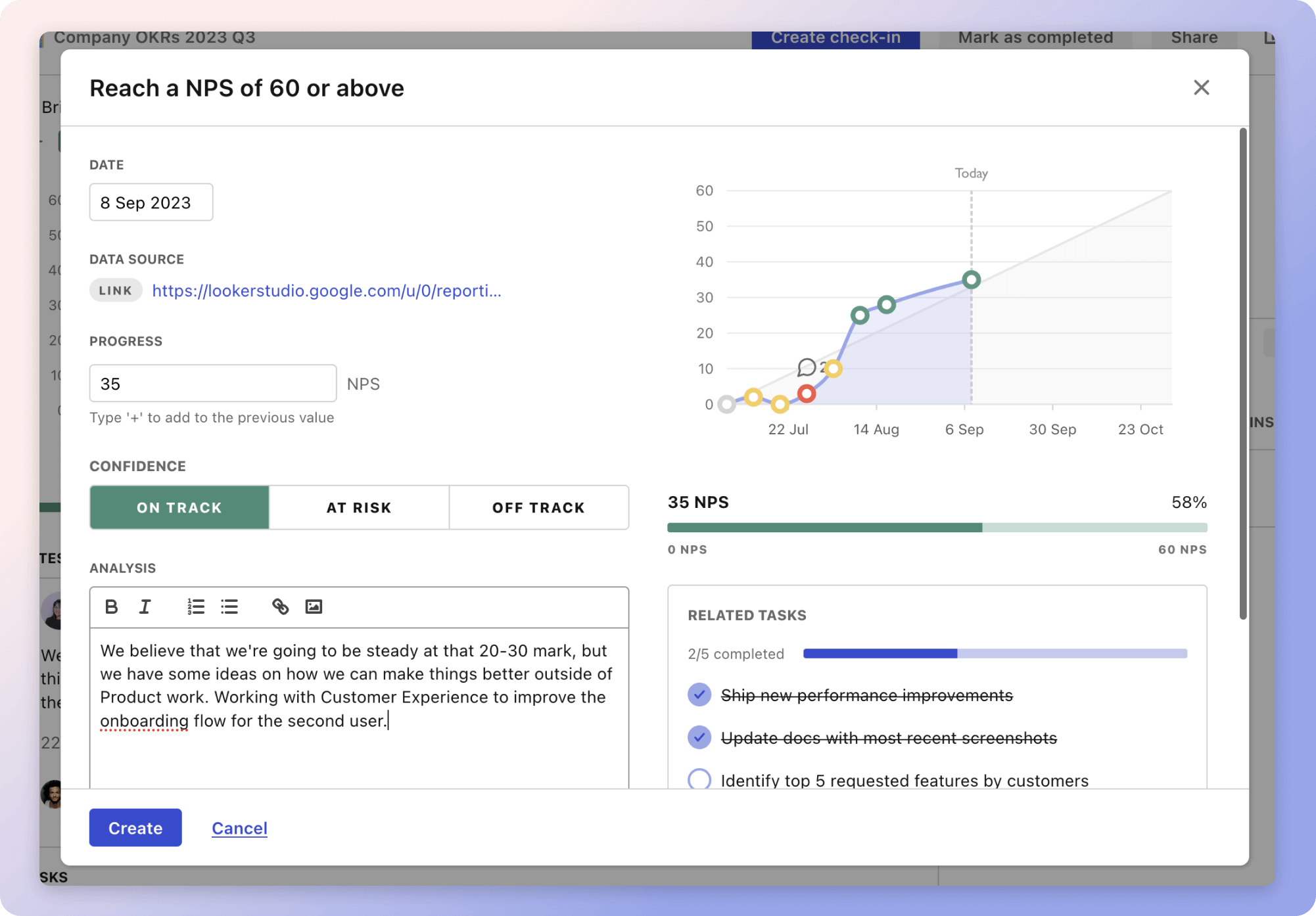
Give it a try and see how it can help you bring accountability to your strategy.