The strategy aims to boost digital performance for Ajar by increasing bookings by 25% in 45 days without surpassing the cost per booking of 210 SAR. It emphasizes optimizing channel performance by measuring key metrics like CPI and CPA, and focusing on high-intent platforms such as Apple Search Ads. For example, pausing underperforming channels and enhancing Snapchat's targeting aims to refine the advertising approach.
A separate focus is on a media plan prioritizing budget allocation to top-performing channels. For instance, allocating 40% of the budget to Apple Search and Google ensures focus on conversions, while 10% dedicated to LinkedIn targets corporate rentals. Performance is assessed weekly.
Tracking and performance measurement improvements involve defining conversion events and using attribution models to maintain accurate analytics. Implementing tools like iOS SKAdNetwork and Android models, along with UTMs, ensures precise tracking. Weekly reports and quality assurance processes aid in maintaining campaign efficiency.
The strategies
⛳️ Strategy 1: Optimise channel performance
- Calculate CPI, CPA, ROAS, and install-to-booking conversion rates for each channel
- Identify and pause underperforming channels with high CPA and low conversion
- Increase budget allocation to channels with high-intent users, like Apple Search Ads
- Improve Snapchat's conversion rate by refining target audience and creatives
- Utilise Google Search for high-intent ‘brand + non-brand’ queries
- Refine existing remarketing strategies by using an improved funnel architecture
- Develop specific creatives for each channel focusing on conversion intent
- Use A/B testing for ad creatives to increase engagement and conversion
- Utilise lookalike audiences in Meta and TikTok to capture similar high-converting users
- Engage in constant review and feedback loops with the analytics team to optimise ongoing campaigns
⛳️ Strategy 2: Implement a result-driven 45-day media plan
- Allocate 40% budget to high-performing channels (Apple Search, Google) focusing on lower funnel
- Divide 30% budget across Meta, TikTok, and programmatic for awareness and engagement
- Allot 20% budget for mid-funnel engagement through curated Snapchat and X content
- Dedicate 10% for LinkedIn targeting professional audiences for corporate rentals
- Set weekly pacing and adjust budgets based on weekly performance reviews
- Establish CPA targets across platforms, ensuring no channel exceeds 210 SAR
- Use ROAS as a secondary KPI to evaluate booking value quality
- Deploy broad targeting first 15 days, narrow post-15 days according to performance
- Incorporate lookalike audience strategies from day 20 based on initial findings
- Promote warm/hot audidence retargeting in the final 10 days to capture undecided users
⛳️ Strategy 3: Enhance tracking and performance measurement
- Define key conversion events such as install, sign_up, add_payment, booking_confirmed
- Implement iOS SKAdNetwork and Android attribution models to track performance accurately
- Use UTMs for all campaign links to ensure granular tracking capabilities
- Set up deep links to direct users to specific app screens post-install
- Create a reporting cadence with weekly performance reports to the team
- Regularly validate data discrepancies by cross-referencing with internal metrics
- Align campaign naming conventions for easy cross-channel insights
- Execute quality assurance to verify all tracking is functional before campaign launch
- Utilise data visualisation dashboards for real-time performance tracking
- Conduct daily optimisations for quick tactical adjustments and weekly strategic assessments
Bringing accountability to your strategy
It's one thing to have a plan, it's another to stick to it. We hope that the examples above will help you get started with your own strategy, but we also know that it's easy to get lost in the day-to-day effort.
That's why we built Tability: to help you track your progress, keep your team aligned, and make sure you're always moving in the right direction.
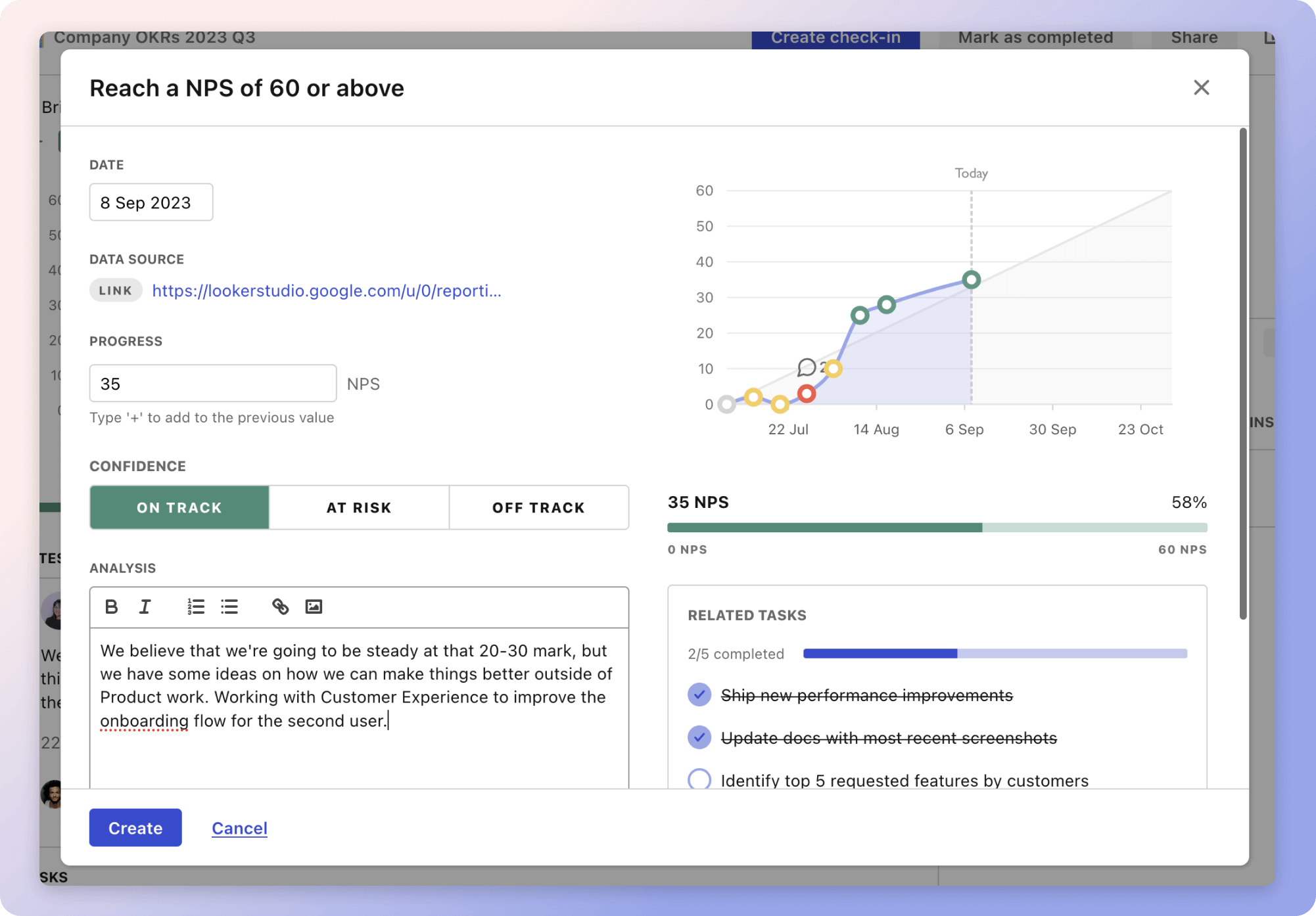
Give it a try and see how it can help you bring accountability to your strategy.