The strategy outlined in the JSON is centered on designing an AI initiative portfolio for sustainable packaging, focusing on improving product performance, enhancing manufacturing efficiency, and optimizing supply chain operations. To improve product performance, machine learning is used to analyze material properties, while predictive analytics forecasts the lifecycle of packaging materials. This could mean using AI to monitor packages designed for durability, thus increasing customer satisfaction by reducing defect rates.
In the realm of manufacturing efficiency, AI algorithms are employed for real-time monitoring and optimizing resource utilization, which helps in minimizing waste. For example, AI could predict machinery failures, reducing downtime and improving throughput in production lines.
Regarding supply chain optimization, AI assists in demand forecasting, optimizing transportation routes to reduce emissions, and real-time tracking of shipments. It establishes predictive analytics to manage supplier performance and assess risks, ensuring faster delivery times and reduced logistic costs. By integrating AI technologies, organizations can streamline processes and enhance overall operational efficiency.
The strategies
⛳️ Strategy 1: Improve product performance
- Use machine learning to analyse material properties and identify opportunities to enhance durability and sustainability
- Develop AI-driven models to simulate product performance under different conditions
- Implement predictive analytics to forecast the lifecycle of packaging materials
- Integrate AI tools to monitor and optimise packaging design for better performance
- Establish OKRs focusing on improved customer satisfaction and reduced defect rates
- Coordinate with R&D teams to align AI initiatives with product development goals
- Build partnerships with AI technology providers for advanced material testing
- Create an automated dashboard to track performance metrics and goal attainment
- Organise regular feedback loops with stakeholders to discuss AI-driven insights
- Train staff on using new AI tools and interpreting performance data
⛳️ Strategy 2: Enhance manufacturing efficiency
- Deploy AI algorithms for real-time monitoring and analysis of production data
- Use predictive maintenance to anticipate and resolve machinery failures before they occur
- Automate critical production line functions using AI robotics
- Implement AI systems to optimise resource utilisation and minimise waste
- Set specific OKRs for reduced downtime and increased production throughput
- Identify key dependencies on IoT and data infrastructure improvements
- Establish AI-enabled quality control processes to detect anomalies
- Create an automated system for tracking productivity metrics and efficiency gains
- Schedule monthly reviews to assess efficiency-related OKRs and revise strategies
- Conduct workshops to train manufacturing teams in AI-driven process innovations
⛳️ Strategy 3: Optimise supply chain operations
- Utilise AI to enhance demand forecasting accuracy and inventory management
- Develop AI models to optimise transportation routes and reduce emissions
- Implement AI tools for real-time tracking of shipments and inventory levels
- Establish predictive analytics for supplier performance and risk assessment
- Set OKRs focused on faster delivery times and reduced logistic costs
- Map dependencies on data integration between suppliers and internal systems
- Create automated alerts and reporting for critical supply chain metrics
- Run pilot programs assessing AI impact on supply chain lead times
- Develop partnerships with logistics AI firms to access cutting-edge solutions
- Organise cross-functional teams to monitor supply chain AI initiatives and share insights
Bringing accountability to your strategy
It's one thing to have a plan, it's another to stick to it. We hope that the examples above will help you get started with your own strategy, but we also know that it's easy to get lost in the day-to-day effort.
That's why we built Tability: to help you track your progress, keep your team aligned, and make sure you're always moving in the right direction.
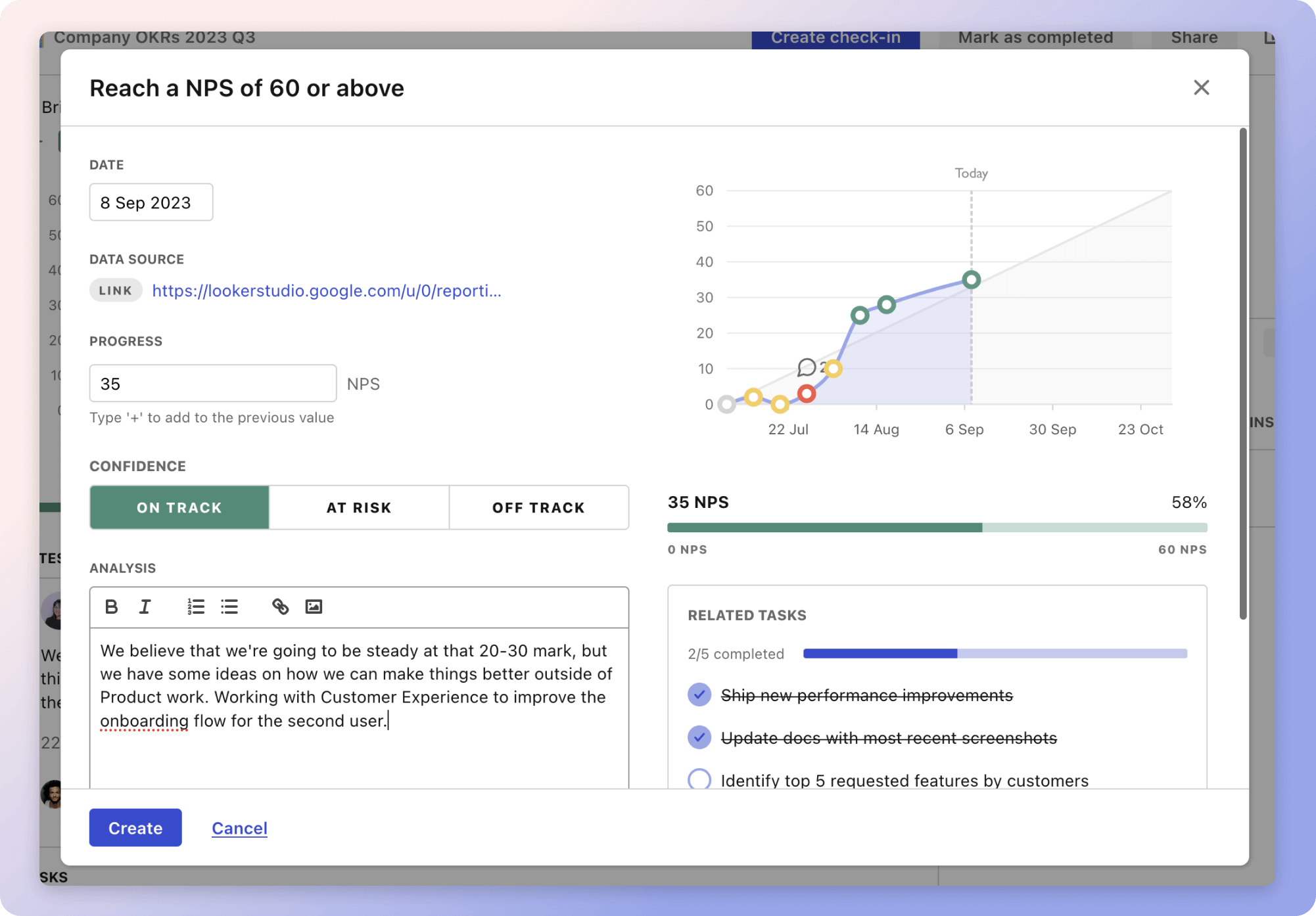
Give it a try and see how it can help you bring accountability to your strategy.