The "Developing Botswana Strategy for the Development of Statistics (BSDS II)" focuses on enhancing statistical data quality and accessibility to guide decision-making and policy development in Botswana. One core strategy is strengthening statistical capacity, which includes conducting a needs assessment to identify gaps, developing training programs for government employees, and creating partnerships for technical support. This effort aims to build a skilled workforce capable of using modern statistical tools and standardizing methods across departments for consistent data analysis.
Additionally, improving data accessibility and dissemination is crucial. This involves developing an open data policy, creating a centralized online portal for government statistics, and training communication officers in data dissemination strategies. The use of interactive data visualization tools and educational programs also plays a role in making statistics more engaging and understandable for the public.
Ensuring data quality and integrity is integral to the strategy. This includes the development of a national data quality assurance framework, regular audits to identify biases, and peer review mechanisms for critical datasets. Investing in automated validation tools and workshops on data ethics further ensures the reliability of statistical products.
The strategies
⛳️ Strategy 1: Strengthen statistical capacity
- Conduct a needs assessment to identify gaps in statistical skills across all government departments
- Develop a training programme to build statistical skills among government employees
- Create partnerships with international statistical organisations for technical support and knowledge exchange
- Recruit and retain skilled statisticians in key government departments
- Invest in modern statistical tools and software to improve data collection and analysis
- Standardise data collection methods across all government departments
- Develop a mentorship programme linking experienced statisticians with less experienced staff
- Establish a national statistical institute to coordinate statistical activities
- Facilitate regional cooperation to harmonise statistical practices
- Monitor and evaluate the impact of capacity building initiatives regularly
⛳️ Strategy 2: Improve data accessibility and dissemination
- Develop an open data policy to make government datasets publicly accessible
- Create a centralised online portal for accessing all government statistics
- Ensure datasets are available in machine-readable formats to allow easy access and analysis
- Conduct stakeholder workshops to determine user needs for statistical information
- Implement data privacy measures to protect sensitive information in public datasets
- Train government communication officers on effective data dissemination strategies
- Regularly update the public on key statistical releases through press briefings and reports
- Partner with civil society to promote the use of statistics in community development initiatives
- Use interactive data visualisation tools to make statistics more engaging and understandable
- Develop educational programmes to improve statistical literacy among the general public
⛳️ Strategy 3: Ensure data quality and integrity
- Develop a national data quality assurance framework to standardise practices
- Regularly audit statistical processes to identify and mitigate potential biases
- Establish a feedback mechanism for users to report data quality issues
- Implement peer review mechanisms for critical datasets before publication
- Invest in automated data validation tools to detect errors early
- Conduct regular workshops on data ethics and integrity for statisticians
- Enforce compliance with international statistical standards and guidelines
- Develop a public registry of data sources and their quality level evaluations
- Collaborate with academic institutions for independent data validation studies
- Report on data quality improvements and challenges annually to all stakeholders
Bringing accountability to your strategy
It's one thing to have a plan, it's another to stick to it. We hope that the examples above will help you get started with your own strategy, but we also know that it's easy to get lost in the day-to-day effort.
That's why we built Tability: to help you track your progress, keep your team aligned, and make sure you're always moving in the right direction.
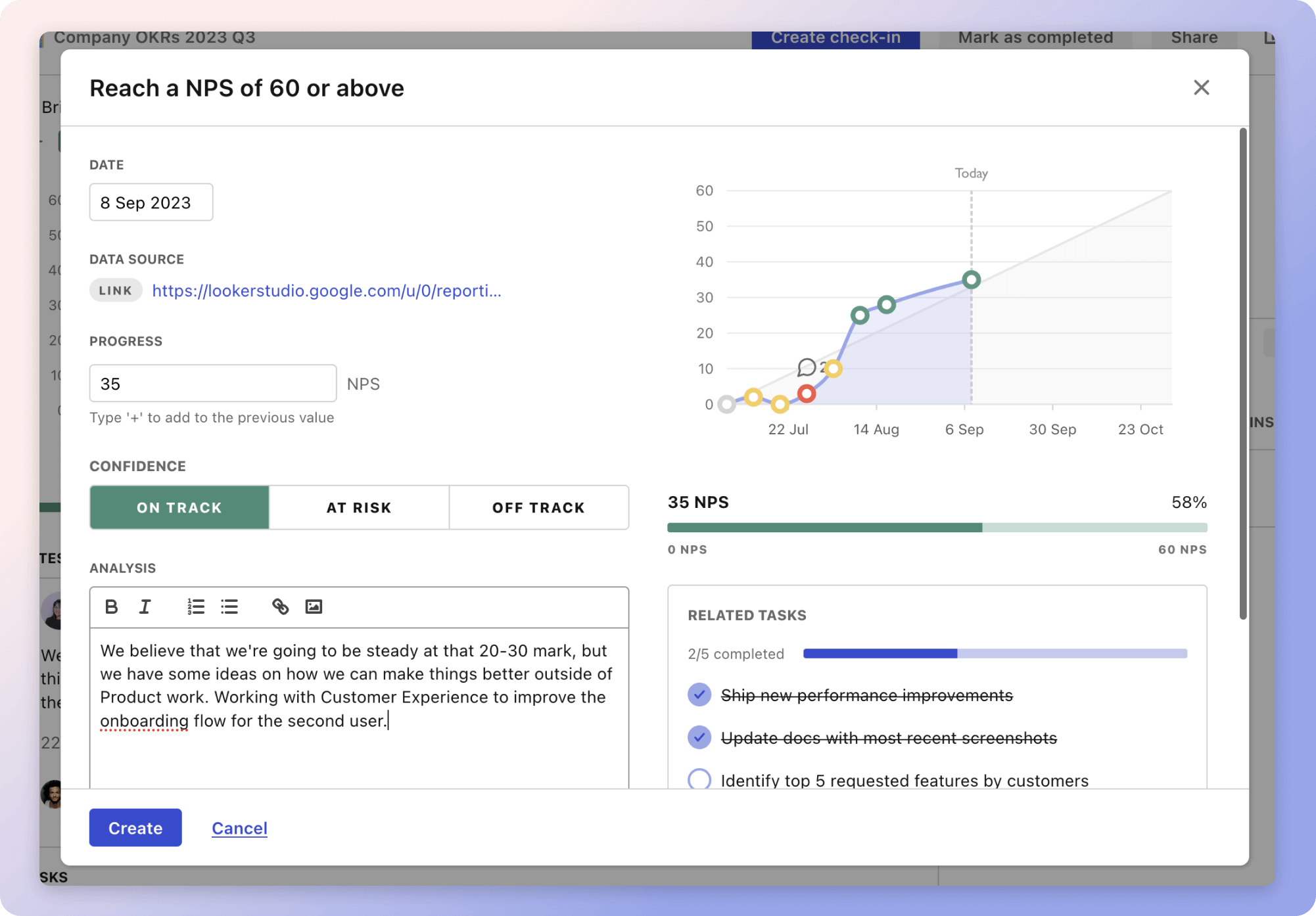
Give it a try and see how it can help you bring accountability to your strategy.