The strategy focuses on creating an efficient organizational structure in a growing company by clearly defining goals, streamlining decision-making, and clarifying roles. Setting clear organizational goals is fundamental to ensuring alignment between long-term business objectives and current structures. For example, identifying the business’s SMART goals ensures efficiency is prioritized based on organizational needs.
Streamlining decision-making involves analyzing current processes, identifying bottlenecks, and delegating authority, thereby empowering employees and enhancing communication. A flatter organizational structure can speed up decisions and promote accountability.
Clarifying roles and responsibilities ensures that employees understand their job descriptions and career development paths. A structured job evaluation and transparent organizational chart provide clarity, supporting alignment with company goals.
The strategies
⛳️ Strategy 1: Define clear organisational goals
- Identify the long-term business objectives of the organisation
- Assess current organisational structure in relation to these objectives
- Set specific, measurable, achievable, relevant, and time-bound (SMART) goals for organisational efficiency
- Prioritise goals based on organisational needs and resources
- Identify gaps between the current structure and desired outcomes
- Engage leadership for alignment on organisational priorities
- Communicate objectives clearly across the organisation
- Establish key performance indicators to track progress
- Review and revise objectives regularly to align with organisational growth
- Ensure objectives are integrated into employee performance evaluations
⛳️ Strategy 2: Streamline decision-making processes
- Map existing decision-making processes within the organisation
- Identify bottlenecks and areas for improvement in decision-making
- Delegate decision-making authority to empower employees
- Implement a flat organisational structure where possible
- Create clear guidelines for decision-making responsibilities
- Utilise technology to facilitate communication and data sharing
- Provide training for managers in efficient decision-making
- Review and optimise decision approval processes
- Foster a culture of accountability and transparency
- Regularly assess decision-making efficiency and make adjustments as needed
⛳️ Strategy 3: Clarify roles and responsibilities
- Conduct a comprehensive job analysis for all positions
- Develop clear job descriptions with specific roles and responsibilities
- Implement a structured job evaluation process to assess job value
- Establish a system for role alignment with organisational goals
- Create a career development plan for employees to understand growth paths
- Design and communicate an organisational chart for transparency
- Engage employees in defining and understanding their roles
- Regularly review and update job descriptions as the organisation grows
- Align compensation structures with evaluation outcomes
- Promote cross-departmental collaboration and understanding of other roles
Bringing accountability to your strategy
It's one thing to have a plan, it's another to stick to it. We hope that the examples above will help you get started with your own strategy, but we also know that it's easy to get lost in the day-to-day effort.
That's why we built Tability: to help you track your progress, keep your team aligned, and make sure you're always moving in the right direction.
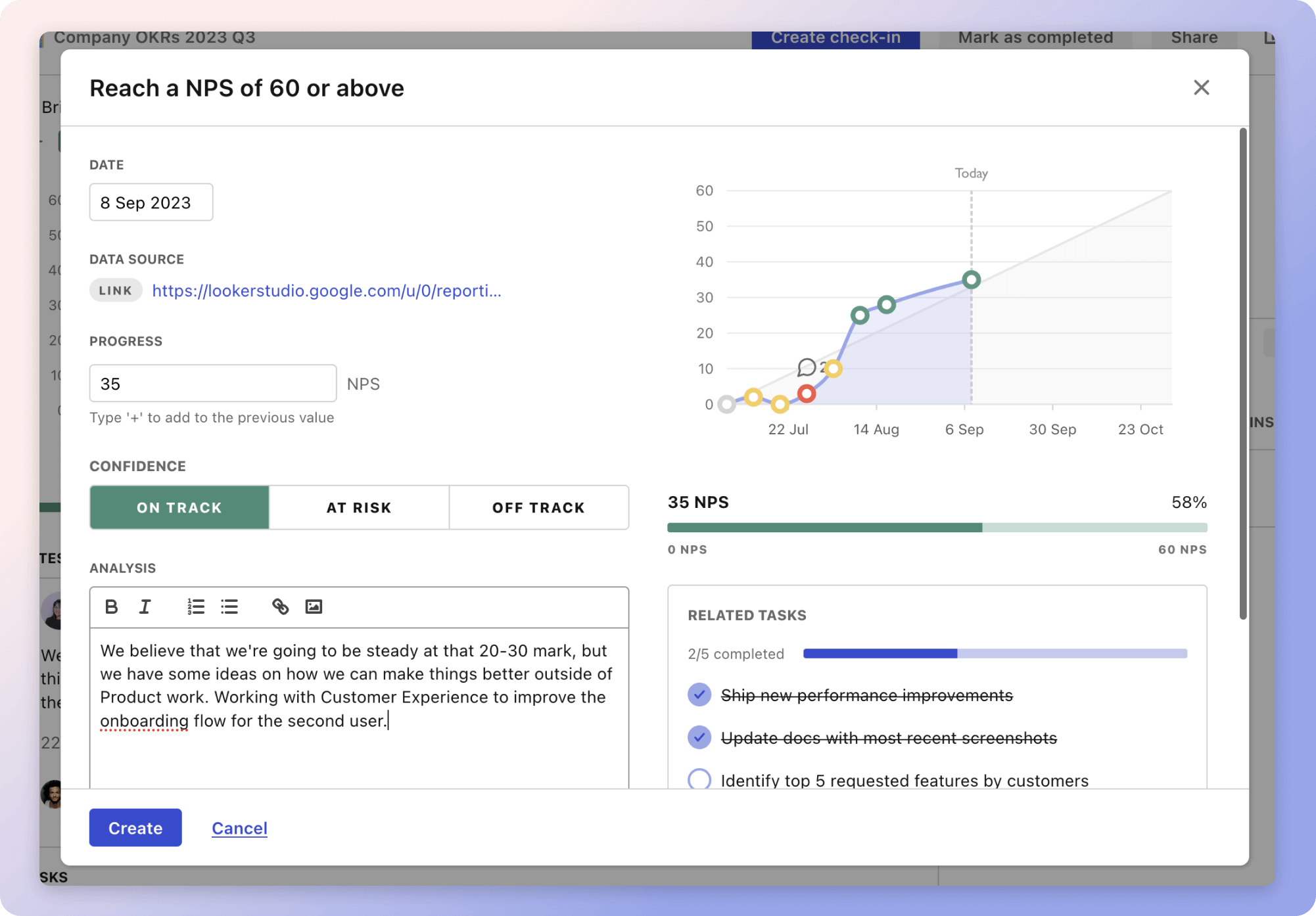
Give it a try and see how it can help you bring accountability to your strategy.