The strategy of "Building a successful business with limited resources" aims to transform constraints into opportunities by focusing on existing skills, strategic networking, and market innovation. By leveraging existing skills, you can identify what you already excel at and find niche markets that demand these skills. For example, if you are skilled in graphic design, you might offer local businesses your design services. Utilizing free online platforms and open-source tools can help reduce costs and promote your business.
Expanding your network strategically involves joining industry groups, attending events, and using platforms like LinkedIn to connect with potential partners. For instance, volunteering at industry events can increase your exposure and open doors for collaborations. Innovating and capitalizing on market trends means spotting gaps in the market and capitalizing on them with minimal investments. Creating a Minimum Viable Product (MVP) and using crowdfunding are methods to introduce and fund new ideas effectively, while storytelling can differentiate your brand.
The strategies
⛳️ Strategy 1: Leverage existing skills and resources
- Evaluate current skill set and identify marketable skills
- Research demand for these skills in the market
- Focus on a niche market to reduce competition
- Develop a small-scale service or product that requires minimal investment
- Utilise free online platforms to promote skills or a business idea
- Collaborate with local businesses for mutually beneficial partnerships
- Seek freelance or gig opportunities to build income and network
- Use open-source tools and software to minimize costs
- Attend workshops and seminars to upskill
- Start a blog or YouTube channel to share expertise and build an audience
⛳️ Strategy 2: Expand network strategically
- Join industry-related online groups and forums to connect with peers
- Attend local networking events to meet potential partners and clients
- Leverage social media platforms like LinkedIn to build a professional network
- Reach out to former colleagues and acquaintances for potential collaborations
- Volunteer at industry events to meet key players and gain exposure
- Seek mentorship from experienced professionals in the industry
- Join a local business association or chamber of commerce
- Use co-working spaces to meet other entrepreneurs and professionals
- Organise meetups or small networking events
- Participate in online webinars and virtual conferences
⛳️ Strategy 3: Innovate and capitalise on market trends
- Identify current trends and gaps in the market through research
- Brainstorm innovative ideas and solutions that address these gaps
- Validate business ideas by seeking feedback from potential customers
- Create a simple prototype or Minimum Viable Product (MVP) to test the market
- Utilise crowdfunding platforms to raise initial capital
- Offer pre-orders or early bird specials to generate initial sales
- Use storytelling to differentiate your brand and make it more relatable
- Implement cost-effective marketing strategies like content marketing and social media
- Continuously gather customer feedback to improve offerings
- Consider collaborative projects with other small businesses
Bringing accountability to your strategy
It's one thing to have a plan, it's another to stick to it. We hope that the examples above will help you get started with your own strategy, but we also know that it's easy to get lost in the day-to-day effort.
That's why we built Tability: to help you track your progress, keep your team aligned, and make sure you're always moving in the right direction.
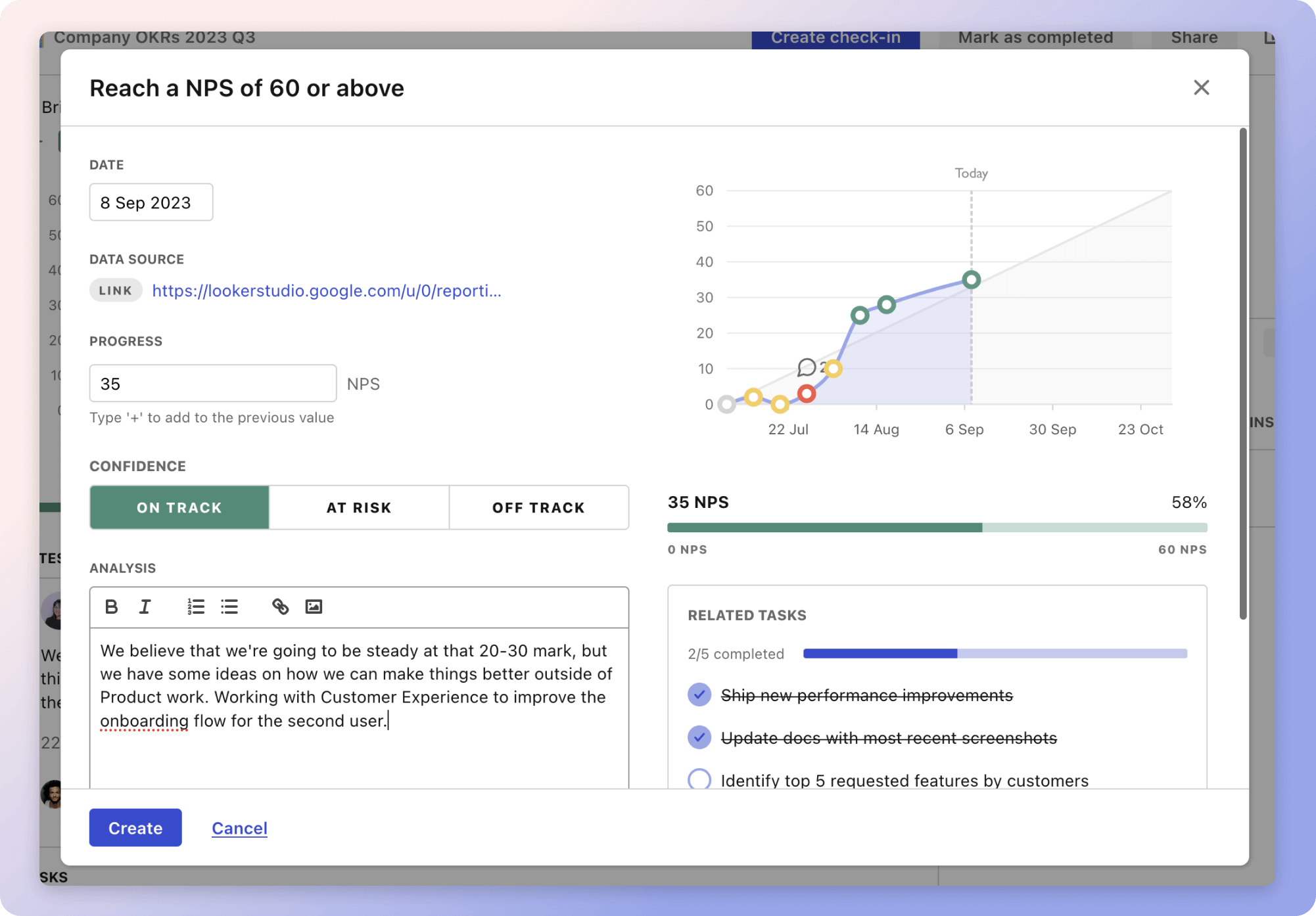
Give it a try and see how it can help you bring accountability to your strategy.