The strategy focuses on expanding operations in Zimbabwe by engaging in large projects. First, conducting thorough market research is essential, examining key industries, political and economic factors, and local competition. This involves evaluating potential partners and understanding the legal landscape. An example might be assessing the tech sector's growth potential while understanding how foreign businesses operate under local laws.
Building strong local partnerships is the next critical step. This involves identifying local businesses, attending networking events, and creating value propositions with partners. Initial collaborations, like working on smaller projects, can build trust and compatibility, ensuring long-term success.
Enhancing project management capabilities is also crucial. Training employees and hiring experienced managers are essential actions. For instance, implementing a robust project management framework and software can streamline processes and ensure project objectives and timelines are met. This fosters a culture of continuous improvement and learning from past experiences, vital for success in large-scale operations.
The strategies
⛳️ Strategy 1: Conduct thorough market research
- Identify key industries and sectors with growth potential in Zimbabwe
- Analyse political, economic, social, and technological factors affecting the market
- Evaluate local competition and their market share
- Identify potential business partners and stakeholders
- Assess the legal and regulatory environment for foreign businesses
- Study consumer behaviour and preferences in the target market
- Gather data on the availability of resources and infrastructure
- Establish connections with local trade, business and industry associations
- Develop a market entry report summarising findings and strategic insights
- Present the market research results to key stakeholders for validation
⛳️ Strategy 2: Build strong local partnerships
- Identify and reach out to potential local businesses and agencies for partnerships
- Attend business networking events and trade shows in Zimbabwe
- Develop a joint value proposition with potential partners
- Negotiate partnership terms that are beneficial to all parties
- Establish clear roles and responsibilities within each partnership
- Formally document partnerships with contracts or agreements
- Engage local consultants or advisors to navigate cultural nuances
- Strengthen relationships through regular communication and feedback loops
- Collaborate on small projects initially to build trust and assess compatibility
- Continuously evaluate and adapt partnerships to ensure mutual success
⛳️ Strategy 3: Enhance project management capabilities
- Invest in training and development of current employees on large project management
- Hire experienced project managers with a background in working in Zimbabwe
- Set up a robust project management framework tailored for large projects
- Deploy project management software to streamline processes and reporting
- Develop risk management plans to mitigate potential project risks
- Establish clear project objectives, timelines, and budgets
- Implement performance metrics to evaluate project success
- Foster a culture of continuous improvement in project execution
- Encourage feedback sessions post-project completion to learn and adapt
- Maintain a repository of lessons learned and best practices for future projects
Bringing accountability to your strategy
It's one thing to have a plan, it's another to stick to it. We hope that the examples above will help you get started with your own strategy, but we also know that it's easy to get lost in the day-to-day effort.
That's why we built Tability: to help you track your progress, keep your team aligned, and make sure you're always moving in the right direction.
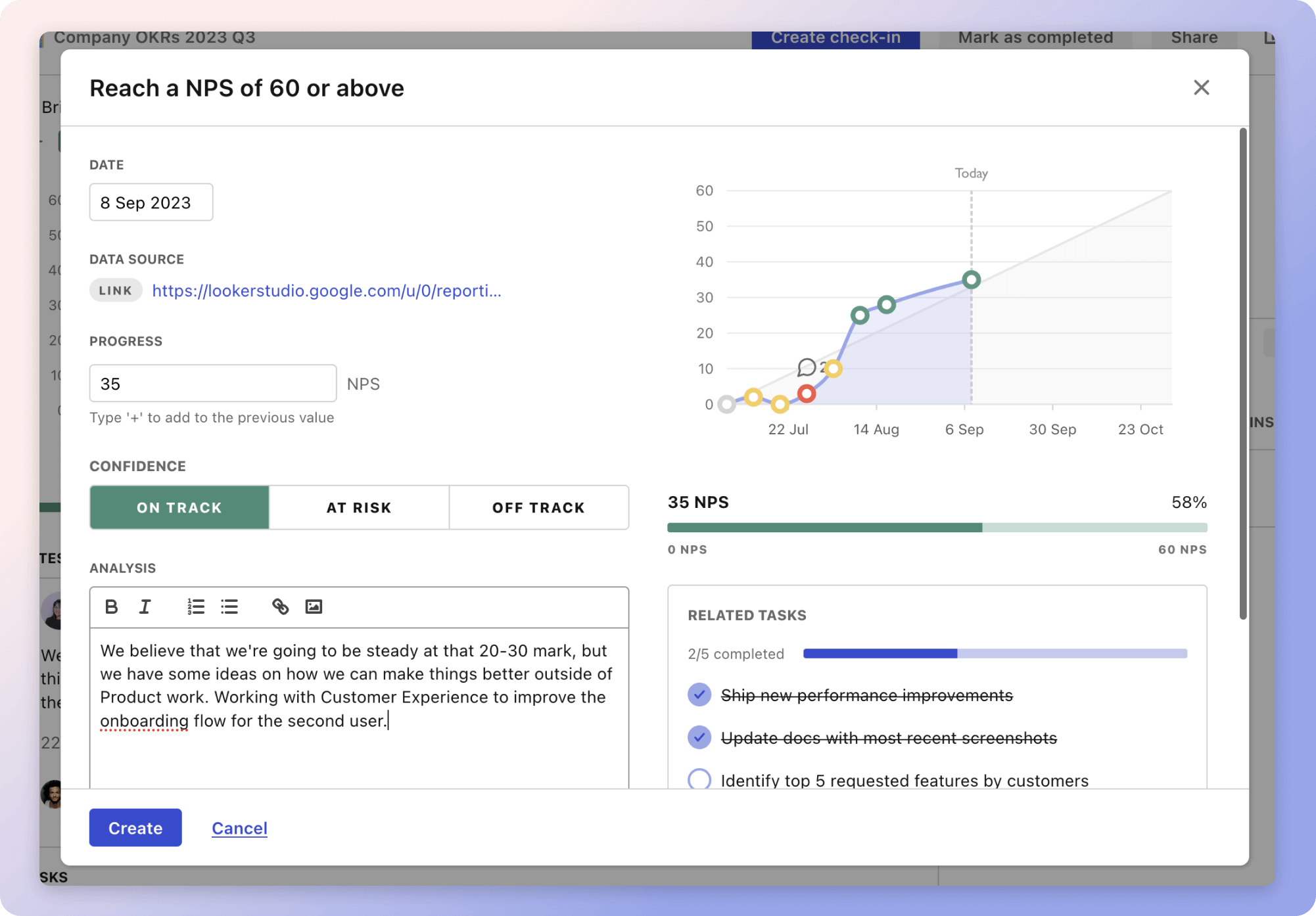
Give it a try and see how it can help you bring accountability to your strategy.