The strategy aims to execute buy and sell orders by following specific trading conditions. It consists of two main components: the Buy Signal Strategy and the Sell Signal Strategy. In the Buy Signal Strategy, the trader monitors the price to ensure it is above the Moving Average 100. Examples include checking if the RSI crosses above 55 and confirming if the MACD line is above the signal line. A positive market is confirmed with a strong bullish candle close, prompting a buy order with a predefined stop loss and take profit level.
The Sell Signal Strategy involves ensuring the price is below the Moving Average 100 and observing the RSI for a drop below 45. The MACD line is used here as well, confirming with a signal line cross for a bearish trend. Again, the presence of a bearish candle close triggers the sell order. All trades are documented for further analysis and improvement.
Finally, the strategy includes optimization by reviewing historical data for accuracy and testing various technical aspects like candle patterns. By enhancing the strategy with peer feedback and attending seminars, traders improve their techniques.
The strategies
⛳️ Strategy 1: Follow Buy Signal Strategy
- Monitor the price to ensure it is above the Moving Average 100
- Check if RSI crosses above 55
- Confirm that the MACD line crosses above the signal line
- Wait for a bullish candle close with a strong body
- Place a buy order at the candle close
- Set a stop loss at 2% below the entry point
- Determine a take profit level at 5% above the entry point
- Review the monitoring tools regularly to spot the buy conditions
- Adjust the trading tools for real-time alerts on moving average crossover
- Keep a trading log to analyse each trade for strategy refinements
⛳️ Strategy 2: Follow Sell Signal Strategy
- Ensure the price is below the Moving Average 100
- Observe if RSI crosses below 45
- Verify if the MACD line crosses below the signal line
- Look for a bearish candle close
- Execute a sell order at the candle close
- Place a stop loss at 2% above the entry point
- Set a take profit target at 5% below the entry point
- Utilise automated tools to track the sell conditions in real-time
- Use charting software to visually confirm conditions
- Document each trade to evaluate strategy effectiveness
⛳️ Strategy 3: Optimise Trading Conditions
- Review the historical data for the Moving Average 100's accuracy
- Analyse RSI levels to determine optimal bullish and bearish thresholds
- Backtest MACD line crossovers to validate entry timing
- Track candle closure patterns to identify strong candle formations
- Evaluate stop loss and take profit levels for risk management
- Utilise spreadsheets to simulate different scenarios
- Discuss with trading peers for further insights and feedback
- Implement feedback to enhance strategy effectiveness
- Regularly update technical analysis tools for accurate signals
- Attend trading webinars to stay informed on market trends
Bringing accountability to your strategy
It's one thing to have a plan, it's another to stick to it. We hope that the examples above will help you get started with your own strategy, but we also know that it's easy to get lost in the day-to-day effort.
That's why we built Tability: to help you track your progress, keep your team aligned, and make sure you're always moving in the right direction.
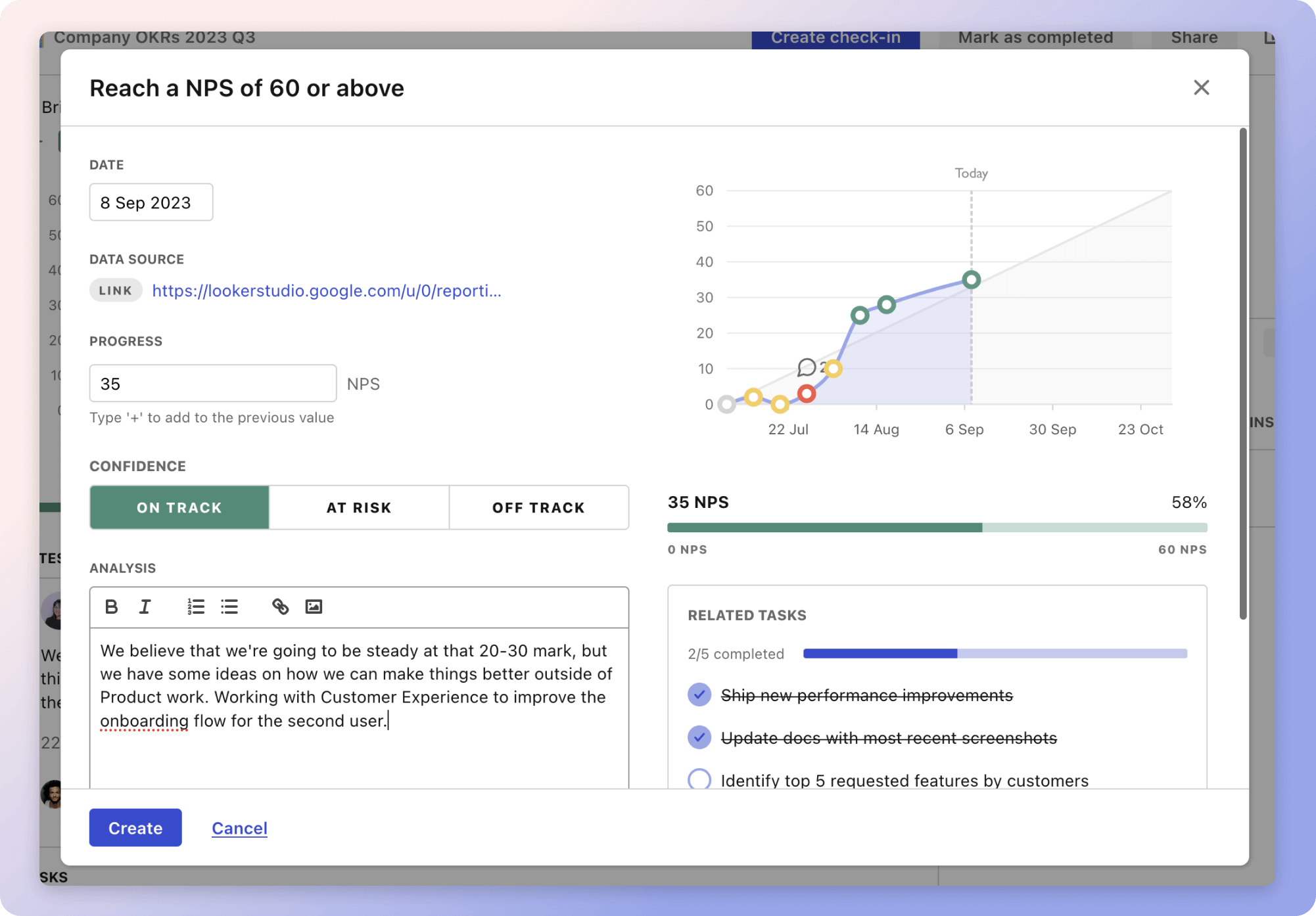
Give it a try and see how it can help you bring accountability to your strategy.