The strategy for "Completing NEET syllabus in 40 days" focuses on efficient preparation with a well-rounded approach. Starting with creating a realistic study timetable, it involves breaking down the syllabus into manageable daily tasks and allocating time for each subject based on its difficulty. Prioritizing topics with higher weight, integrating breaks, and adjusting the timetable based on progress ensures consistent focus. Weekends serve for mock tests and full revisions to evaluate understanding.
Effective study techniques are emphasized, such as active reading, using flashcards, and solving past papers. Group discussions and video lectures aid in clarifying doubts and understanding complex subjects. Techniques like time management and mind mapping further enhance information retention and self-evaluation.
To support rigorous study schedules, maintaining balanced physical and mental health is crucial. Daily exercise, a nutritious diet, and consistent sleep help sustain energy and focus. Stress management techniques like meditation, along with engaging in relaxation and hobbies, prevent burnout. Support from family aids in maintaining motivation and monitoring mental health.
The strategies
⛳️ Strategy 1: Create a realistic study timetable
- Break down the syllabus into daily tasks
- Allocate study time for each subject based on difficulty
- Include short breaks to maintain concentration
- Set specific goals for each study session
- Prioritise subjects and topics with more weight in the exam
- Allocate time for revision at the end of each week
- Keep weekends for mock tests and full syllabus revision
- Adjust the timetable weekly based on progress
- Incorporate time for relaxing activities to prevent burnout
- Mark each completed task to track progress
⛳️ Strategy 2: Utilise effective study techniques
- Practice active reading by taking notes and summarising
- Use flashcards for quick revision of important concepts
- Engage in group discussions to clarify doubts
- Solve previous years' question papers for pattern recognition
- Watch video lectures for difficult topics
- Create mind maps for better information retention
- Practice time management by solving questions within set times
- Use online quizzes and questions for self-evaluation
- Focus on understanding concepts over rote learning
- Keep a record of challenging topics to revisit later
⛳️ Strategy 3: Ensure balanced physical and mental health
- Incorporate at least 30 minutes of physical exercise daily
- Maintain a balanced diet to enhance focus and energy
- Establish a consistent sleep schedule
- Practice stress management techniques such as meditation
- Stay hydrated throughout study sessions
- Take power naps if needed to refresh
- Avoid late-night cramming to ensure quality sleep
- Engage in hobbies to relieve stress
- Seek support from family and friends to stay motivated
- Monitor mental health and seek help if needed
Bringing accountability to your strategy
It's one thing to have a plan, it's another to stick to it. We hope that the examples above will help you get started with your own strategy, but we also know that it's easy to get lost in the day-to-day effort.
That's why we built Tability: to help you track your progress, keep your team aligned, and make sure you're always moving in the right direction.
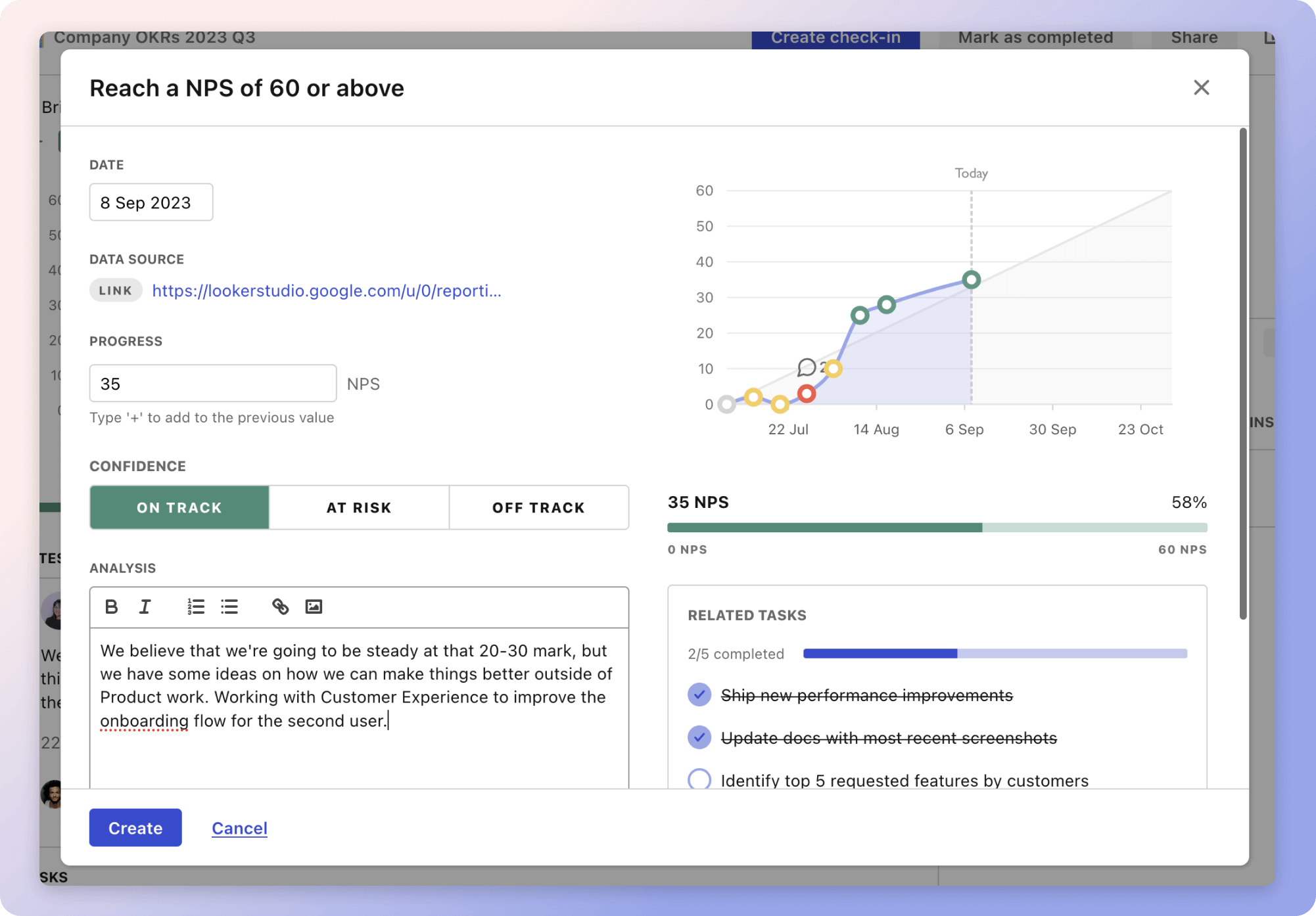
Give it a try and see how it can help you bring accountability to your strategy.