The strategy "Trading on the gold market" focuses on making consistent daily profits with small trades in the gold market. To achieve this, the strategy outlines analyzing market trends by researching historical gold prices, employing technical analysis tools like moving averages, and staying informed with daily insights from financial news sources. For example, understanding how geopolitical events impact gold prices helps predict market movements.
Implementing risk management is crucial; the strategy advises setting daily loss limits, using stop-loss orders, and considering a risk/reward ratio of at least 1:2. For instance, diversifying trades across sectors minimizes potential losses.
Finally, enhancing trading skills through online courses, workshops, and demo accounts bolsters one's trading knowledge. Engaging with online communities and seeking mentorship sharpens strategies and facilitates continuous learning.
The strategies
⛳️ Strategy 1: Analyse market trends
- Research historical gold price trends to understand market cycles
- Use technical analysis tools such as moving averages and RSI
- Subscribe to daily market insights from a trusted financial news source
- Evaluate geopolitical events and their potential impact on gold prices
- Identify and follow gold trading experts for advice and predictions
- Set up alerts for significant price changes in the gold market
- Regularly review economic indicators that influence gold prices
- Maintain a trading journal to track trade performance and market observations
- Establish a routine to conduct daily pre-market analysis
- Use simulation tools to practice trading strategies without financial risk
⛳️ Strategy 2: Implement risk management
- Determine a daily loss limit based on personal risk tolerance
- Set a stop-loss order for each trade to limit potential losses
- Keep trades small enough to maintain emotional and financial stability
- Diversify trading across different market sectors to reduce risk
- Always trade with what you can afford to lose to protect against significant loss
- Conduct end-of-day reviews to assess risk management effectiveness
- Plan trades with a risk/reward ratio of at least 1:2
- Re-assess risk tolerance levels periodically based on market conditions
- Use a trailing stop to secure profits while allowing room for market fluctuations
- Educate yourself on common trading mistakes and how to avoid them
⛳️ Strategy 3: Enhance trading skills
- Register for an online trading course to gain in-depth knowledge
- Engage in webinars and workshops conducted by experienced traders
- Utilise demo accounts to practice trading strategies in a risk-free environment
- Read books and articles on successful trading strategies
- Join online trading communities to exchange ideas and gain insights
- Regularly evaluate personal trading strengths and weaknesses
- Keep abreast of regulatory changes that impact trading activities
- Seek feedback from a trading mentor to improve strategies
- Allocate time regularly for learning and skill development
- Set quantifiable goals to track progress in skill enhancement
Bringing accountability to your strategy
It's one thing to have a plan, it's another to stick to it. We hope that the examples above will help you get started with your own strategy, but we also know that it's easy to get lost in the day-to-day effort.
That's why we built Tability: to help you track your progress, keep your team aligned, and make sure you're always moving in the right direction.
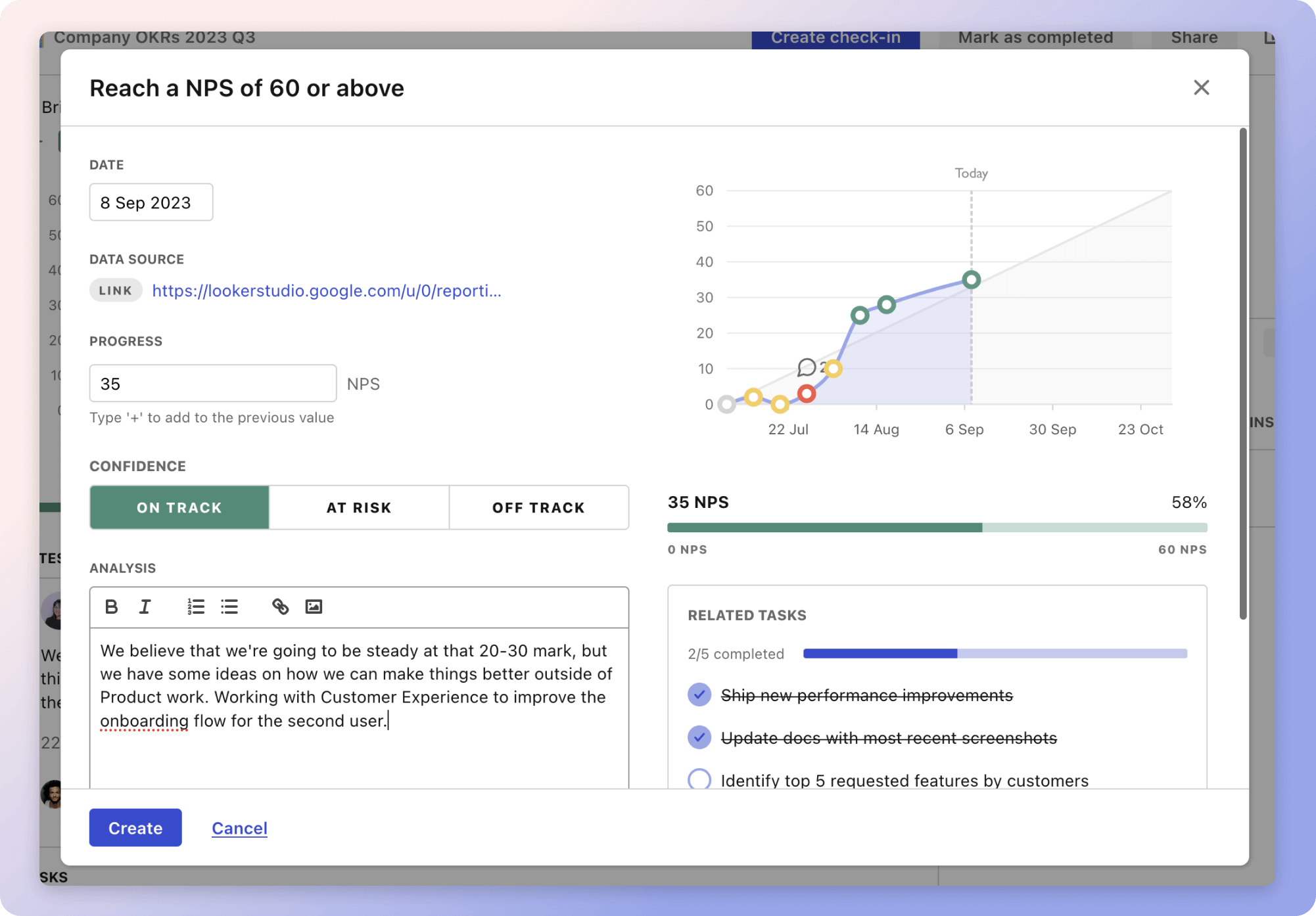
Give it a try and see how it can help you bring accountability to your strategy.