The strategy outlines a detailed plan for creating a "Sectoral Transformation Model" using a structured approach. First, it emphasizes executing a comprehensive sectoral analysis. This involves collecting data on current performance metrics, identifying stakeholders, and evaluating the sector's strengths and weaknesses through SWOT analysis. An example of this could be assessing consumer behaviors and shifts in demand in the tech industry to understand future trends and opportunities.
Next, the strategy focuses on aligning policies with strategic objectives. This entails reviewing existing policies, collaborating with policymakers, and drafting new policy frameworks that support transformation goals. For example, consulting with industry leaders can help ensure policies align with sector objectives to foster development.
Lastly, the plan involves integrating innovation within the sector. By identifying technological advancements and fostering partnerships with tech firms, the strategy promotes the adoption of innovative practices. Organizing innovation workshops and investing in research and development are methods to encourage technological enhancement. Pilot projects can test these innovations before scaling them across the sector for impactful transformation.
The strategies
⛳️ Strategy 1: Execute a thorough sectoral analysis
- Collect data on current sector performance metrics
- Identify key stakeholders and their influence within the sector
- Assess the sector's strengths, weaknesses, opportunities, and threats (SWOT analysis)
- Analyse the competitive landscape to identify key competitors and market dynamics
- Evaluate existing regulations and their impact on the sector
- Conduct surveys and interviews with industry experts and participants
- Map out value chains to understand end-to-end sector processes
- Identify emerging trends and technological advancements affecting the sector
- Understand consumer behaviours and shifts in demand
- Compile findings into a comprehensive sectoral analysis report
⛳️ Strategy 2: Align policies with strategic objectives
- Review existing policies relevant to the sector
- Collaborate with policymakers to communicate sectoral needs
- Draft a policy framework that supports sectoral transformation
- Consult with industry leaders to align policy with strategic sector goals
- Conduct impact assessments of proposed policies
- Implement stakeholder consultations to refine policy alignment
- Develop a timeline for policy implementation
- Identify resources needed for policy enforcement
- Enable feedback loops between policymakers and sector entities
- Monitor policy impacts continuously and adjust accordingly
⛳️ Strategy 3: Integrate innovation within the sector
- Identify leading technologies impacting sector innovations
- Organise innovation workshops with sector stakeholders
- Foster partnerships with tech firms and research institutions
- Encourage innovation through sector-specific competitions and grants
- Invest in research and development for technologically advanced solutions
- Develop pilot projects to test innovative ideas
- Create a framework for scaling successful innovations
- Facilitate training programmes for skills enhancement in new technologies
- Establish a dedicated innovation task force within the sector
- Set up a feedback mechanism to measure innovation outcomes
Bringing accountability to your strategy
It's one thing to have a plan, it's another to stick to it. We hope that the examples above will help you get started with your own strategy, but we also know that it's easy to get lost in the day-to-day effort.
That's why we built Tability: to help you track your progress, keep your team aligned, and make sure you're always moving in the right direction.
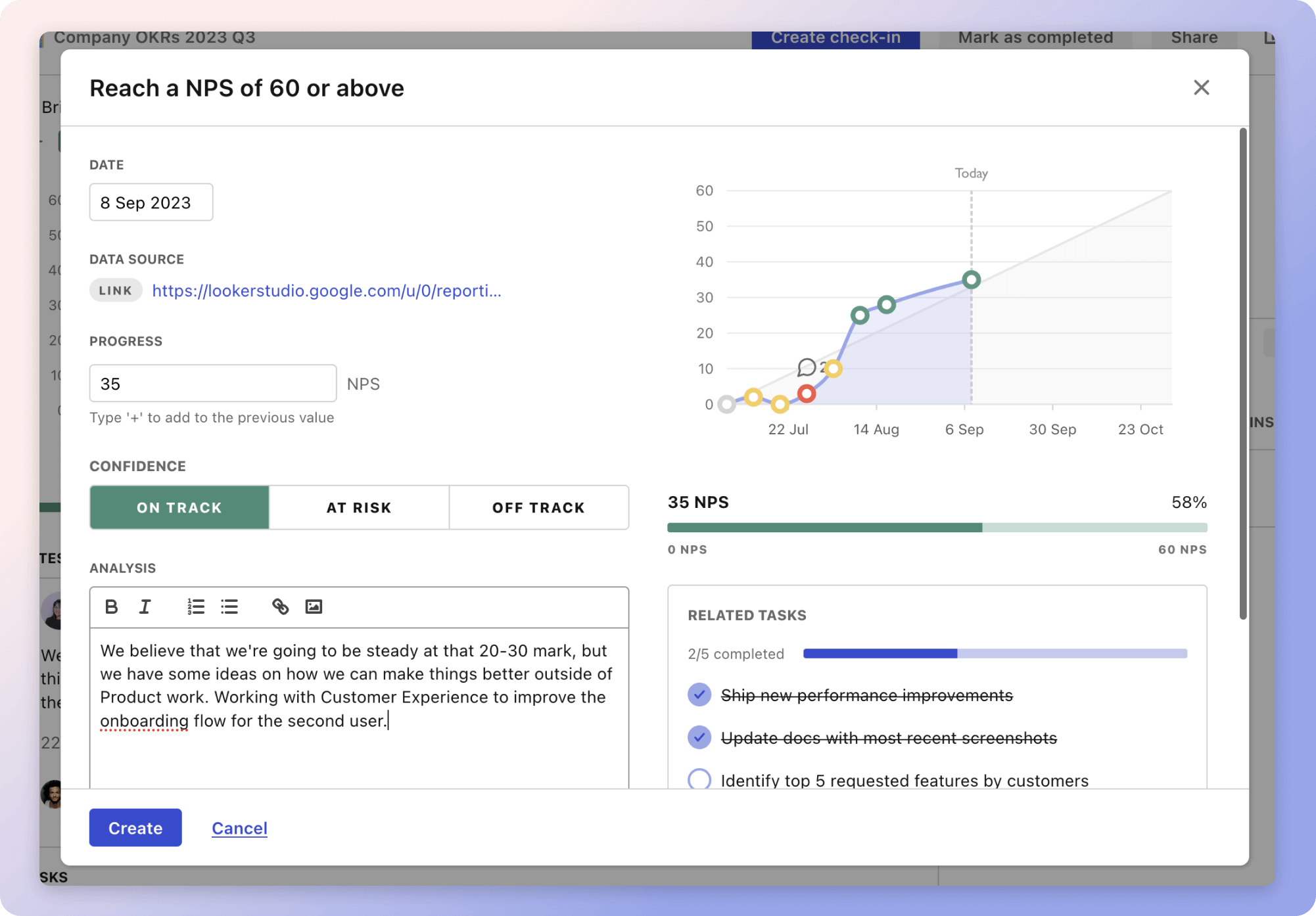
Give it a try and see how it can help you bring accountability to your strategy.