The strategy for analyzing Samsung's finances is centered around evaluating its financial performance, with a specific focus on the flip phone segment. The first step involves gathering financial data, which includes reviewing Samsung's annual and quarterly reports and evaluating sales and profit margins for flip phones. For example, looking at market share and revenue trends can provide insights into the segment's success relative to other products.
The second strategy assesses Samsung's financial strategies for the flip phone line, examining aspects like cash flow management and merger activities. This involves evaluating cost-cutting measures and investment strategies, such as investing in innovative flip phone designs or partnerships influencing financial outcomes. For instance, understanding global economic impacts on Samsung's strategies can provide a broader perspective on its fiscal choices.
The final strategy is to integrate financial insights into a presentation. Key metrics will be highlighted using graphs and charts for clear visual representation. Comparing Samsung's performance with competitors, summarizing financial implications, and identifying consumer behavior trends will enrich the narrative. Including expert opinions and drafting an executive summary gives a comprehensive view of Samsung's financial health.
The strategies
⛳️ Strategy 1: Gather Financial Data
- Review Samsung's latest annual and quarterly financial reports
- Evaluate sales data specifically for the flip phone segment
- Identify profit margins for the flip phone compared to other products
- Assess Samsung's market share in the flip phone market
- Gather analyst forecasts for Samsung's financial performance
- Explore historical financial performance trends of Samsung
- Review Samsung's investment in research and development for flip phones
- Analyse revenue streams from the Samsung flip phone line
- Investigate Samsung's pricing strategy for flip phones
- Collect data on competitor financial performance in the flip phone market
⛳️ Strategy 2: Assess Financial Strategies
- Explore Samsung's financial strategy for the flip phone line
- Discuss Samsung's cash flow management focusing on the flip phone division
- Identify cost-cutting measures implemented by Samsung for flip phones
- Evaluate Samsung's investment strategy in innovating the flip phone design
- Inspect Samsung's merger and acquisition activities related to flip phones
- Determine impact of global economic trends on Samsung's financial strategies
- Analyse how Samsung allocates resources to promote the flip phone
- Explore Samsung's partnerships or collaborations that influence finances
- Identify Samsung's strategies for entering new markets with the flip phone
- Assess risk management activities affecting Samsung's finance in flip phones
⛳️ Strategy 3: Integrate Financial Insights
- Highlight key financial metrics to include in the presentation
- Create graphs and charts to visually represent financial data
- Compare Samsung's financial performance with competitors in flip phones
- Summarise the financial implications of Samsung's strategies
- Identify trends in consumer behaviour affecting Samsung's finances
- Explain the financial impact of technology advancements in flip phones
- Use case studies to illustrate financial decisions made by Samsung
- Describe Samsung's response to financial challenges in the market
- Include expert opinions or quotes on Samsung's financial outlook
- Draft an executive summary of Samsung's financial health for the presentation
Bringing accountability to your strategy
It's one thing to have a plan, it's another to stick to it. We hope that the examples above will help you get started with your own strategy, but we also know that it's easy to get lost in the day-to-day effort.
That's why we built Tability: to help you track your progress, keep your team aligned, and make sure you're always moving in the right direction.
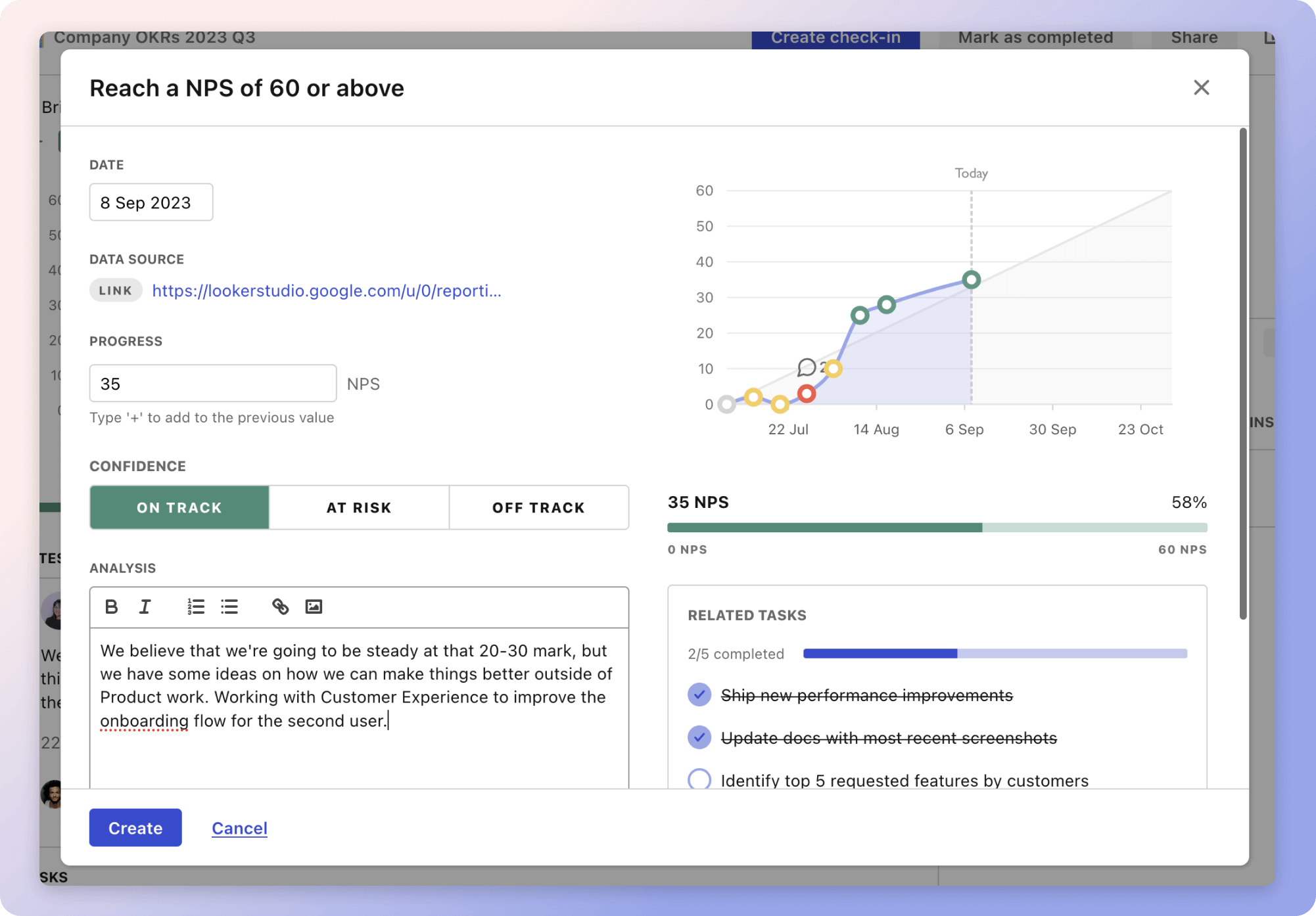
Give it a try and see how it can help you bring accountability to your strategy.