The strategy for preparing for the JEE Mains focuses on effective revision methods to excel in the examination. It emphasises prioritising high-yield topics by identifying major areas for each subject and tailoring study time to bolster weaker areas. For instance, breaking complex topics into manageable sections and incorporating visual aids like flashcards can aid in better retention. One example is using mind maps for topics in chemistry.
Another crucial element is simulating exam conditions. Students are encouraged to take full-length mock tests under timed conditions to build familiarity and comfort with the exam environment. For example, completing past JEE papers can help gauge preparedness.
Strengthening fundamentals forms the base of the strategy. Reviewing core concepts in Physics, Chemistry, and Mathematics can significantly enhance performance. Students could use online quizzes to test and improve basic calculation skills consistently, ensuring a solid understanding of foundational principles.
The strategies
⛳️ Strategy 1: Prioritise High-Yield Topics
- Identify and list the highest yielding topics for JEE Mains for each subject
- Assess personal strengths and weaknesses in these topics by referencing past performance
- Allocate study time based on prioritisation of topics, focusing more on weaker areas
- Break down complex topics into manageable sections and plan their revision over multiple days
- Use short, focused study sessions for each topic to maximise retention and avoid burnout
- Schedule frequent mini-assessments to measure understanding of each high-yield topic
- Revisit difficult concepts regularly rather than studying them in one go
- Integrate visual aids like flashcards and mind maps for better retention of complex topics
- Engage in group study sessions to clarify doubts and gain different perspectives on high-yield areas
- Reassess and adjust topic priorities based on performance in mini-tests and evolving confidence levels
⛳️ Strategy 2: Simulate Exam Conditions
- Schedule full-length mock tests every three days to simulate exam conditions
- Ensure that mock tests are taken at the same time and length as the actual JEE Mains exam
- Analyse performance after each mock test to identify patterns and persistent challenges
- Adjust strategies mid-exam if necessary, to build adaptability and strategic skills
- Prioritise solving previous years’ JEE Mains papers for a realistic practice experience
- Develop a time management strategy that allows completion of each section within the allocated time during mocks
- Create a calm and distraction-free environment for taking practice exams
- Focus on accuracy and speed concurrently by identifying quickest methods to solve problems
- Practice techniques for stress management pre, during, and post mock exams
- Review each test's solutions thoroughly to ensure understanding of mistakes and correct approaches
⛳️ Strategy 3: Strengthen Fundamentals
- Review fundamental concepts from NCERT books, which make up the core of JEE Mains
- Clarify foundational doubts with teachers or through trusted educational resources
- Enrich understanding with video tutorials focused on basic concepts and their applications
- Apply fundamental concepts through problems that increase in difficulty gradually
- Spend time each day strengthening basic calculation skills to increase speed and accuracy
- Create summary sheets of key equations and concepts for quick daily revision
- Allocate time regularly for revisiting core principles in Physics, Chemistry, and Mathematics
- Engage with interactive online platforms that offer quizzes on basic concepts
- Use spaced repetition techniques to retain fundamental knowledge over time
- Discuss foundational topics with peers to reinforce understanding and gain insights
Bringing accountability to your strategy
It's one thing to have a plan, it's another to stick to it. We hope that the examples above will help you get started with your own strategy, but we also know that it's easy to get lost in the day-to-day effort.
That's why we built Tability: to help you track your progress, keep your team aligned, and make sure you're always moving in the right direction.
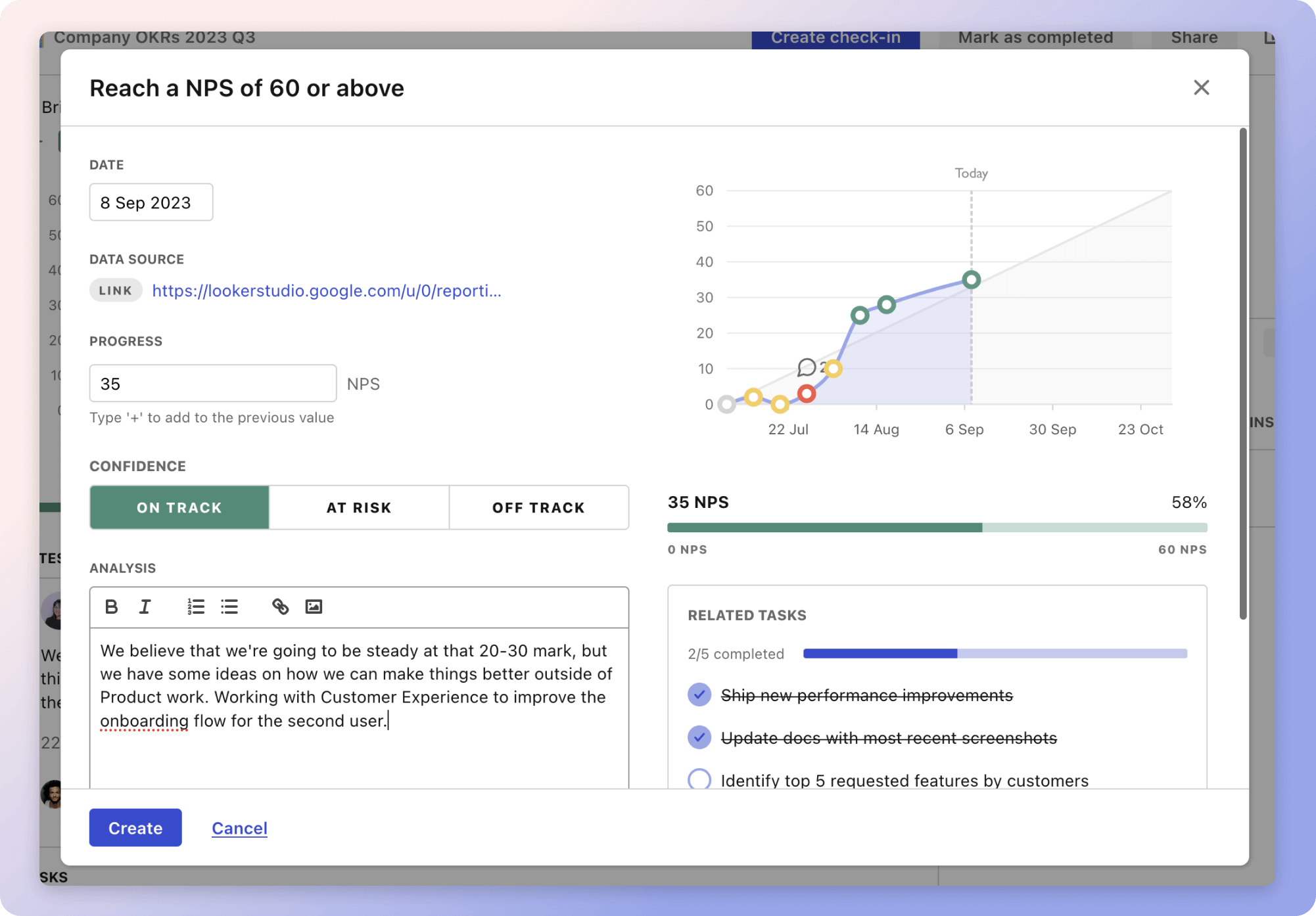
Give it a try and see how it can help you bring accountability to your strategy.