The strategy focuses on trading the Euro/USD currency pair by employing thorough market analysis, effective risk management, and leveraging technology. It starts with analyzing historical price data and economic indicators to spot trends and understand the market climate. For example, monitoring political events and central bank policies helps predict currency value fluctuations, while technical tools like moving averages and RSI identify trading signals.
Risk management is essential, involving setting stop-loss orders and position sizing to control exposure. Diversification and a defined risk-to-reward ratio aid in securing trades. A practical example is using a trailing stop to protect profits as the market moves in favor.
Technology is leveraged to enhance trading efficiency. A reliable platform can offer automated systems and demo accounts for strategy testing. Engaging with trading forums provides communal insights, while economic calendars ensure timely updates for informed trading decisions.
The strategies
⛳️ Strategy 1: Conduct thorough market analysis
- Analyse historical price data for patterns and trends
- Study economic indicators affecting both the Euro and USD
- Monitor political events that might impact the currency values
- Utilise technical analysis tools like moving averages and RSI
- Examine central bank policies from the ECB and the Federal Reserve
- Stay updated with global economic news and forecasts
- Identify key support and resistance levels on the chart
- Assess market sentiment through trader sentiment indices
- Review reports from expert analysts regularly
- Set up alerts for major economic announcements
⛳️ Strategy 2: Implement risk management techniques
- Determine your risk tolerance and set stop-loss orders
- Use position sizing to manage overall exposure
- Diversify your trading portfolio by not over-relying on a single pair
- Establish clear entry and exit points based on analysis
- Set a risk-to-reward ratio for each trade
- Utilise a trailing stop to lock in profits as the price moves favorably
- Avoid trading with high leverage to prevent large losses
- Maintain a trading journal to review and adjust strategies
- Attend trading webinars and seminars to enhance knowledge
- Regularly review and adjust your risk management plan
⛳️ Strategy 3: Leverage technology and trading platforms
- Choose a reliable trading platform with comprehensive tools
- Utilise automated trading systems for efficiency
- Set up charting software with indicators suited to your strategy
- Use demo accounts to test new strategies without financial risk
- Subscribe to economic calendars for timely updates
- Follow trading forums and communities for shared insights
- Keep a secure back-up of trading data and strategy documents
- Enable notifications for key price levels and market events
- Explore algorithmic trading options to enhance execution
- Regularly update your trading software and tools
Bringing accountability to your strategy
It's one thing to have a plan, it's another to stick to it. We hope that the examples above will help you get started with your own strategy, but we also know that it's easy to get lost in the day-to-day effort.
That's why we built Tability: to help you track your progress, keep your team aligned, and make sure you're always moving in the right direction.
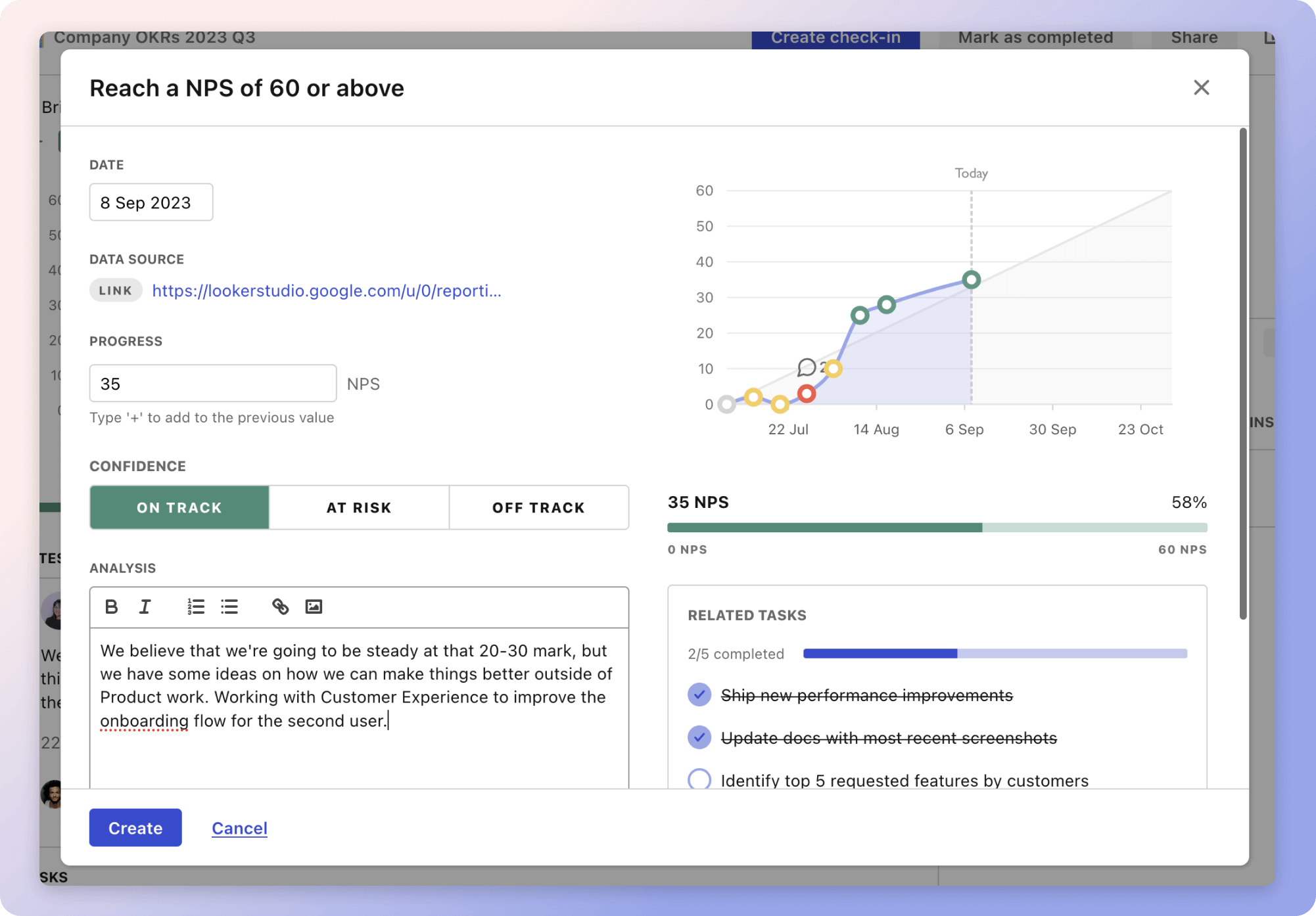
Give it a try and see how it can help you bring accountability to your strategy.