The strategy focuses on developing a robust Quality Assurance Strategy for manufacturing metal parts. It aims to ensure adherence to IATF 16949 and ISO 9001 standards, meeting customer and regulatory demands. A well-defined purpose and scope are articulated, aligning the quality management system with business goals. For example, a company might conduct audits to assess current quality practices and allocate resources essential for strategy implementation.
The second facet of the strategy involves implementing comprehensive quality assurance processes across all manufacturing stages. This includes establishing quality control procedures, training staff on protocols, and leveraging technology for process enhancement. Regular inspections and corrective actions are vital for maintaining high standards. For instance, establishing a document control system ensures consistency and accuracy in quality-related documentation.
Lastly, promoting a culture of quality and continuous improvement is emphasized. Training programs, employee involvement, and recognition systems are pivotal. The strategy encourages workshops and seminars, fostering a proactive approach among employees. Organizations could reward teams for identifying solutions to quality challenges, engendering an ethos of constant improvement.
quality assurance, continuous improvement
quality manager, process engineer
quality control team, production team
The strategies
⛳️ Strategy 1: Define the purpose and scope of the quality strategy
- Identify the key objectives of the quality strategy relating to customer and regulatory demands
- Determine the scope of the quality management system including all manufacturing processes
- Ensure alignment with IATF 16949 and ISO 9001 standards
- Communicate the purpose and scope to all stakeholders within the company
- Integrate the strategy with overall business goals
- Specify the roles and responsibilities of management in implementing the strategy
- Assess the current quality landscape within the company through audits and reviews
- Develop a clear and concise quality policy statement
- Ensure that the quality strategy reflects company values and objectives
- Allocate resources required for effective implementation of the strategy
⛳️ Strategy 2: Implement quality assurance across manufacturing processes
- Establish procedures for each stage of production to ensure quality control
- Train staff on standard operating procedures and quality protocols
- Integrate quality management principles into the design and development phases
- Set up a system for regular reporting and feedback on production quality
- Utilise technology and automation to enhance quality control measures
- Conduct regular inspections and testing of products at critical stages
- Establish a corrective action process to address nonconformities
- Implement a document control system for all quality-related documentation
- Cooperate with suppliers to ensure the quality of raw materials
- Ensure continuous monitoring and improvement of processes through data analysis
⛳️ Strategy 3: Promote a culture of quality and continuous improvement
- Develop and implement a training programme focused on quality standards and practices
- Encourage employee involvement in quality circles and improvement initiatives
- Establish a system for recognising and rewarding quality improvements
- Communicate the importance of quality to all levels of staff
- Conduct regular workshops and seminars to update employees on quality standards
- Utilise feedback from internal audits to educate and improve staff understanding
- Monitor employee performance in relation to quality objectives
- Develop leaders and mentors to champion quality within the organisation
- Foster an environment that encourages proactive identification of issues
- Regularly review and adapt training programmes to ensure relevance and efficacy
Bringing accountability to your strategy
It's one thing to have a plan, it's another to stick to it. We hope that the examples above will help you get started with your own strategy, but we also know that it's easy to get lost in the day-to-day effort.
That's why we built Tability: to help you track your progress, keep your team aligned, and make sure you're always moving in the right direction.
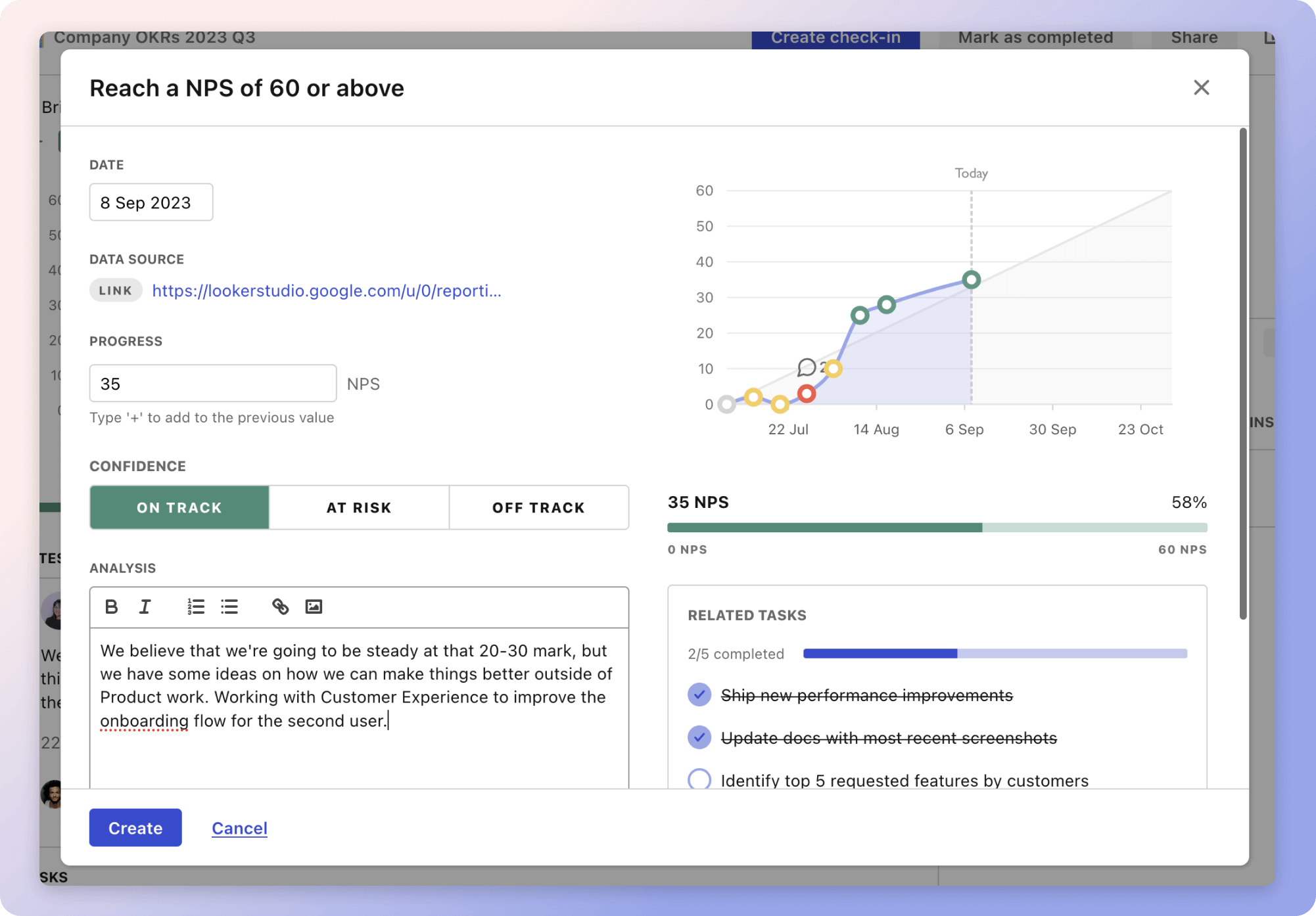
Give it a try and see how it can help you bring accountability to your strategy.