The strategy for developing a Breakout Expert Advisor (EA) in MQL5 involves several key steps. Initially, it emphasizes conducting in-depth research on breakout strategies. This includes analyzing historical data to understand patterns, studying various strategies in financial trading, and consulting with forex experts. For example, one could examine key indicators such as support and resistance levels that signal possible breakout points.
Next, the strategy involves designing and planning the EA framework, which includes defining entry and exit rules, selecting technical indicators, and developing risk management guidelines. An example of risk management could be setting stop-loss and take-profit levels to manage the EA's performance effectively.
Lastly, the coding and testing phase in MQL5 includes setting up the development environment, writing the initial code, and incorporating technical indicators. Testing is crucial, both with historical data and through forward testing to validate performance. For instance, integrating alerts can notify users of potential breakout opportunities, ensuring quick actions can be taken.
The strategies
⛳️ Strategy 1: Conduct research on breakout strategies
- Study various breakout strategies used in financial trading
- Identify key indicators and parameters used in breakout systems
- Analyse historical data to understand breakout patterns
- Research existing breakout EAs for features and performance
- Look for common pitfalls in breakout strategies
- Determine the timeframe most suitable for breakout trading
- Examine how different market conditions affect breakout success
- Assess how volatility influences breakouts
- Consult with forex trading experts on breakout strategies
- Compile a list of insights and lessons learned from research
⛳️ Strategy 2: Design and plan the EA framework
- Outline the objectives and goals of the EA
- Define the entry and exit rules for the breakout strategy
- Select appropriate technical indicators to identify breakouts
- Develop risk management guidelines, including stop-loss and take-profit levels
- Create a flowchart of the logic and decision-making process
- Decide on how to incorporate different market conditions into the EA
- Plan for integrating alerts and notifications
- Specify performance metrics to evaluate the EA’s success
- Document the planned structure and logic of the EA
- Conduct a peer review of the design plan
⛳️ Strategy 3: Code and test the EA in MQL5
- Set up the development environment for MQL5 coding
- Write the initial code for the EA using MQL5 language
- Incorporate the chosen technical indicators and logic into the EA
- Add risk management features to handle trades effectively
- Integrate alerts and notifications into the EA
- Test the EA using historical data on MetaTrader 5
- Refine and debug the code based on test results
- Run forward testing to validate real-time performance
- Optimise the EA parameters for best performance
- Document the final code and testing results
Bringing accountability to your strategy
It's one thing to have a plan, it's another to stick to it. We hope that the examples above will help you get started with your own strategy, but we also know that it's easy to get lost in the day-to-day effort.
That's why we built Tability: to help you track your progress, keep your team aligned, and make sure you're always moving in the right direction.
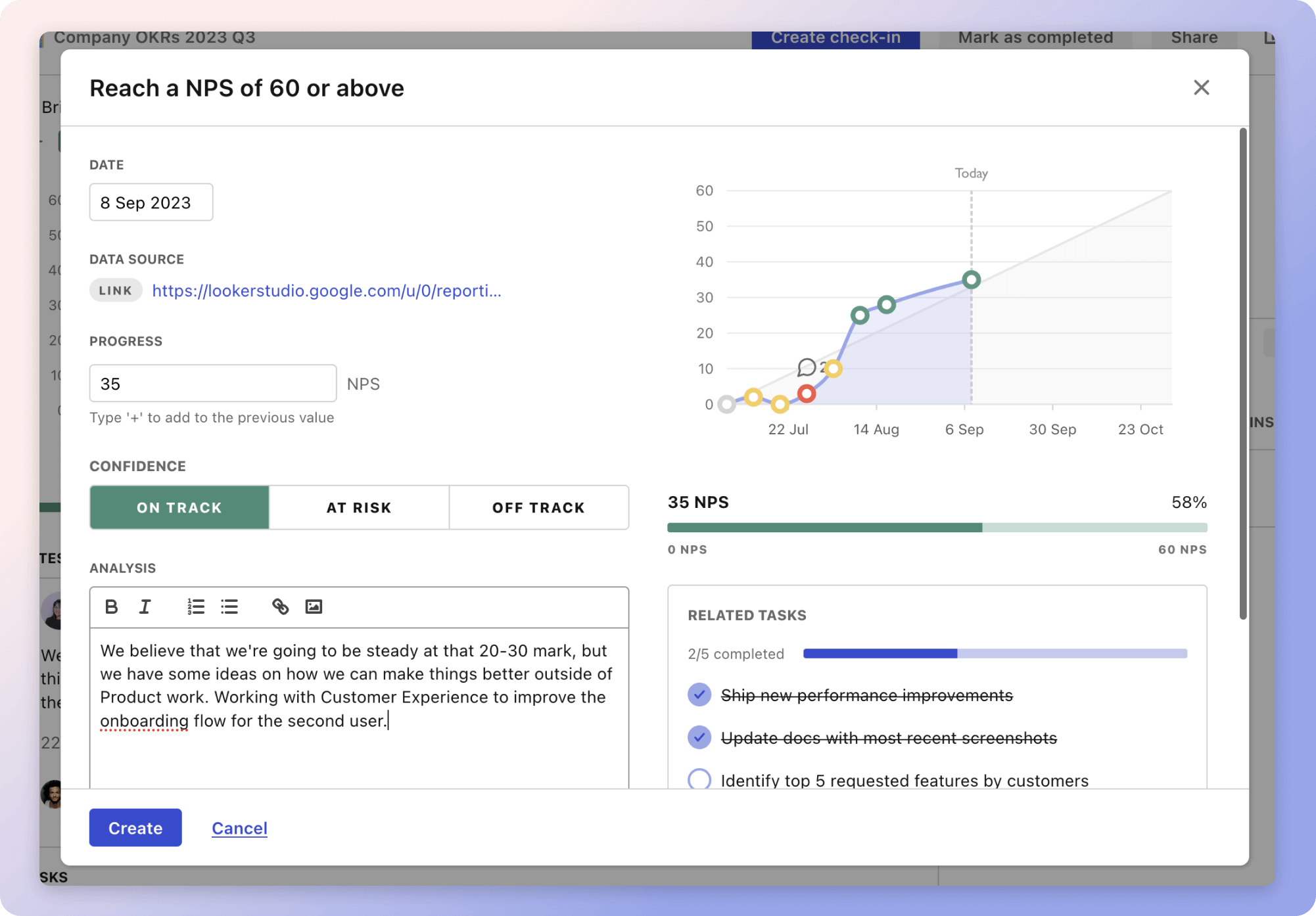
Give it a try and see how it can help you bring accountability to your strategy.