The strategy described in the JSON format is about implementing the ORB (Objective, Results, Benefits) system to enhance organizational performance. Firstly, it emphasizes defining clear objectives by breaking down key organizational goals into measurable objectives. For example, a sales team could identify an objective to increase quarterly sales by 15% and ensure it aligns with the company’s vision. This approach ensures focus and alignment with broader goals.
Secondly, the strategy focuses on measuring and tracking results through key performance indicators (KPIs). It suggests using tools to collect and analyze data, identify gaps, and celebrate achievements like reaching sales targets. This process helps in creating a performance history, essential for informed decision-making.
Lastly, the strategy underscores the importance of effectively communicating benefits to stakeholders. By showcasing how achieving objectives positively impacts the organization, teams remain motivated. For instance, sharing stories of success and gathering testimonials can reinforce team efforts and engagement.
The strategies
⛳️ Strategy 1: Define clear objectives
- Identify key organisational goals to be achieved
- Break down each goal into specific, measurable objectives
- Ensure all objectives align with the overall vision and mission
- Prioritise objectives based on their importance and urgency
- Communicate objectives clearly to all team members
- Develop a timeline for achieving each objective
- Assign responsible stakeholders for each objective
- Create checkpoints to monitor progress on objectives
- Regularly review and adjust objectives as needed
- Document objectives for transparency and accountability
⛳️ Strategy 2: Measure and track results
- Determine key performance indicators (KPIs) for each objective
- Utilise suitable tools and systems for tracking performance
- Collect data regularly and consistently for analysis
- Analyse data to measure progress and outcomes
- Establish a reporting system to communicate results
- Hold regular meetings to discuss progress and challenges
- Encourage feedback and suggestions for improvement
- Recognise and celebrate meeting or exceeding targets
- Identify gaps or areas for further development
- Document results to create a performance history
⛳️ Strategy 3: Communicate benefits effectively
- Identify stakeholders who benefit from achieving objectives
- Articulate the positive impacts of achieving each result
- Create compelling communications highlighting these benefits
- Use various channels to disseminate benefit information
- Engage with stakeholders to gather testimonials
- Leverage stories or case studies to illustrate benefits
- Showcase long-term organisational benefits and growth
- Regularly remind teams of benefits to maintain motivation
- Encourage employees to share their personal benefits
- Monitor feedback to refine benefits messaging
Bringing accountability to your strategy
It's one thing to have a plan, it's another to stick to it. We hope that the examples above will help you get started with your own strategy, but we also know that it's easy to get lost in the day-to-day effort.
That's why we built Tability: to help you track your progress, keep your team aligned, and make sure you're always moving in the right direction.
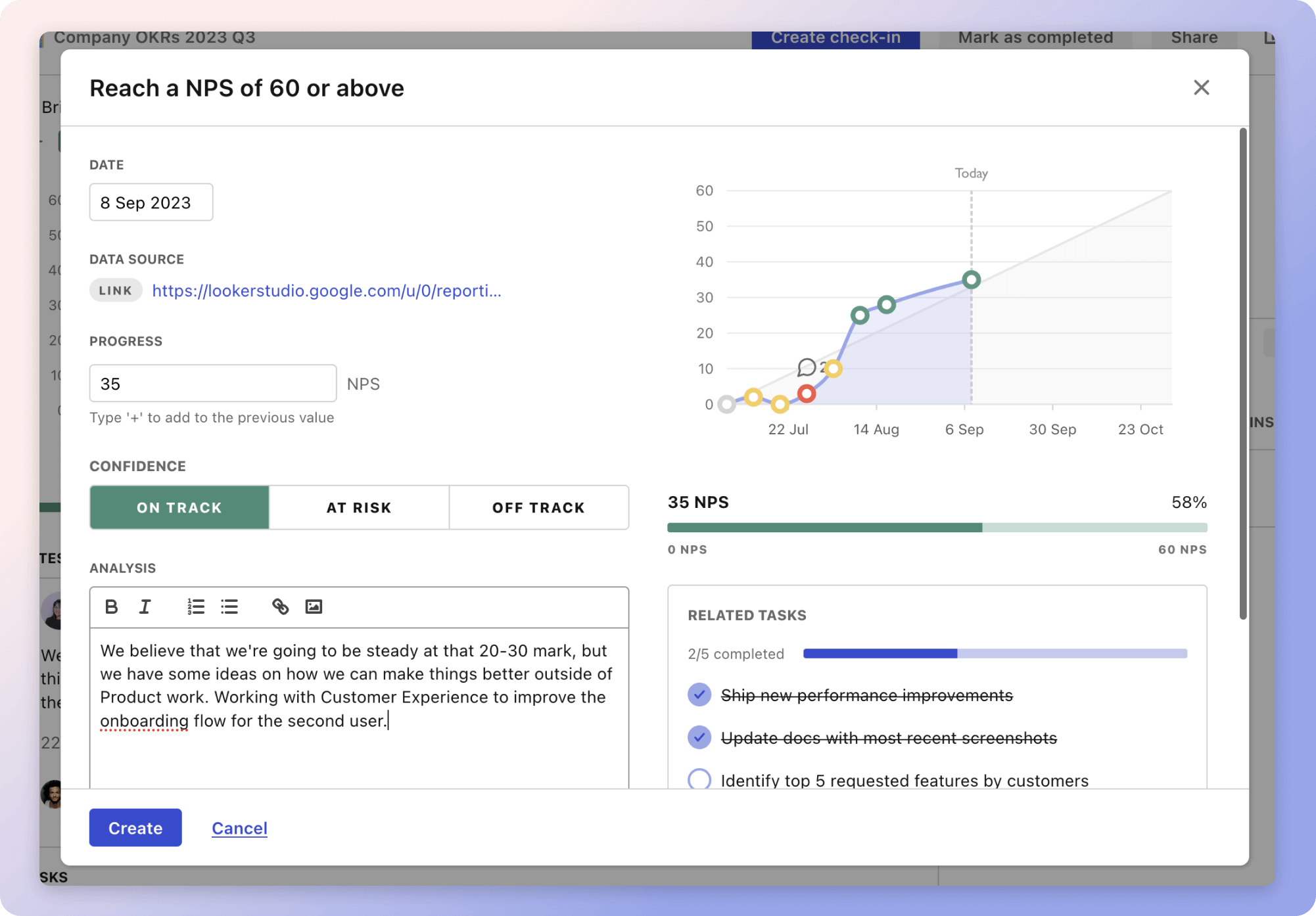
Give it a try and see how it can help you bring accountability to your strategy.