The strategy for executing priority tasks for 2026 emphasizes a structured approach to achieving set goals in the first half of the year. The first strategy involves finalizing architecture guidelines. This includes assembling a team to focus on data, solution, and business architecture, conducting workshops, and drafting guidelines. By gathering existing documentation and setting up review sessions, the team ensures that the guidelines are comprehensive and complied with, ultimately reporting their completion by the end of March.
The second strategy focuses on AI enablement and environment segregation. It begins with assessing technological capabilities and creating a plan in alignment with business goals. By collaborating with stakeholders and evaluating industry best practices, an implementation plan for AI solutions is solidified, with initial preparations set to conclude by the end of Q1.
The final strategy aims to optimize workflows and enhance data governance. This involves mapping out current workflows, identifying areas for improvement, and engaging with data governance leaders. Training sessions and continuous feedback loops will ensure teams are well-versed in optimized practices. Documenting and reporting findings by the second quarter concludes this phase.
The strategies
⛳️ Strategy 1: Finalize Architecture Guidelines
- Assemble a team with Khaled, Khalil, and Yamani to outline tasks for data, solution, and business architecture guidelines
- Set up weekly meetings to review progress and resolve issues
- Gather any existing documentation to inform guidelines, ensuring compliance with current standards
- Schedule workshops to discuss and define certified guidelines
- Draft initial versions of guidelines for team review by mid-January
- Receive feedback and finalize guidelines for data, solution, and business architecture by end of January
- Communicate completed guidelines to all relevant stakeholders and teams
- Develop a checklist to ensure adherence to new guidelines during future projects
- Create a plan for annual revisions and updates to ensure guidelines remain current
- Report the completion and circulate the guidelines to business units by end of March
⛳️ Strategy 2: Implement AI Enablement and Environment Segregation
- Identify current technological capabilities with Yamani to prepare an AI environment
- Conduct a needs assessment for environment segregation to determine necessary sandbox, dev, test, pre-prod, and prod environments
- Collaborate with stakeholders to evaluate the current environment sets
- Create an implementation plan for AI environment, ensuring alignment with business goals
- Hold team discussions to brainstorm on environment segregation improvements
- List potential vendors and technology partners for environment tools
- Evaluate best practices for AI enablement in the industry
- Draft a proposal for selected environment set architectures and AI solutions
- Implement initial phases of AI environment preparation by end of Q1
- Formalise an ongoing evaluation process to measure AI enablement effectiveness
⛳️ Strategy 3: Optimise Workflows and Enhance Data Governance
- With Yamani, identify workflows consuming excessive resources for optimisation
- Map out current workflow processes with detailed descriptions
- Identify key areas for process improvement and establish prioritised action plans
- Engage with data governance leaders like Shaimaa to define critical data rules
- Draft the governance framework to align with strategic company objectives
- Create a feedback loop to refine and enhance workflows continuously
- Organise training sessions to educate teams on newly optimised workflows
- Assess the impact of optimised workflows on business operations quarterly
- Engage Yamani and other leaders in collaborating on environment and data governance
- Document and report findings of the workflow optimisation process to executive stakeholders by Q2
Bringing accountability to your strategy
It's one thing to have a plan, it's another to stick to it. We hope that the examples above will help you get started with your own strategy, but we also know that it's easy to get lost in the day-to-day effort.
That's why we built Tability: to help you track your progress, keep your team aligned, and make sure you're always moving in the right direction.
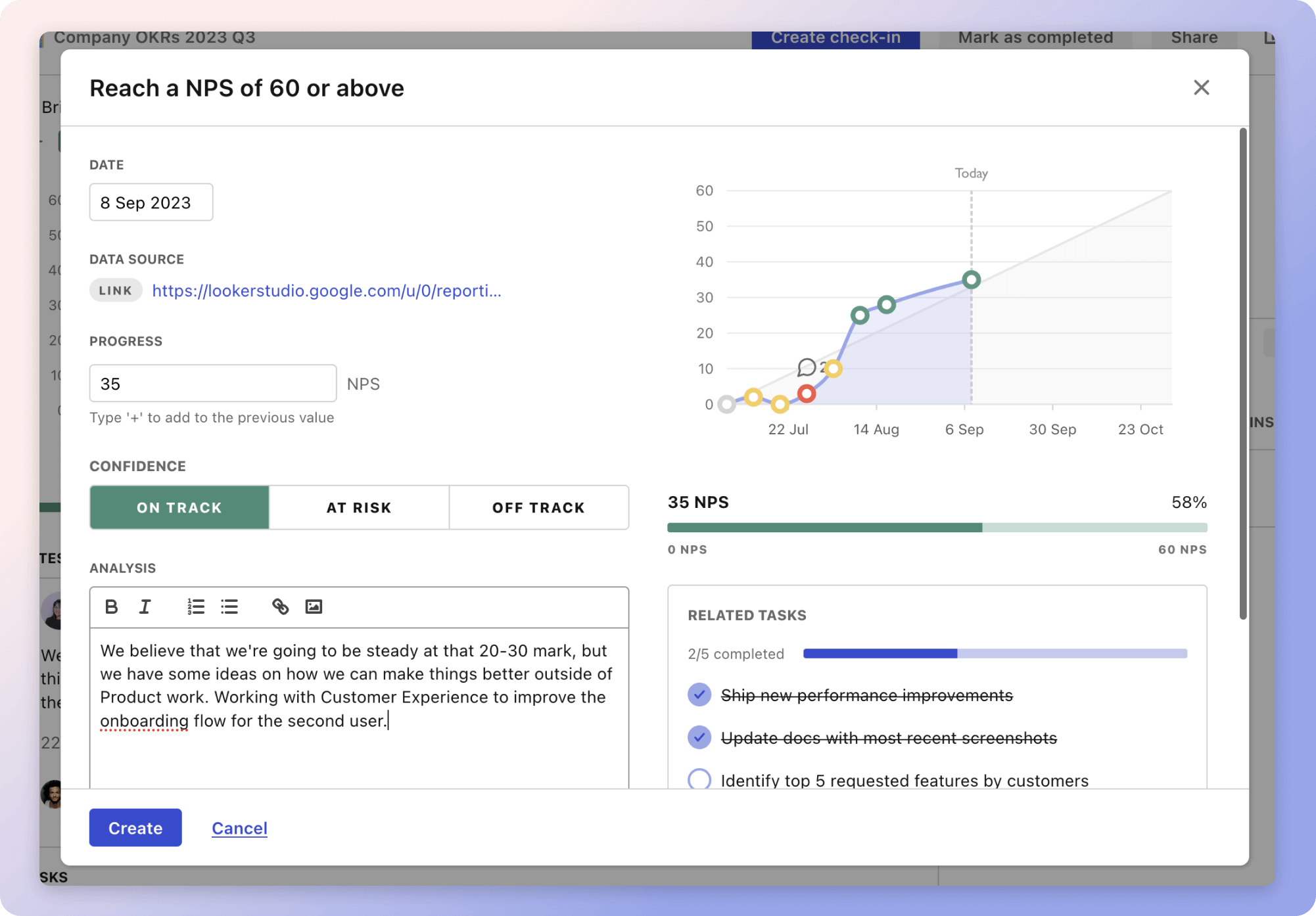
Give it a try and see how it can help you bring accountability to your strategy.