The strategy involves building a fully automated trading bot for MT5 that analyzes market trends and executes trades based on specific conditions. The first step is designing a market analysis system that includes integrating advanced charting tools and machine learning models to predict movements. For example, incorporating indicators like moving averages helps confirm trends.
Next, a dynamic trade execution system must be implemented, which automatically enters multiple trades based on the analysis. This involves creating scripts to manage varying account sizes and setting stop-orders to minimize losses. For example, trades are closed after achieving a profit of at least 0.20.
Finally, optimising profit-taking and trade placement is crucial. This includes setting criteria for immediate profit-taking and adjusting levels dynamically. The bot should continuously monitor market conditions post-trade to ensure it locks in profits progressively. For instance, utilizing an efficient arithmetical system helps calculate trade benefits accurately.
The strategies
⛳️ Strategy 1: Design a comprehensive market analysis system
- Integrate advanced charting tools to analyse current market trends
- Utilise machine learning models to predict market movements
- Incorporate indicators like moving averages and RSI for trend confirmation
- Design an algorithm to compare historical data for pattern recognition
- Set up real-time data feeds for up-to-date market analysis
- Develop a system to filter noise from the market data
- Create a risk management module to handle market volatility
- Implement backtesting using historical data to refine analysis accuracy
- Use pattern recognition techniques to identify high-probability trades
- Establish a method for cross-verifying analysis with multiple sources
⛳️ Strategy 2: Implement a dynamic trade execution system
- Write a trading script to enter multiple trades based on analysis
- Set conditions to enter a minimum of three trades per analysis result
- Develop logic to handle varying account sizes, adjusting trade quantity
- Utilise a trade management system to handle open positions
- Create stop-orders to ensure minimal losses
- Integrate a profit-taking script to close trades at a profit of 0.20 or more
- Allow for real-time account balance checks to adjust trade sizes accordingly
- Enable scalability of trades based on account growth
- Monitor all trades continuously for optimal execution
- Automate the trade execution process at optimal times
⛳️ Strategy 3: Optimise continuous profit-taking and trade placement
- Create criteria for immediate profit-taking when conditions are met
- Utilise an efficient arithmetical system to calculate trade benefits
- Integrate systems to dynamically adjust profit-taking levels
- Ensure constant analysis updates before every trade
- Set triggers to re-assess market conditions post-trade closure
- Create a feature to lock in profits progressively
- Implement a system for identifying the most profitable market sectors
- Adjust entry conditions based on prior profit realisation success
- Ensure the bot capitalises on small-scale fluctuations
- Continuously monitor profit-taking strategy performance and make necessary adjustments
Bringing accountability to your strategy
It's one thing to have a plan, it's another to stick to it. We hope that the examples above will help you get started with your own strategy, but we also know that it's easy to get lost in the day-to-day effort.
That's why we built Tability: to help you track your progress, keep your team aligned, and make sure you're always moving in the right direction.
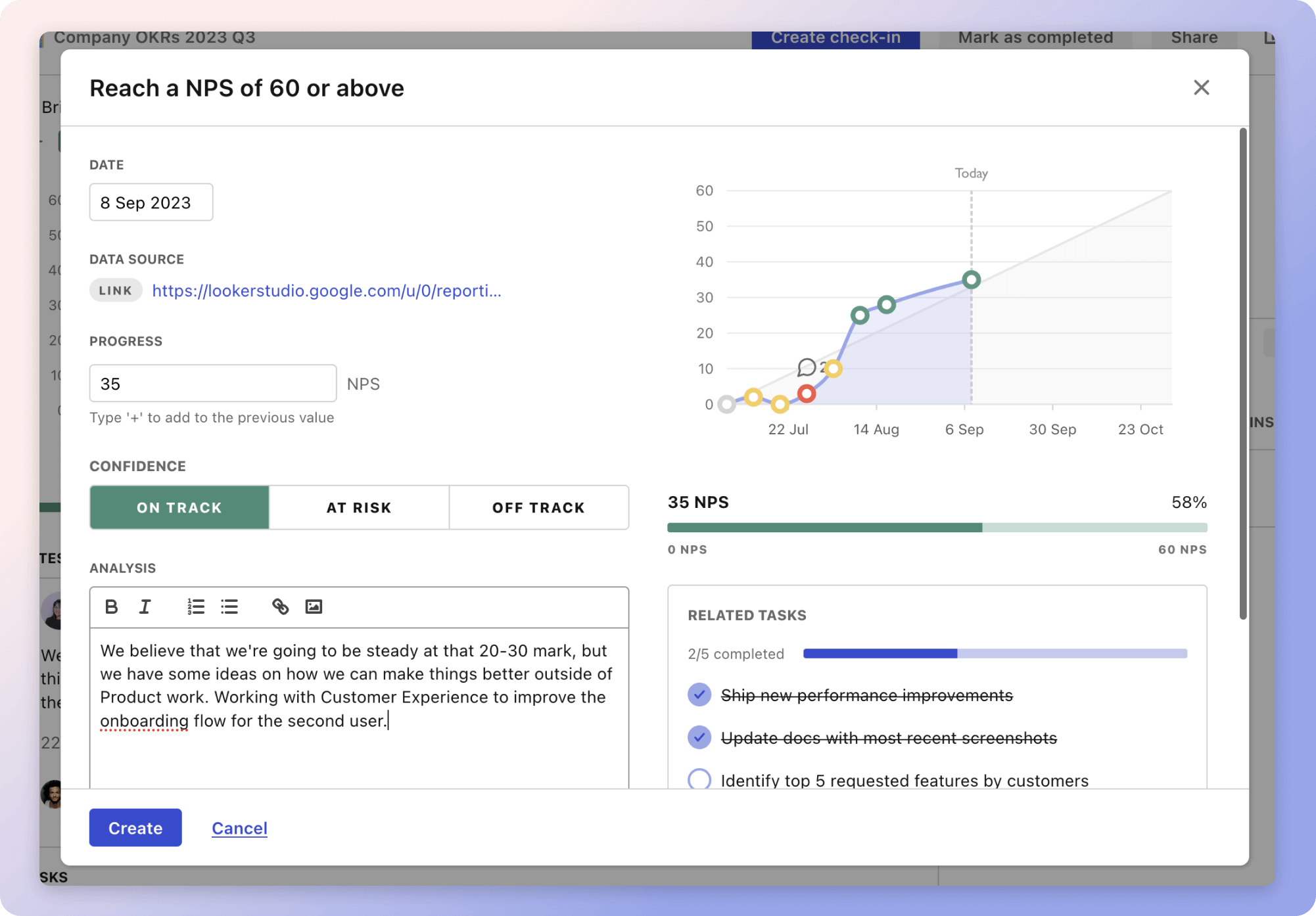
Give it a try and see how it can help you bring accountability to your strategy.