The strategy, "Designing a Sustainable Interior Space," aims to minimize environmental impact by incorporating sustainable practices into interior design. This involves using eco-certified furniture and materials that are durable, low-impact, and locally sourced to reduce transportation emissions. For example, choosing bamboo or cork, which are rapidly renewable, is encouraged.
Additionally, enhancing energy and water usage is crucial. Installing LED lighting, Energy Star-rated appliances, and dual-flush toilets can boost efficiency. Smart layout designs maximize natural light, while programmable thermostats and smart tech oversee resource use.
Moreover, the strategy improves indoor environmental quality. Elements like non-toxic paints and proper ventilation elevate air quality. Biophilic design and green roofs introduce natural elements, enhancing wellbeing and ecological benefits.
The strategies
⛳️ Strategy 1: Incorporate Sustainable Materials
- Use eco-certified furniture such as FSC and Cradle to Cradle certified products
- Select materials that are low-impact and long-lasting to ensure durability
- Source materials and products locally to reduce transportation emissions
- Opt for designs that allow for flexibility and future adaptability
- Choose rapidly renewable materials like bamboo and cork
- Incorporate recycled or reclaimed materials in the design
- Avoid materials that emit high levels of VOCs or other harmful toxins
- Use modular designs to minimise waste and support reuse
- Implement a circular design approach that considers disassembly and reuse
- Incorporate low-flow water fixtures and appliances to enhance water efficiency
⛳️ Strategy 2: Enhance Energy and Water Usage
- Install energy-saving LED lighting with motion and occupancy sensors
- Use only Energy Star-rated appliances to ensure efficiency
- Maximise natural daylight by using reflective surfaces and smart layout designs
- Utilise programmable thermostats to manage energy use effectively
- Install dual-flush toilets and greywater systems for water conservation
- Select drought-resistant indoor plants to reduce water consumption
- Conduct audits on site to measure and improve water and energy efficiency
- Incorporate smart technology for continuous monitoring of sustainability metrics
- Integrate energy and resource modeling tools to assess efficiency
- Consider energy-zoning to optimise heating and cooling in different areas
⛳️ Strategy 3: Optimise Indoor Environmental Quality
- Use non-toxic paints, adhesives, and sealants to improve air quality
- Ensure proper ventilation and air filtration systems are installed
- Incorporate elements of biophilic design to bring natural elements indoors
- Design spaces for acoustic comfort using sound-absorbing panels
- Provide easy access for recycling and composting to manage waste
- Use modular flooring and fixtures to allow for reusability
- Minimise packaging waste through tailored supplier agreements
- Conduct pre- and post-construction waste audits for accountability
- Design outdoor areas with permeable surfaces to reduce environmental runoff
- Incorporate green roofs and walls to support the building’s ecological footprint
Bringing accountability to your strategy
It's one thing to have a plan, it's another to stick to it. We hope that the examples above will help you get started with your own strategy, but we also know that it's easy to get lost in the day-to-day effort.
That's why we built Tability: to help you track your progress, keep your team aligned, and make sure you're always moving in the right direction.
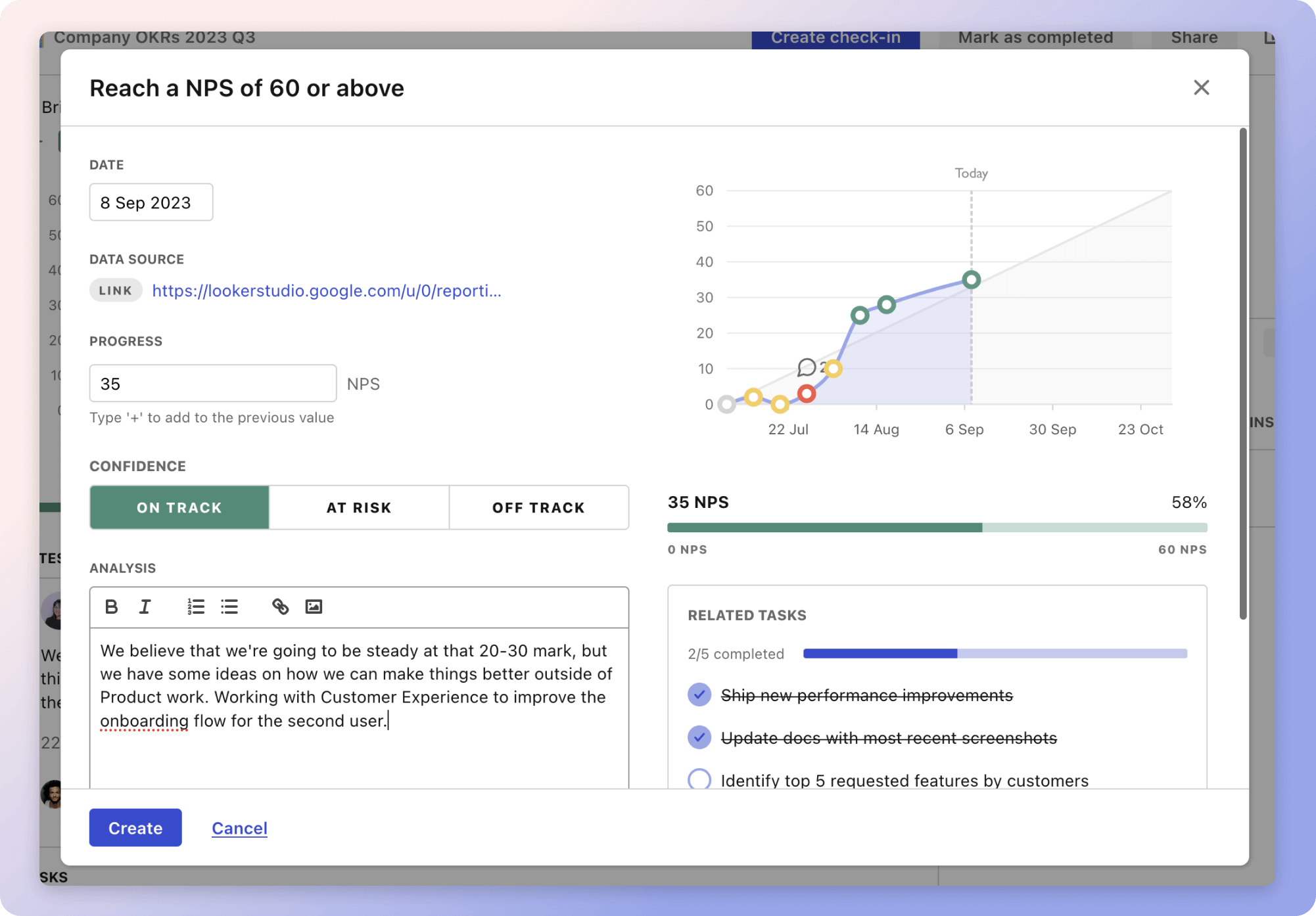
Give it a try and see how it can help you bring accountability to your strategy.