The strategy centers around using 50 and 200-day exponential moving averages (EMAs) in trading decisions. Initially, it involves collecting historical price data to calculate these EMAs for determining the direction of market trends. By identifying crossovers, traders can use these as indicators for potential buy or sell signals. To enhance accuracy, integrating EMAs with other technical indicators and staying informed on market news is crucial.
Furthermore, optimizing trading strategies means setting clear rules based on EMA crossovers, including risk management tactics like stop-loss and take-profit levels. Regular testing and adjustments to the strategy in different market conditions help refine the approach and improve trading outcomes.
Education and communication are key. This involves researching EMA theory, participating in webinars on technical analysis, and engaging with trading communities for feedback and insights. Training programs and discussions help traders interpret EMA signals correctly and ensure effective collaboration within teams.
The strategies
⛳️ Strategy 1: Analyse market trends
- Collect historical price data for assets of interest
- Calculate the 50 and 200-day exponential moving averages for each asset
- Identify the current trend direction by comparing the EMAs
- Look for crossovers as potential buy or sell signals
- Integrate trend direction with other technical indicators for confirmation
- Regularly update EMAs to reflect the latest data
- Incorporate market news to contextualise EMA signals
- Backtest EMA-based strategies on historical data
- Adjust EMA parameters based on the asset's volatility
- Document findings and refine trading plan based on EMA performance
⛳️ Strategy 2: Optimise trading strategies
- Develop a set of trading rules utilising the 50 and 200-day EMAs
- Set clear entry and exit points based on EMA crossovers
- Incorporate stop-loss and take-profit levels to manage risk
- Analyse performance of EMA strategies in various market conditions
- Test different timeframes to find optimal EMA settings
- Combine EMA strategies with other technical and fundamental analysis
- Regularly review and adjust trading rules to improve outcomes
- Monitor trades and assess the effectiveness of the EMA signals
- Report on trading performance monthly to identify patterns
- Iterate on strategies based on performance insights
⛳️ Strategy 3: Educate and communicate
- Research the theory behind exponential moving averages
- Attend webinars or workshops on technical analysis
- Engage with online trading communities for insights and feedback
- Share trading experiences and EMA strategies in forums
- Design a training program for new traders on using EMAs
- Create simple guides on interpreting EMA signals correctly
- Develop a glossary of terms related to moving averages
- Host discussions on different EMA strategies and their effectiveness
- Encourage collaborative analysis within trading teams
- Provide regular updates on market conditions impacting EMA use
Bringing accountability to your strategy
It's one thing to have a plan, it's another to stick to it. We hope that the examples above will help you get started with your own strategy, but we also know that it's easy to get lost in the day-to-day effort.
That's why we built Tability: to help you track your progress, keep your team aligned, and make sure you're always moving in the right direction.
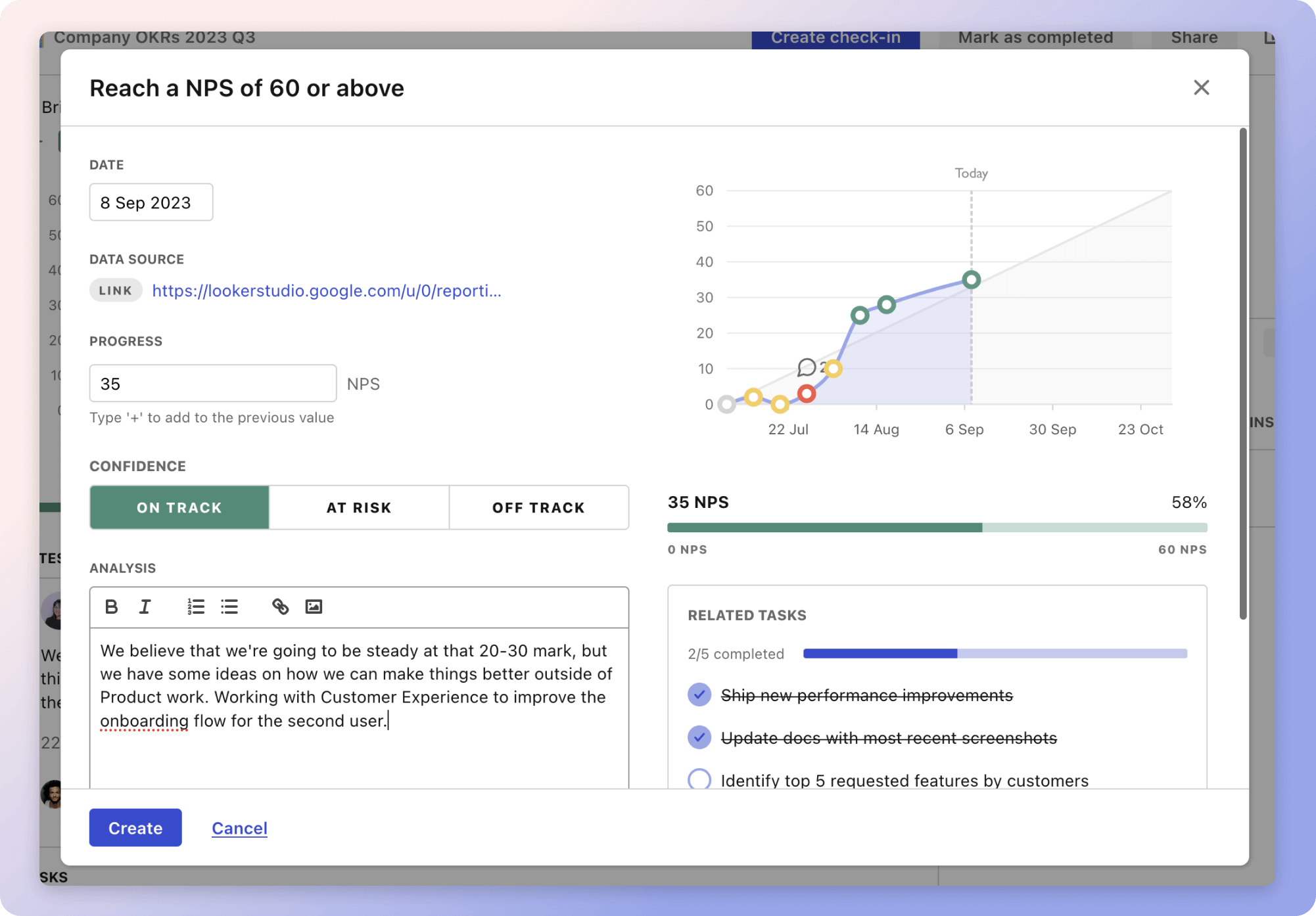
Give it a try and see how it can help you bring accountability to your strategy.