The strategy "Designing an AI corporate implementation strategy" is focused on facilitating AI adoption across small businesses in a company's investment portfolio. It comprises three main elements: conducting readiness assessments, developing tailored training programs, and implementing pilot projects.
Conducting an AI readiness assessment involves evaluating a business’s technology infrastructure and workforce AI literacy, identifying data quality, and analyzing industry adoption trends. This approach helps prioritize which businesses should receive AI solutions first. For example, a business with a robust IT setup and high data quality will score better on the readiness scale.
Developing tailored AI training programs focuses on identifying industry-specific AI concepts and creating adaptable curriculums. Interactive workshops and case studies are integrated to enhance practical understanding, leveraging partnerships with industry experts for real-world insights, thereby ensuring the workforce is well-prepared.
Implementing AI pilot projects allows for hands-on trials, setting objectives and KPIs, and leveraging partnerships with tech vendors. Businesses can fine-tune AI solutions before scaling, based on continuous monitoring and feedback.
The strategies
⛳️ Strategy 1: Conduct an AI readiness assessment
- Evaluate each business's current technology infrastructure
- Identify data availability and quality for AI integration
- Assess each business's workforce AI literacy levels
- Determine specific AI needs and challenges for each business
- Develop a readiness scoring system for prioritisation
- Collect feedback from key stakeholders within each business
- Analyse industry-specific AI adoption trends
- Prepare a report on findings and recommendations
- Presentation of assessment results to portfolio management
- Decide which businesses to prioritise for AI implementation
⛳️ Strategy 2: Develop tailored AI training programmes
- Identify key AI concepts relevant to each business sector
- Create a curriculum that is scalable and adaptable for different businesses
- Schedule and organise interactive workshops and webinars
- Develop case studies showcasing successful AI implementations
- Recruit industry experts to lead training sessions
- Incorporate hands-on training for practical understanding
- Prepare training materials and resources for continuous learning
- Set up feedback mechanisms to assess training effectiveness
- Facilitate peer-learning groups for post-training support
- Integrate AI training into regular professional development programs
⛳️ Strategy 3: Implement AI pilot projects
- Select pilot business partners willing to engage in AI trials
- Identify specific processes or areas for AI enhancement in pilot businesses
- Collaborate with AI technology vendors for turnkey solutions
- Establish clear objectives and KPIs for each pilot project
- Set up data collection and analysis mechanisms for pilot evaluation
- Monitor pilot progress through regular check-ins and reports
- Adjust implementations based on insights and feedback
- Capture learnings and case studies from each pilot
- Develop scaling strategies for successful pilot initiatives
- Report pilot outcomes to stakeholders, recommending further rollouts
Bringing accountability to your strategy
It's one thing to have a plan, it's another to stick to it. We hope that the examples above will help you get started with your own strategy, but we also know that it's easy to get lost in the day-to-day effort.
That's why we built Tability: to help you track your progress, keep your team aligned, and make sure you're always moving in the right direction.
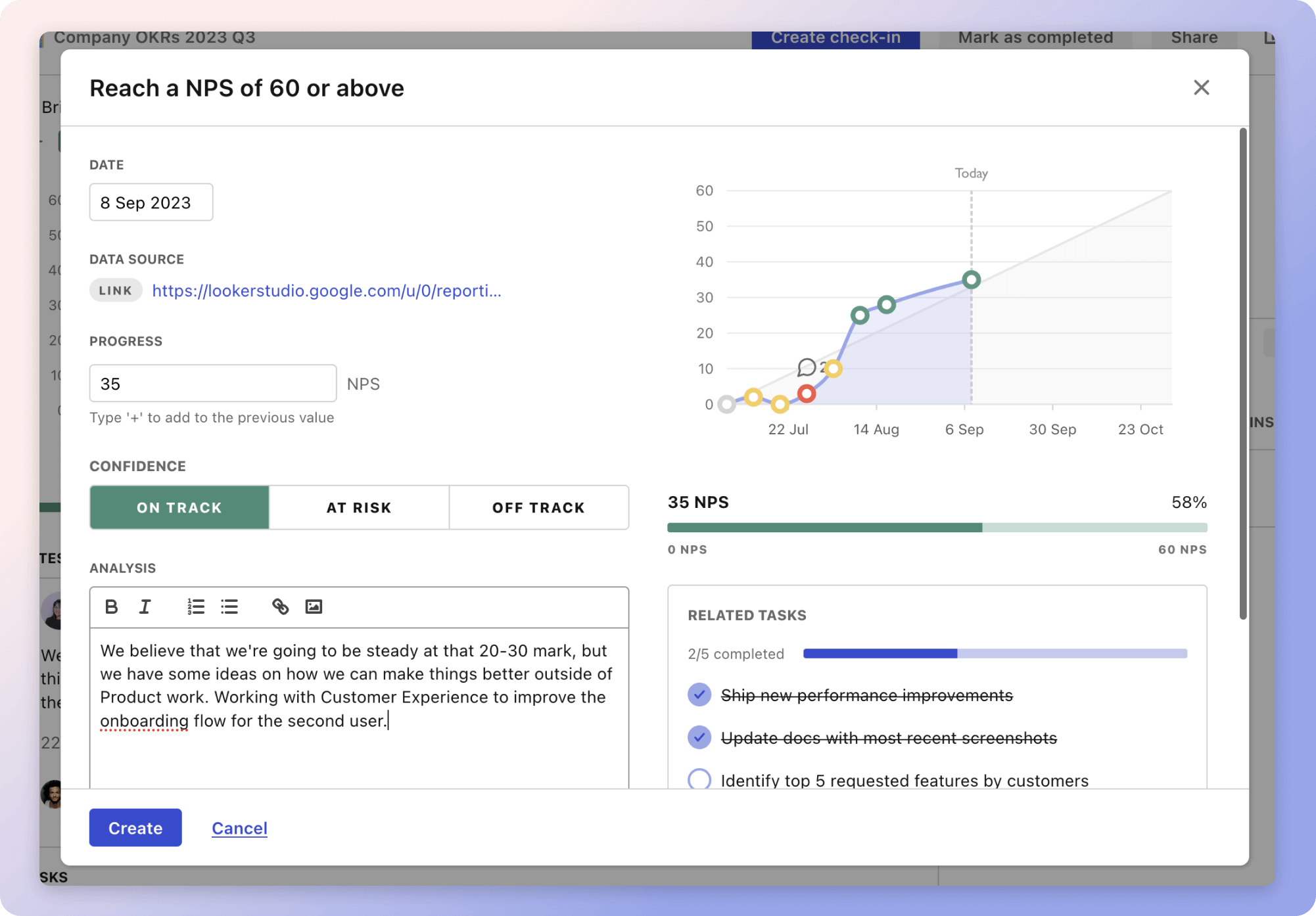
Give it a try and see how it can help you bring accountability to your strategy.