The strategy outlined revolves around using the Relative Strength Index (RSI) as a key indicator for making informed buying and selling decisions in trading. Initially, it involves analyzing market conditions. By researching current trends and assessing historical data, one can define RSI levels specific to a chosen asset. This step also involves setting thresholds for when to buy or sell based on market and asset volatility, regularly updating these parameters as market conditions shift.
An integral part of the strategy is automating the trading process. Using a reliable platform, traders can script processes that monitor RSI levels in real time, automatically executing transactions when RSI thresholds are met. This automation includes features like stop-loss and take-profit levels to manage risk, supported by regular updates and backtesting to ensure efficiency.
To enhance accuracy, the strategy recommends combining RSI with other indicators, like moving averages and MACD. This combination offers additional confirmatory signals for market decisions, thereby refining and validating trade signals. Regular reassessment of these combined indicators against standalone RSI results helps in maintaining an effective strategy.
The strategies
⛳️ Strategy 1: Analyse market conditions
- Research current market trends to define suitable RSI levels for your asset
- Identify the asset or index you want to apply the strategy to
- Use historical data to understand the average RSI range for the chosen asset
- Determine the periods that correspond to overbought and oversold conditions
- Set the RSI thresholds for buying and selling based on historical data
- Evaluate macroeconomic factors that might affect the RSI values
- Assess the asset's volatility to refine your RSI strategy
- Use technical analysis to validate RSI thresholds with other indicators
- Regularly review and update RSI levels based on market changes
- Identify similar assets for comparative RSI analysis
⛳️ Strategy 2: Automate the buying and selling process
- Select a reliable trading platform that supports RSI-based trading automation
- Create a script using the platform's API to monitor RSI levels in real-time
- Set the script to trigger buy orders when RSI falls below your predefined low threshold
- Set the script to trigger sell orders when RSI exceeds your predefined high threshold
- Implement stop-loss and take-profit levels within the script to manage risk
- Backtest the script using historical data to evaluate its effectiveness
- Adjust the script parameters based on backtesting results
- Regularly monitor the automated system and make tweaks as needed
- Enable notifications to alert you of buy and sell executions
- Perform regular maintenance and updates on the script
⛳️ Strategy 3: Combine RSI strategy with other indicators
- Investigate complementary technical indicators such as moving averages and MACD
- Integrate a moving average analysis to confirm RSI-based buy and sell signals
- Use MACD crossovers as an additional confirmation for entry and exit points
- Establish rules for when RSI and other indicators should agree for action
- Test the integrated strategy using historical data for validation
- Refine the strategy by adjusting thresholds based on combined indicator outcomes
- Continuously analyse market results to ensure synergy among indicators
- Diversify assets to apply the multi-indicator strategy across different markets
- Regularly update your integrated strategy with new insights
- Evaluate the performance of combined indicators against standalone RSI signals
Bringing accountability to your strategy
It's one thing to have a plan, it's another to stick to it. We hope that the examples above will help you get started with your own strategy, but we also know that it's easy to get lost in the day-to-day effort.
That's why we built Tability: to help you track your progress, keep your team aligned, and make sure you're always moving in the right direction.
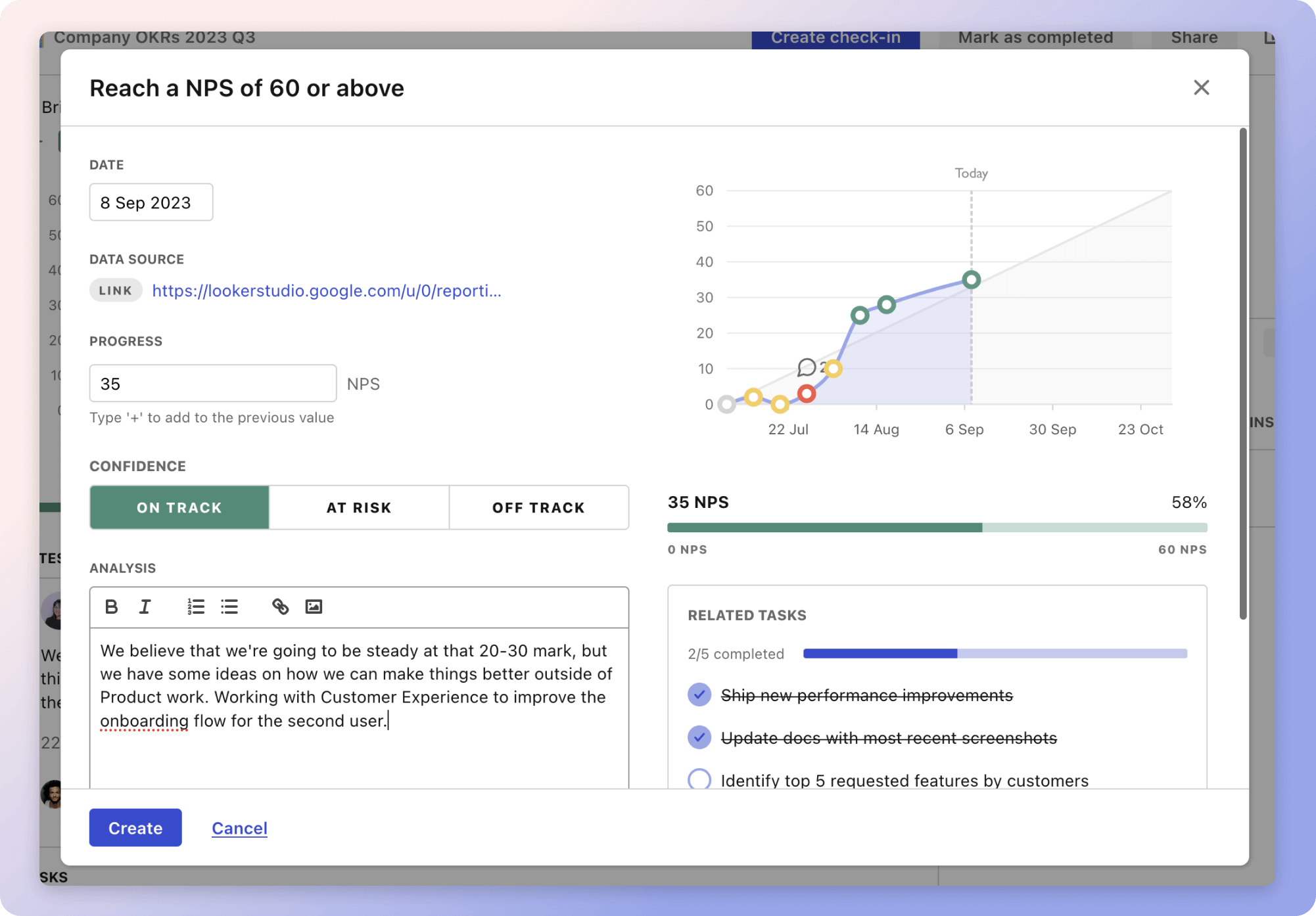
Give it a try and see how it can help you bring accountability to your strategy.