The strategy "Facilitating local partnership networks" focuses on creating effective networks by engaging key local actors. Initially, it involves identifying and mapping local stakeholders in fields like education, employment, and youth services. For instance, conducting research to compile contact details and roles of these stakeholders is crucial. A comprehensive database aids in understanding the dynamics among them, setting the stage for establishing Local Partnership Networks (LPNs).
Once the LPNs are formed, assessing the training needs of participating institutions becomes vital. This involves surveys and focus groups to pinpoint capacity gaps. The insights gained lead to tailored training programs targeting these deficiencies. In practice, designing a curriculum based on assessment outcomes ensures the program addresses real needs. A robust implementation plan, including scheduling and trainer selection, and feedback mechanisms, ensures its effectiveness.
The strategies
⛳️ Strategy 1: Establish and map local actors
- Conduct initial research to identify key local actors in employment, education, social protection, youth services, and local governance
- Create a comprehensive database of identified actors with contact information and roles
- Schedule meetings with identified actors to explain the concept of Local Partnership Networks (LPNs)
- Map relationships and roles of each actor within the local context
- Prepare a report summarising the findings from the mapping exercise
- Identify potential champions among the actors to lead the establishment of LPNs
- Facilitate initial meetings to connect local actors and discuss LPN objectives
- Develop a charter or agreement outlining the structure and objectives of each LPN
- Assign roles and responsibilities within the LPNs
- Establish regular communication channels among the members of each LPN
⛳️ Strategy 2: Conduct training needs assessment
- Design and distribute a survey to institutions participating in the LPNs to determine training needs
- Conduct focus group discussions with stakeholders to gather qualitative data on capacity gaps
- Analyse survey and focus group data to identify the main areas where training is required
- Create a needs assessment report highlighting key skills and capacity gaps
- Share the assessment findings with LPN members to validate results
- Collaborate with experts to prioritise training topics based on assessment results
- Determine the preferred training formats and methodologies for participating institutions
- Establish criteria for selecting participants for the training programme
- Draft a preliminary list of topics and modules for the training programme
- Plan a feedback session with LPN members to refine the training needs assessment
⛳️ Strategy 3: Design and implement the training programme
- Develop a curriculum for the training programme addressing identified capacity gaps
- Create training materials and resources tailored to the specific needs of the institutions
- Schedule the training sessions across the three pilot municipalities
- Secure venues and necessary equipment for conducting the training sessions
- Identify and hire qualified trainers or facilitators to deliver the training
- Launch a communication campaign to inform about the training programme and encourage participation
- Conduct training sessions and collect real-time feedback from participants
- Provide follow-up support and troubleshooting for participants post-training
- Facilitate sharing of best practices and experiences among participants through peer learning platforms
- Gather overall feedback on training effectiveness and document outcomes for evaluation and future iterations
Bringing accountability to your strategy
It's one thing to have a plan, it's another to stick to it. We hope that the examples above will help you get started with your own strategy, but we also know that it's easy to get lost in the day-to-day effort.
That's why we built Tability: to help you track your progress, keep your team aligned, and make sure you're always moving in the right direction.
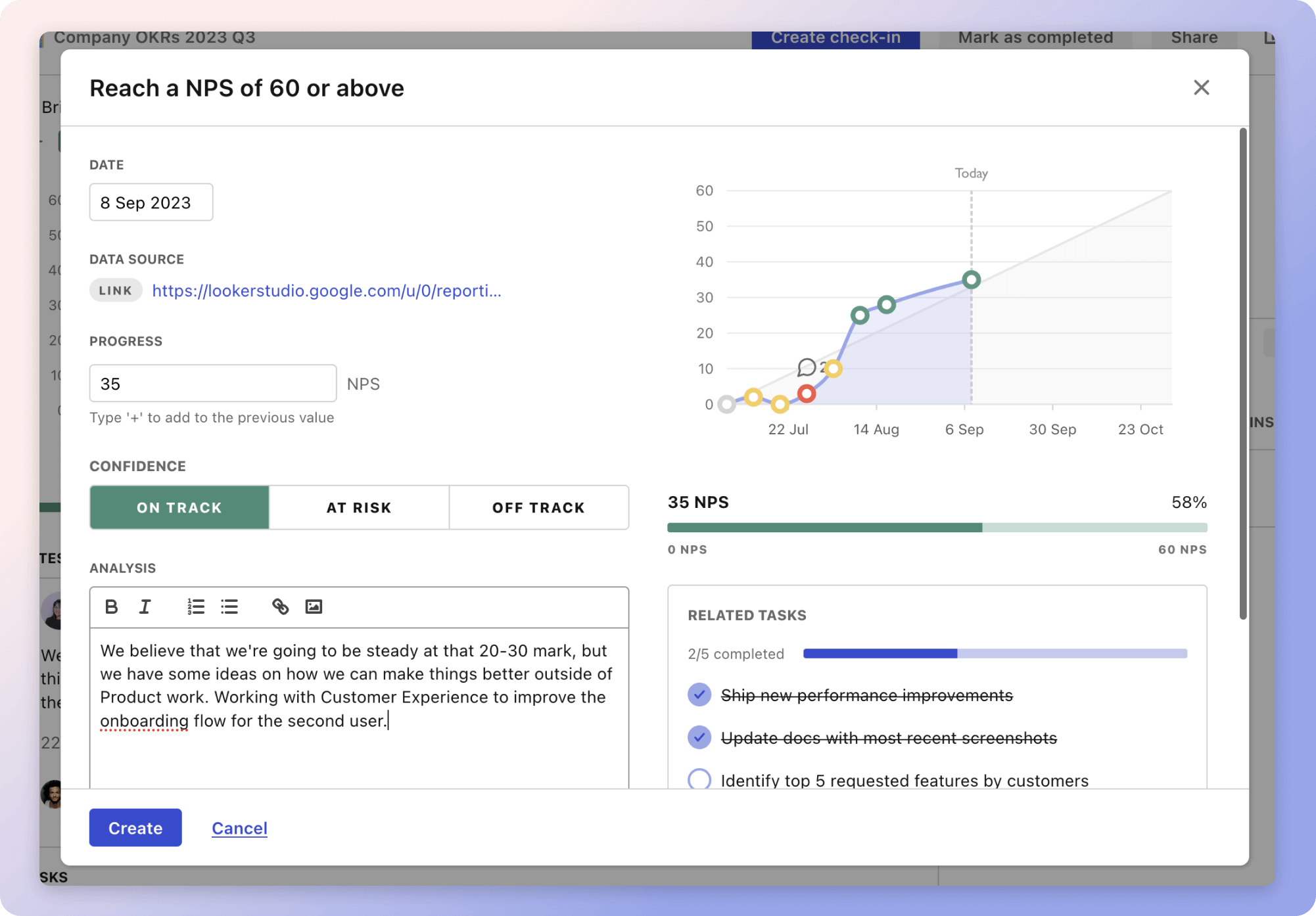
Give it a try and see how it can help you bring accountability to your strategy.