The AI strategy for XAUUSD trading focuses on leveraging advanced machine learning, deep learning, and reinforcement learning techniques to enhance trading outcomes. By employing machine learning models, the strategy aims to predict gold price movements effectively. For instance, using models like linear regression and decision trees helps evaluate data performance with metrics like RMSE and R-squared. This analysis enables traders to select the best model for real-time trading.
Deep learning techniques, with frameworks such as TensorFlow, facilitate time series forecasting for more complex data patterns. Traders can create neural networks to improve prediction accuracy, using GPUs to speed up computation. Implementing methods like dropout prevents overfitting and ensures that the model remains robust in dynamic market conditions.
Reinforcement learning algorithms empower traders to develop automated decision-making processes. By simulating trading environments and designing reward functions aligned with profitability, the strategy teaches AI systems to make optimal trading decisions. This continuous learning process adapts to evolving market trends, maintaining a competitive edge.
The strategies
⛳️ Strategy 1: Utilise machine learning models
- Research the most effective machine learning models for financial prediction
- Collect historical XAUUSD data from reliable sources
- Clean and preprocess the data for modelling
- Divide the data into training and test sets for model evaluation
- Train multiple machine learning models using the training data
- Evaluate model performance using metrics like RMSE and R-squared
- Select the best-performing model for predicting XAUUSD price movements
- Integrate the selected model into a real-time trading platform
- Continuously monitor model performance and adjust parameters as needed
- Regularly update the model with new data to maintain accuracy
⛳️ Strategy 2: Implement deep learning techniques
- Explore deep learning frameworks such as TensorFlow or PyTorch
- Gather extensive XAUUSD datasets for training deep learning models
- Develop a neural network architecture suitable for time series forecasting
- Preprocess the dataset to normalise and structure it for deep learning
- Use GPUs for faster deep learning model training
- Train the neural network on historical data and validate its accuracy
- Implement dropout and regularisation techniques to prevent overfitting
- Test the deep learning model on unseen data to confirm predictive strength
- Deploy the deep learning model into a live trading environment
- Continuously refine the model using updated market data for improved prediction
⛳️ Strategy 3: Adopt reinforcement learning algorithms
- Understand the basics of reinforcement learning and its applications in trading
- Select a suitable reinforcement learning algorithm such as DQN or PPO
- Collect live market data of XAUUSD for real-time learning
- Design a reward function that aligns with profitability in trading actions
- Simulate trading environments for the reinforcement learning model to interact
- Train the model to make optimal buy, sell, or hold decisions
- Use backtesting to evaluate the reinforcement learning strategy's performance
- Integrate the reinforcement learning model into an automated trading system
- Monitor the system's performance and ensure compliance with risk management
- Continuously retrain the model to adapt to changing market conditions
Bringing accountability to your strategy
It's one thing to have a plan, it's another to stick to it. We hope that the examples above will help you get started with your own strategy, but we also know that it's easy to get lost in the day-to-day effort.
That's why we built Tability: to help you track your progress, keep your team aligned, and make sure you're always moving in the right direction.
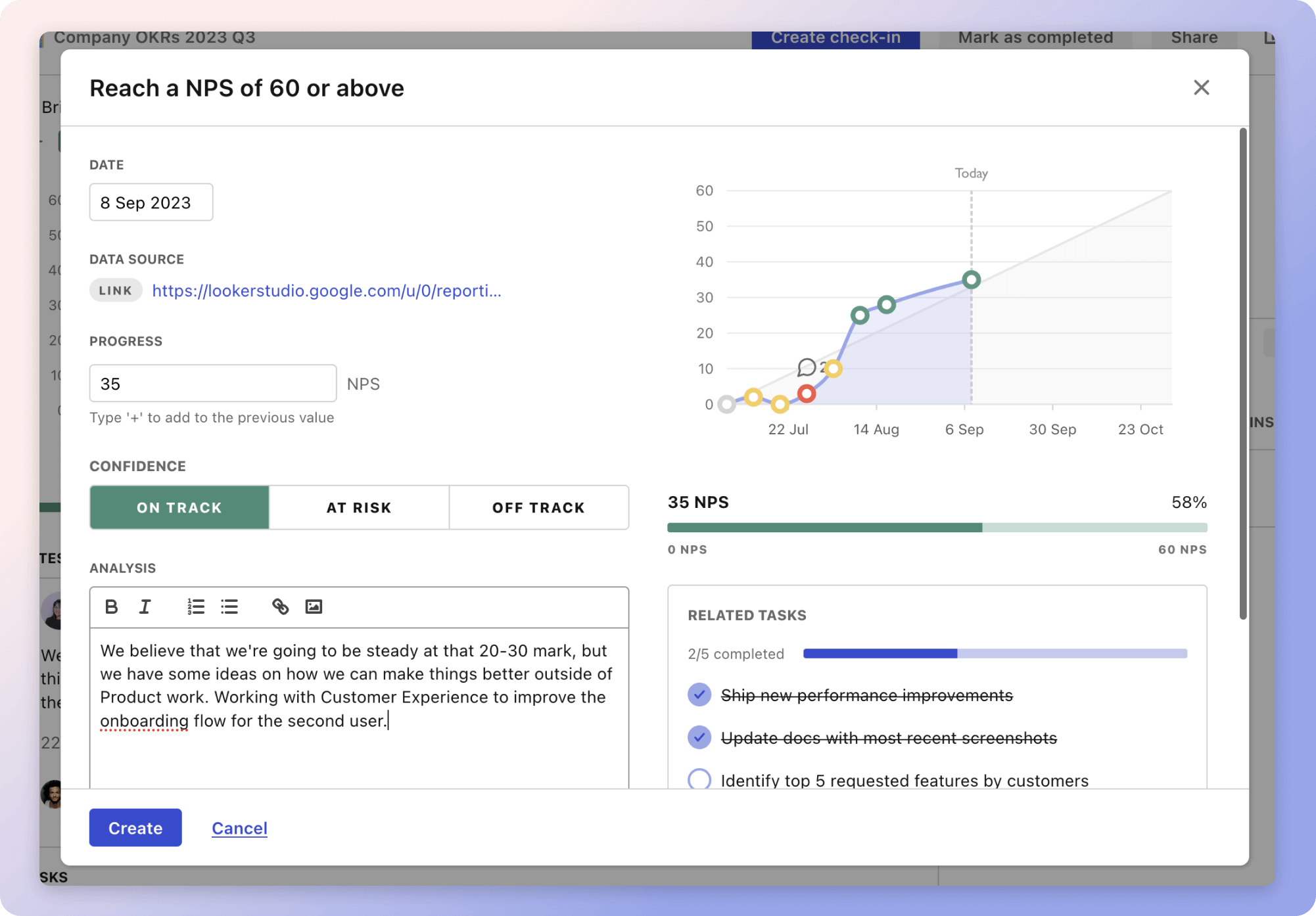
Give it a try and see how it can help you bring accountability to your strategy.