Designing experiential learning experiences focuses on creating engaging and effective educational environments both online and offline. One key strategy is incorporating technology into online experiences, using platforms with gamification elements like points and badges. For example, virtual simulations can offer hands-on practice in subjects like science. Offline, strategies include designing physical activities that mimic real-life scenarios, such as role-playing exercises to foster critical thinking. An example might be a field trip that complements classroom learning. Combining these, a hybrid learning approach merges digital and physical experiences, offering students diverse learning modalities while monitoring progress across formats.
The strategies
⛳️ Strategy 1: Incorporate technology for online experiences
- Research the latest technologies in gamification platforms
- Identify key disciplines where technology can enhance learning experiences
- Select and test appropriate platforms for different subjects
- Develop interactive content tailored for each discipline
- Integrate gamification elements such as points, badges, and leaderboards
- Create virtual simulations for hands-on practice
- Host pilot sessions to gather feedback from students
- Refine and adjust content based on user feedback
- Train educators on using technological tools effectively
- Continuously update technology to keep pace with advancements
⛳️ Strategy 2: Create engaging offline experiential learning
- Identify learning objectives and outcomes for each discipline
- Design physical activities that mimic real-life scenarios
- Develop role-playing exercises to foster critical thinking
- Incorporate problem-solving challenges into lesson plans
- Use visual aids and props to enhance experiential learning
- Integrate group activities to promote teamwork
- Organise field trips or site visits relevant to the subject
- Collect feedback from students to assess engagement levels
- Adjust activities based on constructive feedback
- Encourage reflection and discussion post activities
⛳️ Strategy 3: Hybrid learning approach
- Analyse the strengths of both online and offline methods
- Create a blend of digital and physical learning materials
- Develop a curriculum that balances screen time and hands-on activities
- Utilise digital tools to supplement physical experiences
- Facilitate both in-person and virtual discussion groups
- Provide options for students to choose preferred learning modalities
- Implement tracking methods to monitor progress in different formats
- Evaluate the effectiveness through regular assessments
- Offer support and resources for seamless transition between modes
- Gather feedback to continuously improve the hybrid model
Bringing accountability to your strategy
It's one thing to have a plan, it's another to stick to it. We hope that the examples above will help you get started with your own strategy, but we also know that it's easy to get lost in the day-to-day effort.
That's why we built Tability: to help you track your progress, keep your team aligned, and make sure you're always moving in the right direction.
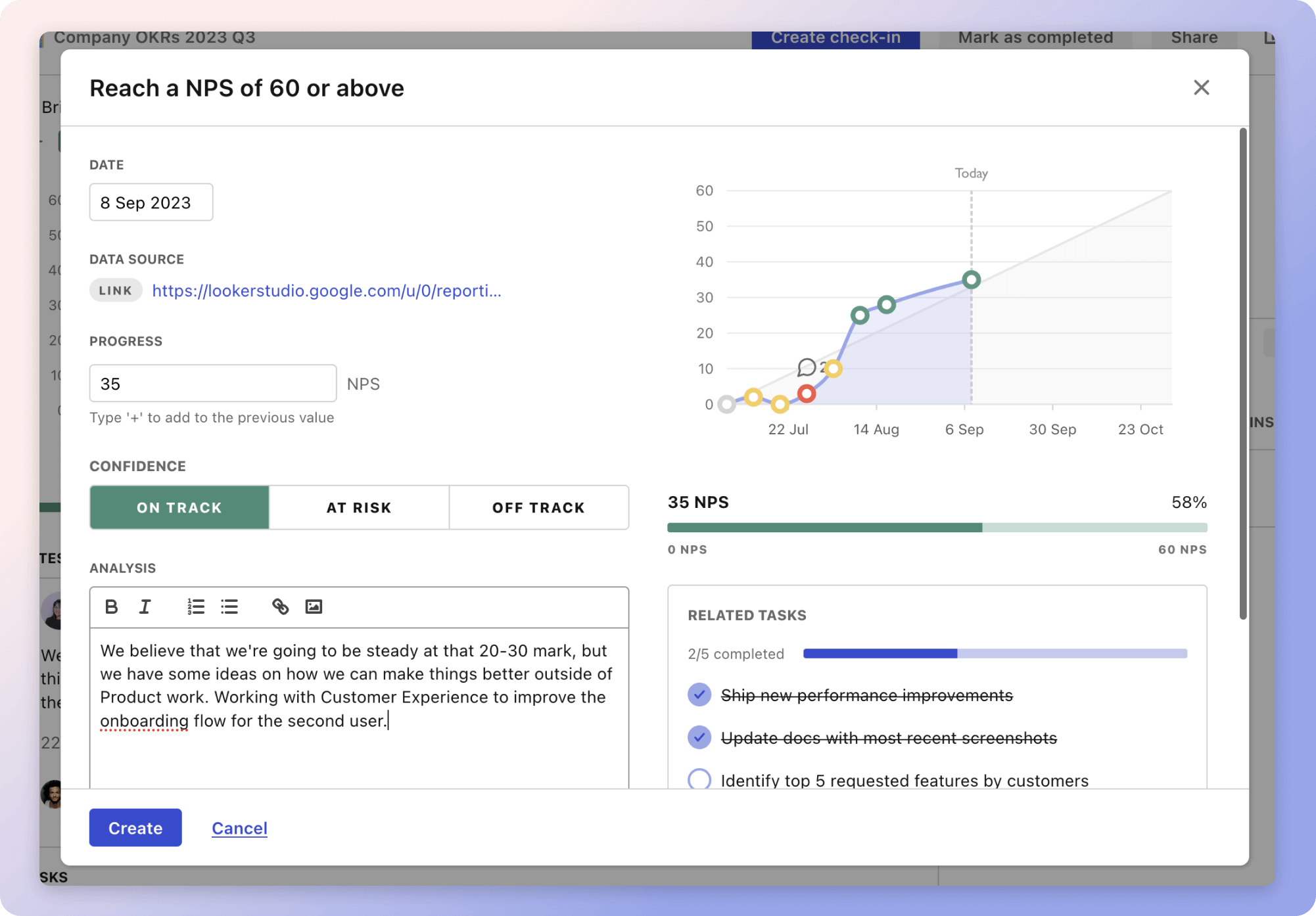
Give it a try and see how it can help you bring accountability to your strategy.