The strategy "Improving Consultative Discovery Skills" focuses on shifting from merely taking orders to solving client problems by discovering hidden needs during consultations. By conducting structured research, professionals can understand industry challenges and keep abreast of client needs. For instance, reading case studies and attending webinars can help illustrate effective approaches, much like analyzing competitor strategies and engaging with online forums for new insights.
Active listening skills are crucial for successful discovery calls. Techniques such as role-playing exercises, recording calls, and summarizing client needs emphasize understanding and empathy. These methods encourage professionals to ask the right questions, thereby uncovering underlying issues that might otherwise remain hidden.
Lastly, enhancing questioning techniques helps in drawing out valuable information from clients. Preparing tailored questions, employing storytelling, and incorporating meaningful pauses after queries facilitate deeper client engagement. Continuous learning through seminars and peer groups ensures that these techniques evolve in line with the latest consultative approaches.
The strategies
⛳️ Strategy 1: Conduct structured research
- Research common challenges in the industry of your clients
- Read case studies on successful consultative selling
- Attend workshops or webinars on discovery call techniques
- Identify key influencers and thought leaders in consultative selling
- Follow industry trends to understand evolving client needs
- Gather feedback from peers who excel in discovery
- Subscribe to industry-specific publications and newsletters
- Conduct competitor analysis to learn from their approach
- Analyze past client interactions to identify areas for improvement
- Join online forums that discuss bad and good consultative strategies
⛳️ Strategy 2: Practice active listening
- Participate in role-playing exercises with a focus on listening
- Record and review your discovery calls for self-assessment
- Practise summarising client needs to ensure understanding
- Develop a habit of asking open-ended questions
- Take notes on client cues for latent needs
- Engage in daily exercises to improve concentration and mindfulness
- Seek feedback on your active listening skills from colleagues
- Adapt reflective listening to confirm client statements
- Practice empathy by fully placing yourself in the client's situation
- Reduce distractions in your call environment to maintain focus
⛳️ Strategy 3: Enhance questioning techniques
- Study different types of questions and their uses in discovery
- Prepare a set of tailored, probing questions for different scenarios
- Utilise storytelling to relate questions to real-world situations
- Incorporate silence after questions to encourage client response
- Analyse successful calls for effective questioning strategies
- Test and refine questioning strategies during practice sessions
- Join a peer group to exchange effective questioning techniques
- Record and assess reactions of clients to various questions
- Regularly review and update your question bank
- Attend seminars on high-level consultative questioning
Bringing accountability to your strategy
It's one thing to have a plan, it's another to stick to it. We hope that the examples above will help you get started with your own strategy, but we also know that it's easy to get lost in the day-to-day effort.
That's why we built Tability: to help you track your progress, keep your team aligned, and make sure you're always moving in the right direction.
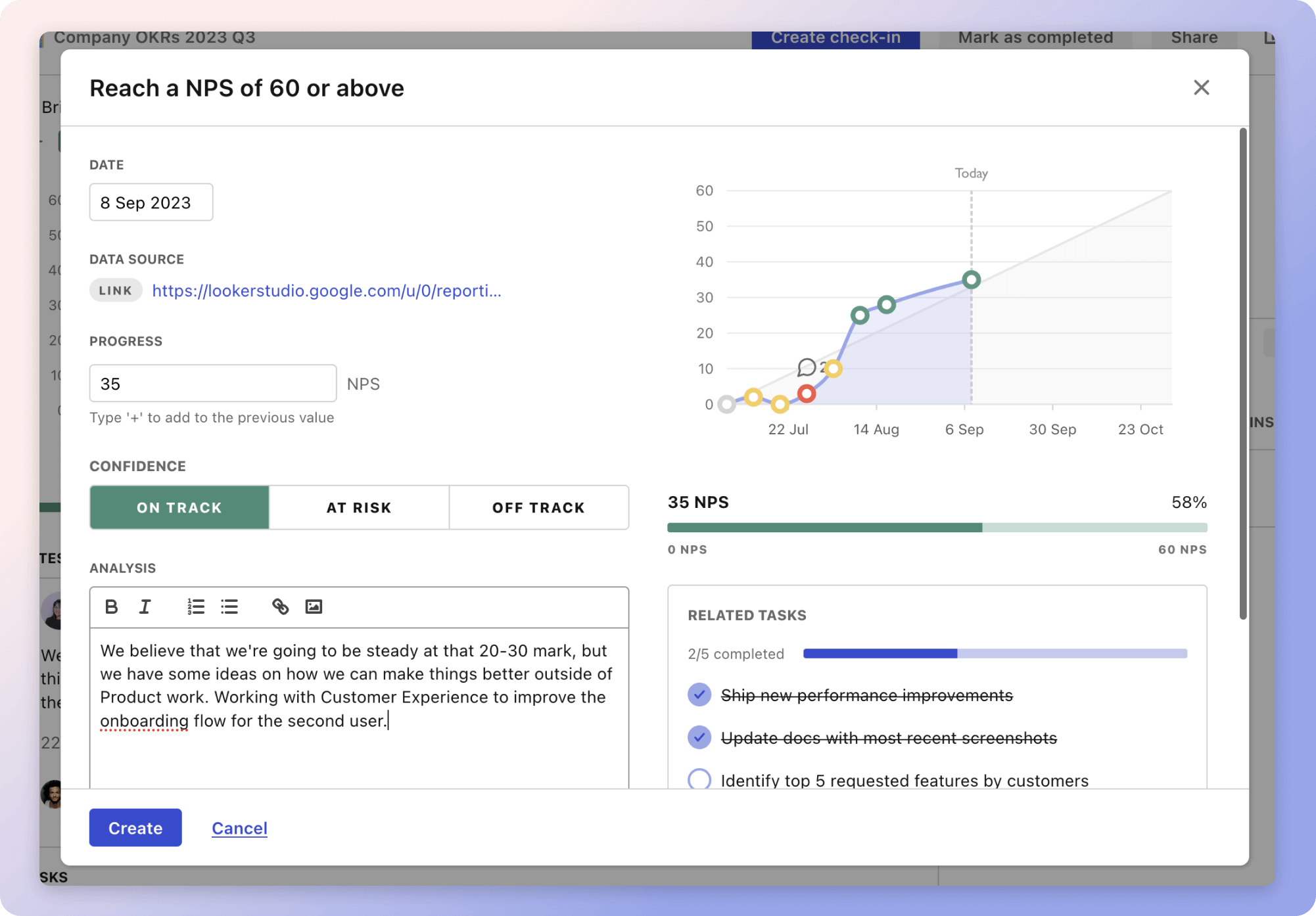
Give it a try and see how it can help you bring accountability to your strategy.